
The USS Abraham Lincoln carrier strike group has significantly intensified its presence within the US Central Command’s (CENTCOM) area of responsibility, strategically positioning itself in the Indian Ocean as of early 2025. This deployment comes amid persistent heightened tensions and ongoing strategic considerations by the current US administration regarding potential actions involving Iran. While the precise operational status remains under continuous evaluation, the movement underscores a clear intent to bolster regional security and provide robust support for any contingent American operations in the Middle East, a region frequently at the forefront of global geopolitical discussions. This proactive measure aims to ensure that US forces maintain a credible deterrent posture and are prepared for a spectrum of contingencies that may arise.
This substantial naval deployment places the carrier strike group squarely within a critical operational zone, enhancing America’s force projection capabilities. The move is viewed by defense analysts as a calibrated response to the enduring complexities of Middle Eastern security dynamics, particularly those involving Iran’s regional activities and nuclear program. Such deployments serve as both a visible assertion of power and a logistical readiness exercise.
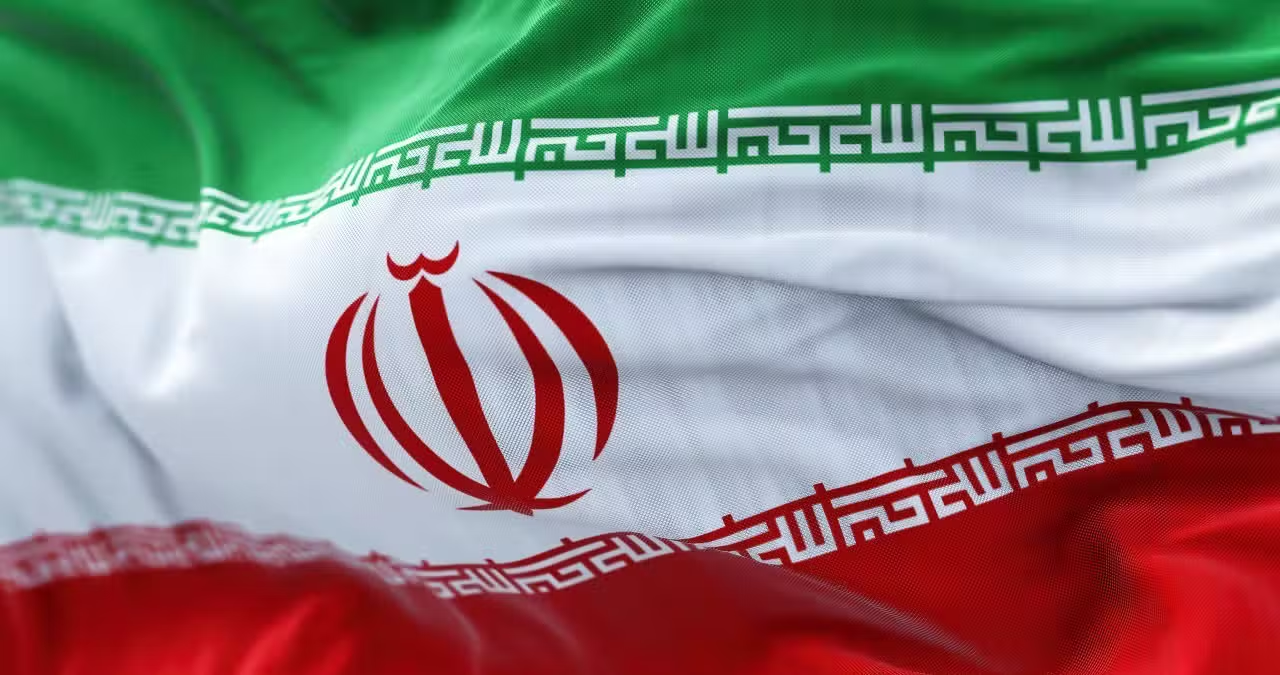
The carrier’s location, while within CENTCOM’s jurisdiction, signifies enhanced strategic flexibility rather than an immediate commitment to specific military actions. White House officials have consistently affirmed their commitment to exploring all diplomatic avenues while simultaneously ensuring military assets are appropriately postured to protect US interests and allies. Key considerations include:
* Maintaining freedom of navigation in international waters.
* Deterring aggression against US personnel and regional partners.
* Supporting regional stability efforts through visible military presence.
Strategic positioning and operational readiness
The USS Abraham Lincoln, a Nimitz-class aircraft carrier, leads a powerful contingent of naval assets, including several guided-missile cruisers and destroyers. This formidable group’s current trajectory into the Indian Ocean signals a calculated effort to optimize response times and logistical support for operations across the wider Middle East. The strategic value of its current placement allows for a broader reach across critical chokepoints and potential flashpoints, ensuring flexibility for various operational scenarios.
This deployment is a standard, yet critical, component of US global force posture, particularly in regions where geopolitical sensitivities run high. It guarantees that the United States can rapidly project air and naval power, providing both defensive capabilities and the option for offensive actions should national security interests demand it. The constant readiness of such a group is a testament to the US military’s ability to adapt to evolving threats and maintain a robust presence far from its shores.
Escalating regional tensions with Iran
Recent years have seen a complex interplay of diplomatic efforts and periods of elevated military posturing between the United States and Iran. The current administration, while emphasizing de-escalation, has reiterated that all options remain on the table to address Iran’s nuclear ambitions and its support for proxy groups across the Middle East. This persistent tension forms the backdrop against which the carrier group’s movements are understood.
The positioning of such a significant naval force is often interpreted as a clear message, signaling resolve without necessarily indicating imminent conflict. It provides leverage for diplomatic negotiations while also acting as a deterrent against perceived threats to US allies and commercial shipping lanes. The delicate balance between deterrence and provocation remains a central challenge for policymakers.
Concerns continue to mount regarding the security of international waterways, particularly the Strait of Hormuz, a vital conduit for global oil supplies. Iran’s past actions in this area have frequently led to international condemnation and increased scrutiny of its maritime activities. The carrier group’s presence can serve to safeguard commercial interests and reassure global partners of continued navigational freedom.
White House considers response options
The current US administration continues to evaluate a range of responses to Iranian actions, extending from diplomatic engagement and economic sanctions to potential military options. Decisions on such a sensitive matter are subject to extensive internal review and consultations with international allies, reflecting the gravity of any potential military confrontation. No definitive course of action has been publicly announced, highlighting the ongoing nature of strategic deliberations.
Discussions within the White House are reported to encompass a wide array of scenarios, emphasizing a preference for diplomatic resolutions while maintaining preparedness for alternatives. The deployment of the carrier strike group is part of this comprehensive approach, ensuring that military capabilities align with the broader strategic objectives of the United States in the region.
Officials stress that the ultimate goal is to achieve long-term stability and prevent any escalation that could destabilize the broader Middle East. The careful calibration of military deployments with diplomatic overtures is a hallmark of the current administration’s foreign policy in this complex theater.
The situation remains fluid, with international observers closely monitoring developments for any signs of resolution or further escalation. The global community largely advocates for a peaceful resolution through dialogue, recognizing the profound implications of any military action in the region.
Allied calls for de-escalation
Many allied nations have consistently urged both the United States and Iran to prioritize de-escalation and diplomatic engagement to resolve their longstanding differences. International partners emphasize the profound risks of miscalculation and the potential for a wider regional conflict that could have devastating global economic and humanitarian consequences. These calls often stress the importance of multilateral diplomacy and sustained dialogue as the most viable path toward a stable resolution, warning against any unilateral actions that might exacerbate an already volatile situation. Concerns also focus on protecting the welfare of their citizens residing in or traveling through the Middle East, as well as safeguarding critical trade routes that are essential for global commerce. The collective voice of the international community underscores a shared desire to avoid further instability in a region that has historically experienced significant geopolitical challenges.
Composition of a carrier strike group
A US carrier strike group represents one of the most powerful and versatile formations in modern naval warfare, designed for comprehensive power projection and defense across vast maritime areas. Typically, it is centered around a nuclear-powered aircraft carrier, which serves as a mobile airbase supporting dozens of fighter jets, surveillance aircraft, and helicopters. This core element allows for extensive aerial operations far from fixed land bases.
Accompanying the carrier are various support vessels crucial for layered defense and offensive capabilities. These include guided-missile cruisers equipped with advanced anti-air, anti-surface, and anti-submarine warfare systems, providing robust protection for the entire group. Destroyers and frigates further enhance the group’s defensive screen, specializing in anti-submarine warfare and air defense, creating a formidable and self-sufficient naval force capable of operating in high-threat environments globally.
A history of naval presence
The United States has maintained a continuous naval presence in the Middle East for decades, reflecting its enduring strategic interests in regional stability, energy security, and the protection of international trade. Carrier strike group deployments are a routine, yet impactful, element of this long-standing commitment.
