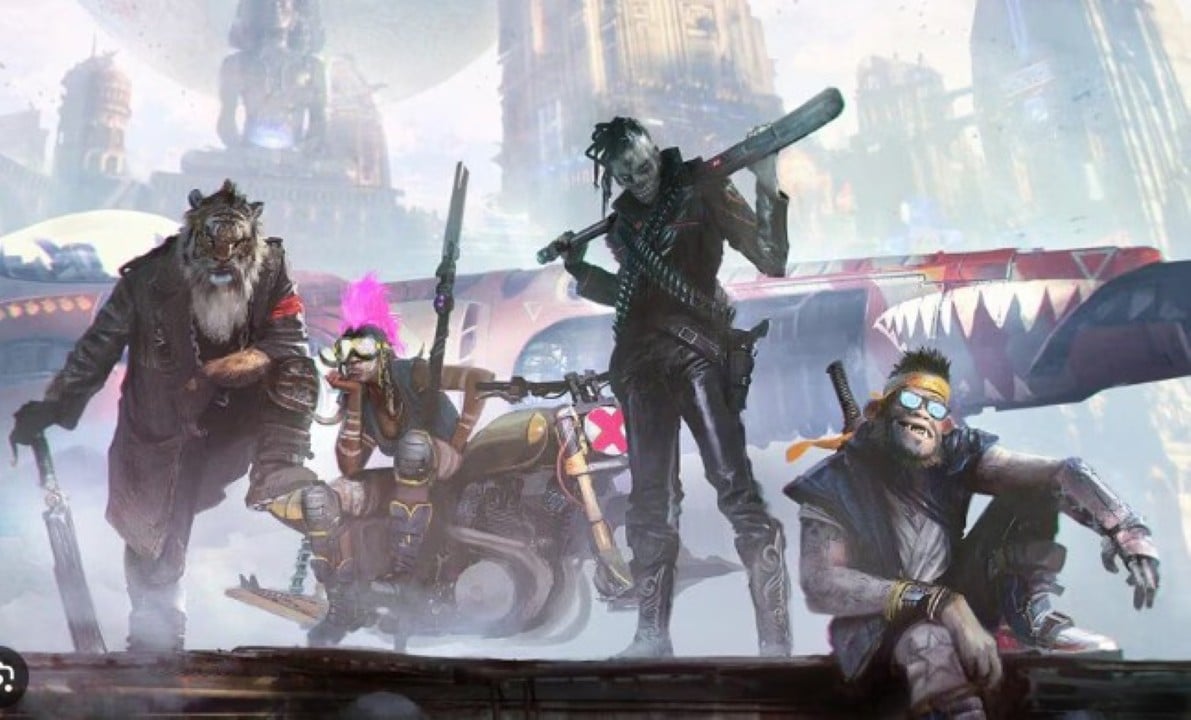
The development of “Beyond Good & Evil 2” represents one of the longest and most complex chapters in video game history, spanning nearly two decades since its initial announcement. Amid intense restructuring at Ubisoft, marked by staff cuts and the cancellation of multiple projects, the survival of the sequel to the Jade adventure continues to be a question mark for many. The answer, however, appears to lie less in creative vision and more in cold financial reality.
The project, which has already surpassed “Duke Nukem Forever” as the game with the longest development cycle in history, has become an invaluable asset for the French company. The volume of investment already allocated over the years has reached such a high level that simply discarding the project would represent a devastating financial blow for the company, making its cancellation a practically unfeasible maneuver.
Despite the internal turmoil and the long journey into pre-production, Ubisoft ensures that the project remains a priority. Essa resilience does not arise only from the passion for the franchise, but from a strategic need to try to recover, at least partially, the hundreds of millions of dollars already invested, avoiding an accounting loss of catastrophic proportions.
A saga of troubled development
The trajectory of “Beyond Good & Evil 2” is a mirror of its promised greatness, marked by twists and turns and constant challenges. The first information about its production dates back to 2007, with the official confirmation of Ubisoft occurring a year later. Inicialmente designed for the seventh generation of consoles, the project had a conceptual trailer of its graphics engine and a gameplay teaser leaked in 2009.
The silence that followed lasted nearly a decade, until E3 2017, when Ubisoft revealed a new cinematic trailer and a completely revamped aesthetic. At Neste point, the team had scrapped the original prototype and started work over from scratch, transforming the game from a direct sequel to a prequel to the original story, further expanding the scope and ambition.
This change in direction reset expectations, but also reset the development clock. The new vision promised a vast, interconnected universe, requiring cutting-edge technology and a monumental production effort that would justify the studio’s long period of waiting and silence.
Since then, updates have been sporadic, with the fan community wavering between hope and skepticism. Cada new glimpse of the game was accompanied by grandiose promises, but also by the absence of a concrete release date, fueling the narrative of a project lost in its own development cycle.
Ambitious promises and production challenges
E3 2018 brought more news, including gameplay demos that highlighted a customizable character, a ship piloting system, and a truly expansive open-world scope. The promise was an unprecedented experience, where players could explore entire planets seamlessly, from the surface to deep space, without loading screens. The ambition to accurately simulate intergalactic travel, with massive worlds, innovative combat mechanics and an epic narrative, proved to be one of the main obstacles for the development team, who faced monumental technical and creative challenges to realize this vision.
The public, already wary of exaggerated promises after the troubled launches of games like “No Man’s Sky” and “Cyberpunk 2077”, viewed the announcements with a dose of suspicion. Previous Exemplos in the industry have shown the risk of promising the world and under-delivering, although both aforementioned titles have subsequently recovered. Ubisoft itself did not help to reduce this insecurity, with the constant changes of direction and the departure of important figures from the project, which signaled a turbulent production without a clear direction, making it difficult to maintain the trust of both investors and players.
Instability in creative leadership
One of the factors that most contributed to the uncertainty surrounding the project was the instability in its leadership. In 2020, Michel Ancel, creator of the series and one of the minds behind the game, left the company. Posteriormente, he admitted the existence of significant creative differences over the direction the title should take, indicating internal conflicts that paralyzed progress.
His successor, Emile Morel, tragically passed away in July 2023, aged 40, leaving the team once again in creative limbo for a long period. The unexpected loss of a key leader added another layer of difficulty to an already complex development, forcing the team to reorganize at a critical time.
The role of creative director remained vacant for an impressive fifteen months, only to be filled in October 2024 by Fawzi Mesmar. Sua’s arrival brought a new lease of life, but Mesmar adopted a cautious stance, limiting itself to confirming that development was continuing, without offering concrete details about the schedule or the current state of the game.
The cost that prevents cancellation
The decision to keep “Beyond Good & Evil 2” in active development while other games, including the highly anticipated remake of “Prince of Persia: Estimativas market share suggests that the project has already consumed more than 500 million dollars in its long and arduous production path, without even considering future marketing costs. Esse amount positions it as one of the most expensive games in history, even though it is, according to reports, still in the pre-alpha phase. In comparison, even the projected colossal budget for “Grand The cancellation of “Beyond Good & Tal impact could seriously weaken the company’s economic health, compromising its overall stability and shareholder confidence in the near future. Portanto, the game’s completion and eventual release became a crucial strategic imperative. Ele is an asset that needs to be realized to mitigate investments already made and, ideally, generate a significant return for the company.
Internal restructuring of Ubisoft
Recently, Ubisoft implemented a profound restructuring that included the cancellation of six games, the postponement of another seven and the closure of studios, resulting in mass layoffs. The company has also established five “creative houses,” each focused on a specific genre or iconic franchises, with the goal of streamlining production and focusing on more profitable intellectual properties.
One of these “houses”, Vantage Studios, which has the participation of the Chinese giant Tencent, will be responsible for major series such as “Assassin’s Creed”, “Far Cry” and “Rainbow Six”. Outras units will be dedicated to IPs such as “Splinter Cell”, “Prince of Persia”, “For Honor”, “Rayman”, “Just Dance”, and notably “Beyond
The company’s current scenario and public perception
The current scenario at Ubisoft is complex, with public morale at a low ebb due to a series of factors that have shaken players’ confidence. Entre among them, the cancellations of expected titles, the recent layoffs of developers in several teams and the controversial adoption of Inteligência Artificial in the creation processes stand out, decisions that generated significant criticism and debates about the company’s future direction and ethical values.
Expectations about the future of the game
For fans and the industry itself, the most pressing question is: when will “Beyond Good & Evil 2” finally see the light of day? The question is no longer “if”, but “when” the game will become a product available on the consumer market, after so many years of development that has become legendary for its own merits and demerits.
The challenge for Ubisoft will be to not only release the game, but also to ensure that it meets, or at least comes close to, the monumental expectations built over two decades. The success or failure of “Beyond Good & Evil 2” will be a defining milestone for the company’s future and a case study in the limits of ambition in video game development.
