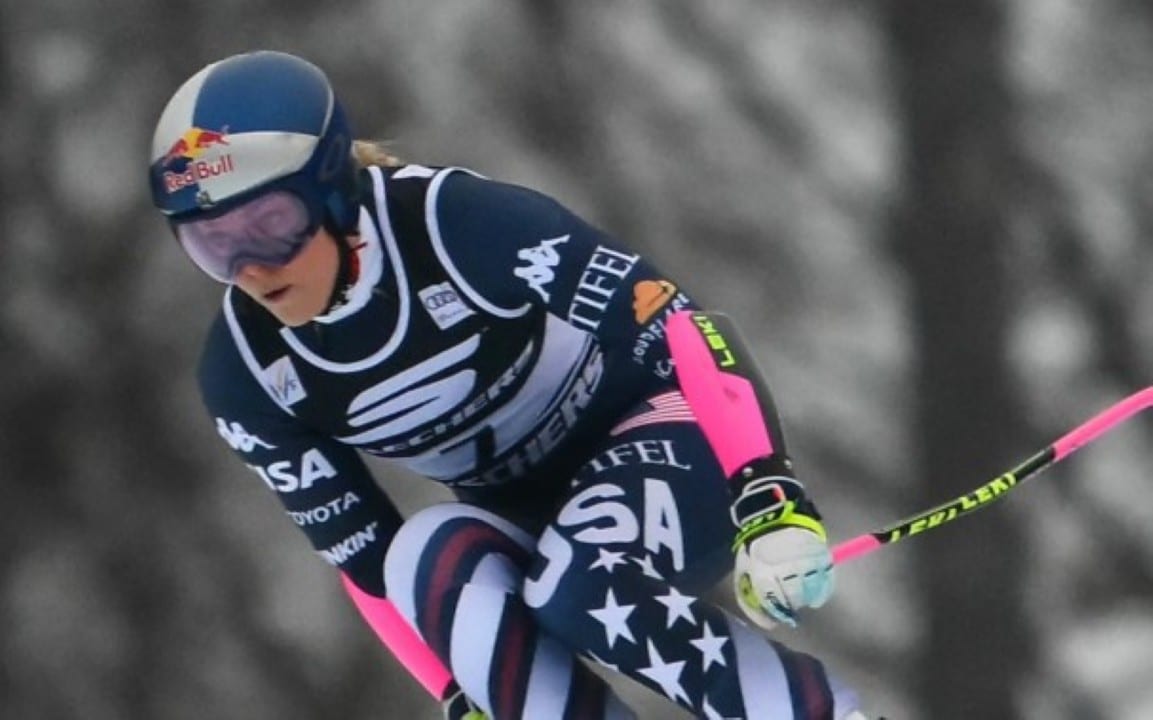
Fall in Suíça leaves Lindsey Vonn’s knee compromised before the Winter Olympics
Renowned American skier Lindsey Vonn faced a worrying incident last Friday, January 30th, during a stage of Copa of Mundo of The accident occurred when Vonn, aged 41, lost control while landing a jump in low visibility conditions, a factor that had already been identified as challenging on the course, culminating in his collision with the safety nets at the top of the runway. Este setback casts a shadow of uncertainty over her expected Olympic participation, where she was seen as a top star and a veteran in search of more glory.
After the fall, the competition was quickly cancelled, as three other of the first six athletes had also suffered accidents, highlighting the dangerous nature of the route under those weather conditions. The race organizers prioritized the safety of competitors, suspending activities to avoid greater risks on a particularly challenging day for high-speed alpine skiing.
The situation generated immediate concern among the ski community and its millions of fans around the world, concerned about the condition of an athlete who is a symbol of resilience and performance in the sport. The news spread quickly, with messages of support being sent to the skier, known for her ability to overcome physical adversity throughout her extensive career.
The rescue drama in Crans-Montana
At the time of the accident, Lindsey Vonn received medical attention promptly on the track, with the emergency team acting quickly to assess his condition. The skier, visibly shaken, was unable to support her weight on her left knee and needed the assistance of her poles to be able to move slowly, indicating the seriousness of the injury suffered. The scene was highly tense, with the rescue team working to ensure the athlete’s safety amid the complex mountain conditions, preparing her for safe transport.
After initial care and a brief assessment in the arrival area, Vonn was evacuated by helicopter over Alpes Suíços, a common procedure in cases of injuries in difficult to access locations, but which reinforces the serious nature of the incident. Aerial removal is crucial to ensuring that athletes receive specialized hospital care as quickly as possible, minimizing potential damage and speeding the process of diagnosis and treatment of complex injuries such as those that occur in elite alpine skiing.
First aid at the scene of the fall
The first reaction to Vonn’s fall was widespread concern, both on the part of organizers and fellow athletes. The skier demonstrated clear signs of pain and discomfort while receiving initial care, a concerning indication of the extent of the trauma to her knee. Essa step is crucial to avoid worsening and begin the athlete’s stabilization process before a more in-depth diagnosis, which can only be carried out in a hospital environment with imaging exams and complete orthopedic evaluations.
Observers noticed the expression of anxiety on Vonn’s face and a long hug with teammate Jacquelin Wiles, who was leading the race before its cancellation, a gesture of solidarity and mutual concern. The camaraderie between athletes is evident in times of difficulty, with emotional support being as important as physical support for recovering from such an impactful incident. Essa support network is fundamental in such an individual sport, but which is built around a community united by the same passions and risks.
Vonn’s trajectory of overcoming and achievements
Lindsey Vonn is an alpine skiing legend, recognized worldwide for her numerous victories in Copas of Sua career is a testament to talent, dedication and, above all, remarkable resilience in the face of a series of injuries that could have ended the trajectory of less determined athletes. Ela has always demonstrated a unique ability to return to the track at a high level, even after complex interventions such as the partial replacement of his right knee with a titanium prosthesis in the previous season. At 41 years old, Vonn maintained her position as the main name in downhill this season, collecting two victories and three other podiums, which reaffirmed her elite status and accredited her as a strong competitor for the Jogos of Milão-Cortina, where her presence was awaited with great expectation by the global sports community.
Implications for Olympic participation
The injury suffered by Lindsey Vonn raises great uncertainty about his participation in the Jogos Olímpicos of Inverno of Milão-Cortina, considered the peak of the season and the stage where the biggest names in the sport seek glory. Vonn, one of the most decorated and charismatic athletes on the circuit, would be one of the biggest attractions, and her absence would represent a significant loss for the sport, both in terms of competition and media appeal. The expectation is that the detailed diagnosis will determine the necessary recovery time and the real chances of the skier being able to compete at a high level, given the physical and technical demands of the Olympic events.
The medical team and the athlete herself will now begin an intensive process of evaluation and planning for recovery, with the aim of optimizing any possibility of participation. However, the priority will always be the long-term health and well-being of Vonn, who already has an unquestionable legacy in the sport. The final decision will depend on several factors, including the severity of the injury, the response to treatment and the skier’s ability to regain full physical and mental fitness in time to face the challenges of the Olimpíadas, a tournament that allows no room for error or sub-optimal performance.
Analysis of weather conditions on the day of the accident
The Copa race of Mundo in Crans-Montana was marked by adverse weather conditions, with low visibility, a factor that became crucial in triggering the accidents. Alpine skiing requires keen spatial perception and quick reflexes, elements that are severely compromised when athletes cannot clearly visualize the terrain ahead, gates and variations in the track. The high-speed descent, combined with technical jumps and turns, turns the race into an even greater challenge under such circumstances, exponentially increasing the risk of falls and injuries. The decision to cancel the race following multiple incidents, including that of Vonn, was a recognition of the impossibility of guaranteeing the safety of competitors, demonstrating the importance of a safe environment for holding elite events.
Details of the injury and the first prognoses
Although the exact diagnosis of Lindsey Vonn’s injury has not yet been officially released, the skier’s difficulty in supporting weight on her left knee and the need for air rescue suggest significant trauma. Lesões in the knee are common in alpine skiing, and can range from strains and sprains to ruptures of ligaments, such as the anterior cruciate ligament (ACL) or the meniscus, requiring prolonged recovery and, often, surgical intervention. Upcoming imaging tests, such as MRIs, will be critical in determining the exact extent of the damage and guiding the treatment plan. The medical and sports community will closely monitor the details, hoping for a favorable prognosis for one of the greatest athletes in history.
Support from the ski community
The news of Lindsey Vonn’s fall generated an outpouring of solidarity and support from fellow athletes, former competitors and ski federations around the world. Mensagens of encouragement and wishes for a speedy recovery flooded social media and news channels, highlighting the respect and admiration that the athlete has earned throughout her career. Essa unity demonstrates the strength of the ski community, which mobilizes to support one of its greatest icons in a time of difficulty. The support for Vonn’s return to the track, whether as a competitor or in another role in the sport, is unanimous, reinforcing her lasting impact on the global sporting scene.
