The Nissan officially announced the arrival of the new generation of the Kicks to the Brazilian market, a strategic move to reinforce its position in the fierce compact SUV segment. The model, which has established itself as one of the brand’s sales pillars in the country since its original launch in 2016, is undergoing its most profound update, focused on design, technology and a new positioning of versions to attract an even broader and more demanding audience.
Instead of developing an entirely new project, the Japanese manufacturer opted for an intelligent approach: evolving the already consolidated V platform. The strategy aims to consolidate the strong presence of the Kicks in one of the most sought after categories in the national automotive sector.
The changes are noticeable from all angles of the vehicle, which adopts a more robust visual language in line with the global design trends of the Nissan. The interior also received special attention, with improvements to the finish and the introduction of new technological features that were awaited by consumers, such as a more modern multimedia center and a digital instrument panel in the most complete versions.
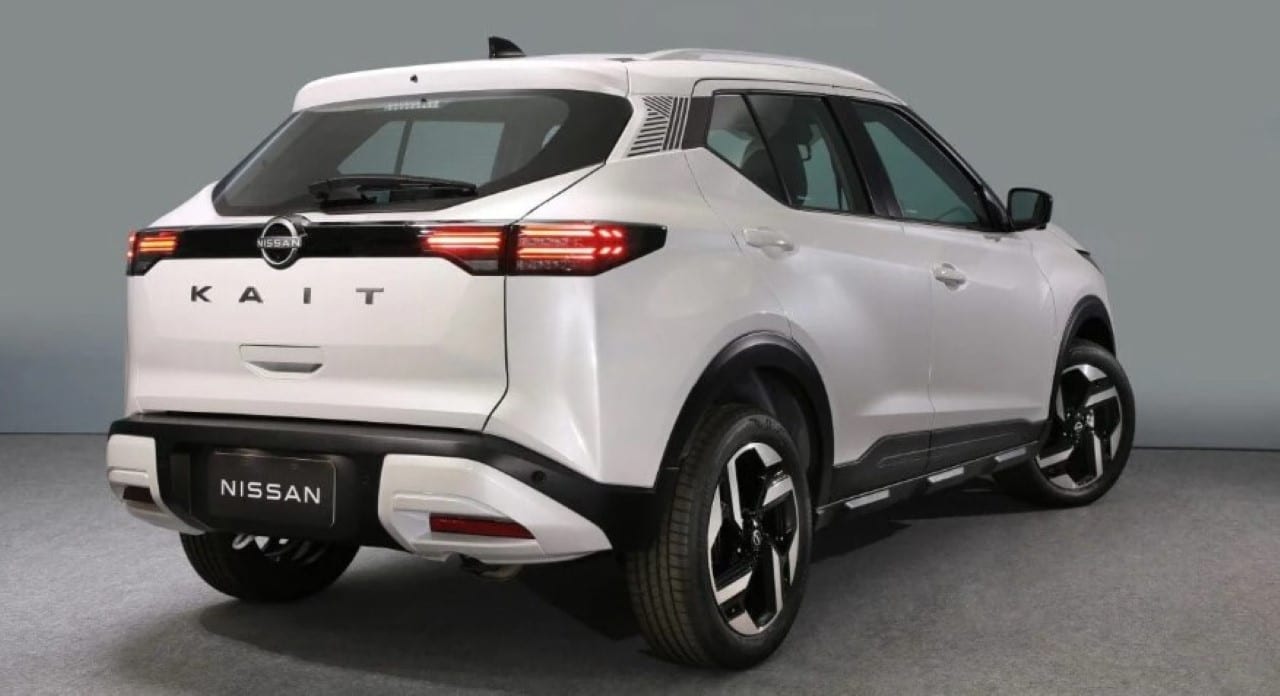
With this renewal, Nissan not only updates its main product, but also reaffirms its commitment to national production at the Resende factory, in the Rio of Janeiro. The new Kicks arrives with the mission of directly facing strong competitors, such as the Hyundai Creta, Volkswagen T-Cross and Chevrolet Tracker, betting on the combination of an attractive look, a packed equipment package and the mechanical reliability already known to the public.
A new visual identity for an established model
The main transformation of the new Nissan Kicks is in its exterior design. The front has been completely redesigned, featuring a more imposing hood, new bumpers and a more tapered and modern full-LED optical assembly, which is integrated into a more discreet front grille with horizontal bars. Essas changes give the SUV a more aggressive and sophisticated appearance, significantly distancing it from the previous generation and conveying a feeling of greater size and robustness, even while maintaining the same structural base.
At the rear, the modernization continues with the adoption of LED taillights with a three-dimensional effect, interconnected by a black bar that crosses the trunk lid, a design feature that is increasingly common on the market. Apesar of the profound visual renovation, the essential dimensions of the Kicks were preserved. The SUV maintains its 4.30 meters in length, 1.76 m in width, 1.59 m in height and 2.62 m in wheelbase, ensuring the good internal space that was already one of its strong points. The trunk also has a generous capacity of 432 liters, one of the largest in the category.
Improved technology and interior finish
Upon entering the cabin of the new Kicks, the driver finds an environment that mixes familiar elements with important new features. The overall dashboard layout and steering wheel design have been maintained, but the Nissan has invested in better quality materials to elevate the perception of refinement. The more expensive versions feature a synthetic leather finish on the doors and parts of the dashboard, as well as glossy black details that replace the hard plastic in some areas.
The biggest technological highlight is the new multimedia center with a 9-inch floating screen, available in intermediate and top configurations. The system now offers wireless connectivity for Apple CarPlay and Android Auto, a significant improvement over the previous generation. Complementa the package a new partially digital instrument panel with a 7-inch screen, which displays information in a clearer and more customizable way.
Despite the improvements, some points reveal the age of the original project. The rear camera, for example, still has a lower image resolution than more modern competitors. Outro detail is the maintenance of the parking brake via a manual lever, while many rivals have already adopted the electronic system, which frees up more space on the center console.
Equipment versions and packages
The new Nissan Kicks debuts in a well-defined range of versions to suit different consumer profiles. The entry-level configuration, Active, leaves the factory with a robust package, including six airbags, 17-inch alloy wheels, LED headlights and taillights, rear parking sensor, face-to-face key with push-button start and a multimedia center with an 8-inch screen.
Moving up to the intermediate version, the Advance Plus, the Kicks adds important comfort and technology items. Entre they include the electrochromic interior rearview mirror, the 9-inch multimedia center, the 7-inch digital instrument panel and two USB-C ports for rear seat passengers, increasing convenience on board.
It is from version Advance Plus that the SUV also incorporates a semi-autonomous safety package. Este system includes frontal collision warning with braking assistant, pedestrian detector and lane keeping alert, technologies that significantly increase safety in daily driving and traveling.
At the top of the line, version Exclusive stands out for being the most complete. Ela adds features such as adaptive cruise control (ACC), seat coverings in premium synthetic material and automatic digital air conditioning, positioning itself as the ideal option for those looking for the maximum technology and sophistication that the model can offer.
Performance and efficiency of the mechanical assembly
Under the hood, the Nissan chose to maintain the successful and reliable formula of the previous generation. The new Kicks continues to be equipped with the well-known 1.6 aspirated four-cylinder flex engine, capable of generating up to 113 horsepower and 15.2 kgfm of torque when fueled with ethanol. Este engine works together with the CVT automatic transmission, which simulates gears for smoother driving. The focus of this set is clearly comfort and efficiency in urban use, offering adequate responses to everyday traffic and silent operation. Embora does not have the same agility as rivals with a turbo engine, the Kicks presents competent performance for most situations, with acceleration from 0 to 100 km/h estimated in around 12 seconds. In terms of fuel consumption, official figures indicate averages with ethanol of 7.8 km/l in the city and 9.4 km/l on the highway, while with gasoline the values rise to 11.3 km/l and 13.7 km/l, respectively. Esses data, combined with the vehicle’s weight which varies between 1,139 kg and 1,152 kg, confirm its vocation to be a balanced and economical SUV for the family routine.
Suspension adapted for Brazilian conditions
One of the most praised points of the Nissan Kicks has always been the correctness of its suspension, and in the new generation this feature has been maintained and improved. The brand’s engineering team made specific adjustments to the shock absorbers and rear springs, seeking an even better balance between stability in curves and the ability to absorb the imperfections of Brazilian streets and roads. The result is a comfortable ride, which filters holes and ditches well, ensuring the well-being of the occupants even on poor quality surfaces, without compromising safety and drivability.
Market strategy and competition
By promoting a profound restyling instead of launching a new platform, Nissan demonstrates a pragmatic and effective market strategy. The brand manages to keep the Kicks modern and competitive, with an updated look and technologies, without incurring the high costs of developing a new project. Isso allows the SUV to be offered with an attractive value for money, strengthening its position as one of the best-selling models in the category.
The new Kicks arrives to compete in an environment of high rivalry. The Seus’s main direct rivals are the sales leader Hyundai Creta, the Volkswagen T-Cross, the Chevrolet Tracker and the recently launched Renault Kardian. The Nissan’s bet is that the renewed design, the list of standard equipment since the entry-level version and the reputation for robustness and low maintenance costs will be the differentiators to win and keep customers.
National production and export plans
The production of the new Nissan Kicks is concentrated in the Complexo Industrial of Resende, in the state of Rio of Janeiro. The factory, which received investments to modernize, is a strategic hub for the Nissan in the América of the Sul and responsible for supplying the entire Brazilian market with the renewed SUV.
In addition to meeting internal demand, the Resende unit will also be the model’s export platform. Nissan plans to ship the new Kicks to more than 20 América Latina countries, reinforcing the importance of the Brazilian operation in the company’s global scenario and contributing to the trade balance of the country’s automotive sector.
