The fifth day of collective testing of the Fórmula 1 in Barcelona, held this Friday (30), marked a crucial stage in the development of the new cars that will compete in the 2026 season. The session, conducted privately in the Circuito of Barcelona-Catalunya, brought together eight of the eleven teams on the grid for final aerodynamic and engine adjustments. Charles Leclerc, driving for Ferrari, ended the morning period as the fastest driver, demonstrating the evolution of the Italian team’s technical package in dry track conditions.
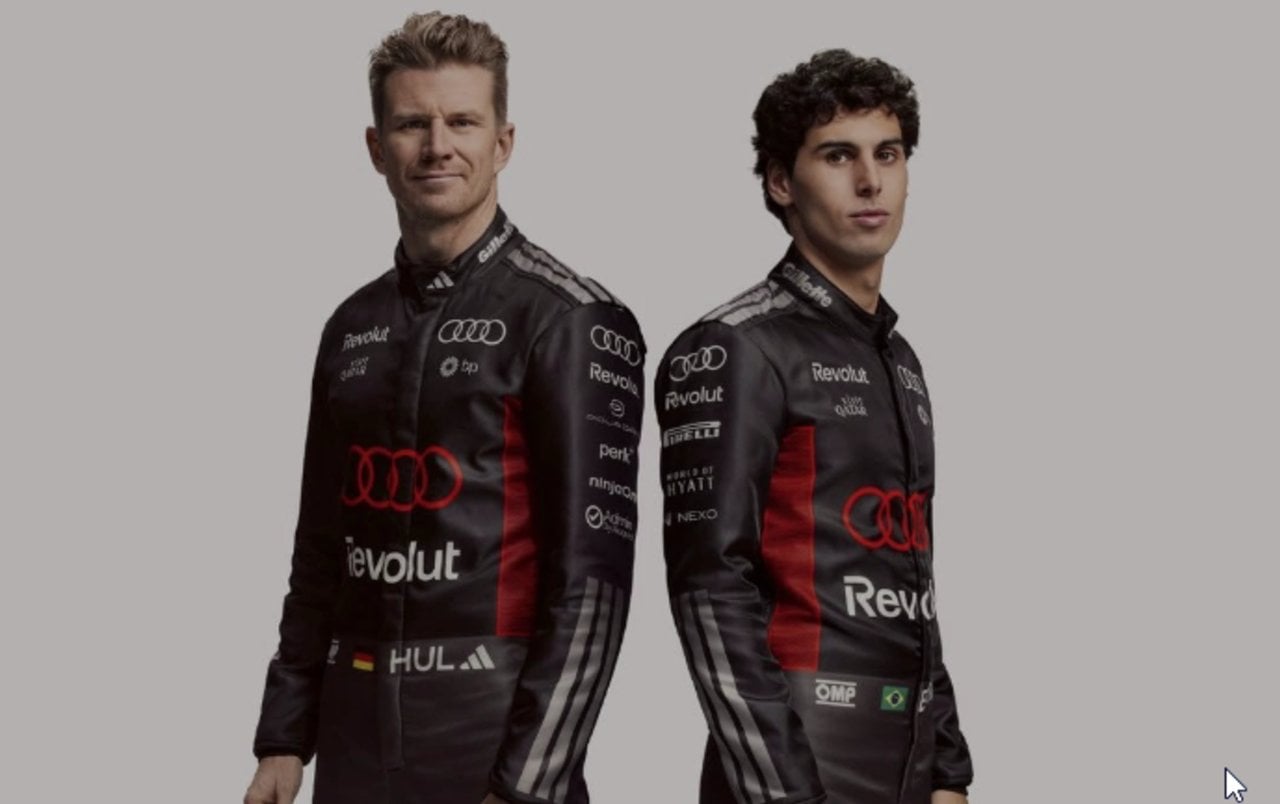
The Brazilian Gabriel Bortoleto, debuting for Audi, had a morning considered clean and productive, focusing on data collection and adapting to the complex systems of the new regulation. Durante the first hours of activity, the young driver carried out race simulations and sensor tests, avoiding incidents that could compromise the team’s schedule. The Audi seeks to consolidate the reliability of its power unit, and the constant presence of the Bortoleto on the track reinforces the project’s progress for the coming years.
- The Mercedes and Racing Bulls have already completed their respective test programs and did not hit the track today.
- Williams chose not to participate in the trip to Espanha, focusing its efforts on simulator and factory testing.
- Eight teams remain active on the Spanish circuit to validate the chassis and suspension updates.
- The recorded times are unofficial due to the private nature of the session, but local observers monitor each lap.
Day 3 summary of the R26 with Nico driving#audiF1 pic.twitter.com/x18P28q2L6
—Audi F1 Racing Team (@audi_f1stars)January 29, 2026
Technical performance and leadership of Ferrari in Barcelona
Charles The Monegasque driver used medium compound tires to achieve his best time, which suggests an even greater performance potential if soft tires were used. Although Embora did not surpass the record time set by George Russell the day before, Ferrari demonstrated remarkable consistency over long track stints.
The Italian team’s work focused on the thermal balance of the tires and the efficiency of the airflow under the car’s floor. Leclerc reported stable behavior of the single-seater in high-speed corners, allowing engineers to gather valuable information about component wear. The mileage accumulated by Ferrari this morning places the team among the most prepared for the start of the official season, highlighting the strength of the new mechanical set.
Constant activity of Gabriel Bortoleto with Audi
Gabriel The Brazilian prioritized constancy over fast laps, allowing the team to analyze the engine’s behavior in different power regimes. Audi has been cautious in its outputs, focusing on ensuring that all electronic systems operate without critical failures under high temperatures.
Bortoleto’s performance was praised by technicians for its precision in delivering feedback on setup changes made between pit exits. The pilot managed to maintain a stable pace, which is essential for the data collected to be statistically relevant for future development. Mesmo with a better lap time than the leaders, the focus of today’s program for the Brazilian was the in-depth understanding of the interaction between the chassis and the new hybrid propulsion unit.
Aston Martin situation and Fernando Alonso tests
Aston Martin presented a different work schedule this Friday, with Fernando Alonso taking over the cockpit after mechanical problems faced by Lance Stroll yesterday. The Spanish driver dedicated much of the morning to specific engine tests, using a speed limiting system to monitor combustion parameters. Alonso completed 49 laps, recording a time of 1min20s795, a mark that reflects the experimental nature of the tests carried out by the British team today.
The team’s main objective was to resolve the electrical instability that caused the stoppage of Stroll’s car the previous day. Alonso performed several laps of installation and basic systems check procedures before attempting longer lap sequences. The team seeks to ensure that the energy recovery system is operating within the safety margins established by the engineers of Milton Keynes and Silverston.
Return of Max Verstappen and progress of Red Bull
Max Verstappen returned to the track with Red Bull after the team completed the necessary repairs to the car damaged in an incident last Tuesday. The Dutch driver completed 69 laps and recorded a time of 1min18s285, positioning himself in the middle of the unofficial time table. Red Bull awaited the arrival of new components sent directly from its headquarters at Inglaterra to ensure that the single-seater was in ideal safety conditions.
- Max Verstappen focused on validating the structural integrity of the chassis after renovations.
- The team tested new cooling solutions for the brakes and power unit.
- Oscar Piastri, from McLaren, also stood out for his high mileage, completing 80 laps.
- Haas, with Oliver Bearman, was the team that ran the most, totaling 106 laps in total.
- Pierre Gasly worked on fine suspension adjustments to improve the Alpine’s traction in slow corners.
- Valtteri Bottas carried out initial aerodynamic tests for the Cadillac design on the circuit.
McLaren consistency and mileage of Oscar Piastri
Oscar Piastri delivered a solid performance throughout the morning, positioning McLaren as one of the most balanced forces in this phase of testing. The Australian driver recorded a time of 1min17s446, being the second fastest driver of the day so far, behind only Leclerc. McLaren has been notable for its lack of serious mechanical problems, which has allowed Piastri to focus on refined aerodynamics testing and engine mapping.
The Woking team used aerodynamic paraffins in various parts of the car to visualize the behavior of the air in real time during the straights. Piastri completed 80 laps without interruption, providing a robust database for data analysts. The efficiency of the DRS and the car’s behavior in low fuel conditions were also assessed, showing that McLaren has reached an advanced level of technical maturity in developing its 2026 project.
Work intensity for Oliver Bearman and Haas
Haas opted for a high intensity program this morning, resulting in 106 laps completed by Oliver Bearman. The young driver was responsible for subjecting the car to thermal stress tests, carrying out extremely long stints to observe the degradation of internal components. Bearman recorded a time of 1min18s423, focusing on collecting telemetry on the durability of the transmission system and drive axles under severe conditions of use.
This Haas approach aims to identify possible points of failure that only occur after long periods of continuous operation. Bearman demonstrated excellent fitness by maintaining consistent lap times even after surpassing the 100 lap mark in a single morning. The data generated will be essential for the team to plan maintenance and parts replacement windows during the official season, minimizing the risk of abandonment due to mechanical breakdowns.
Evaluation of Alpine systems with Pierre Gasly
Alpine has focused its efforts on understanding chassis dynamics and suspension response at different ride height settings. Pierre Gasly completed 78 laps and recorded a time of 1min19s754, working together with the track engineers to optimize corner entry. The French team seeks to recover ground lost in previous seasons, focusing on a mechanical platform that is more friendly to the riding style of its competitors.
During the morning activities, Gasly made several setup changes that allowed the car’s rear stability to be compared in different grip conditions. The French driver highlighted the importance of accumulating mileage without technical interruptions, something that Alpine managed to achieve this Friday in Barcelona. The focus remains on full integration between the electronic systems and the new engine, aiming for harmonious operation during racing situations.
Aerodynamic challenges and conclusion of morning tests
The closing of the morning period at Barcelona confirmed that Ferrari and McLaren begin the 2026 cycle with a very solid technical base. The leadership of Charles Leclerc, although in a private and unofficial session, signals that the path adopted by the Italian team is generating immediate results in terms of pure performance. The proximity of the times between the leaders indicates that the fight for positions at the top of the grid could be intensely balanced in the first races.
Gabriel Bortoleto ends his participation in this phase with a feeling of accomplishment, having avoided mistakes and provided accurate information to Audi. The Brazilian pilot is now waiting for the data collected to be processed to plan the next steps in his technical preparation. The teams will return to the track in the afternoon for the final test session at Barcelona, where qualifying simulations with soft tires are expected to reveal the true speed potential of each competitor before activities conclude at Espanha.
