
Trump confirms US holds serious discussions with Iran as naval exercises loom in Hormuz
President Donald Trump recently confirmed that the United States is engaged in “serious discussions” with Iran, a significant development emerging as new military tensions rise in the Middle East. These diplomatic exchanges unfold against the backdrop of an impending live-fire naval exercise planned by Iran within the strategically crucial Strait of Hormuz, a narrow waterway essential for global oil shipments. The announcement from the former president signals a complex interplay of diplomacy and escalating military posturing in a region historically prone to volatility.
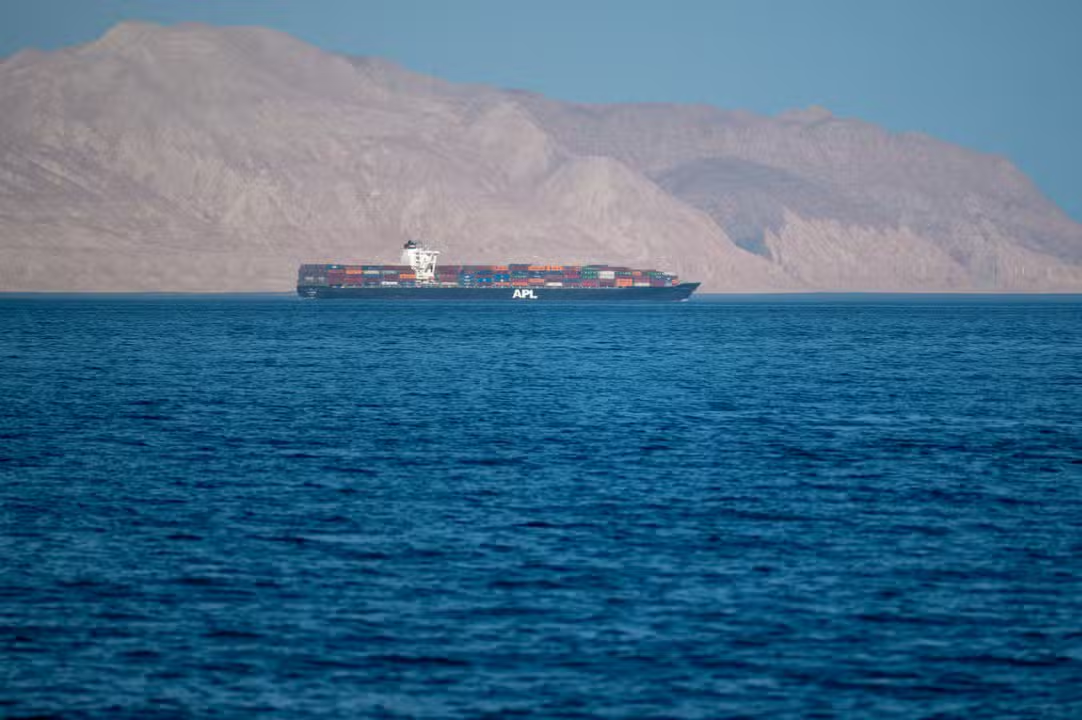
The timing of these high-level talks, divulged by Trump, underscores the delicate balance Washington aims to strike between de-escalation through dialogue and maintaining a strong deterrent posture. Concerns mount over potential miscalculations as Iranian forces prepare for maneuvers in a choke point vital to international trade and security. Analysts are closely watching how this dual approach impacts regional stability and international shipping lanes.
* The Strait of Hormuz represents a critical maritime passage for a substantial portion of the world’s petroleum.
* Its geopolitical significance often places it at the center of international security debates, directly influencing global energy markets.
Escalating regional tensions
Tensions in the Persian Gulf have notably increased with the announcement of Iran’s upcoming naval exercises. Military maneuvers in such a sensitive area naturally draw international scrutiny, particularly from nations heavily reliant on the uninterrupted flow of oil through the strait. The exercises, reportedly involving multiple vessels and live ammunition, are perceived by some as a show of force amidst ongoing international pressures.
The United States, along with its regional allies, has consistently expressed concerns about Iran’s military activities in the Gulf. Such exercises are often viewed through the lens of potential disruption to commercial shipping and regional security, prompting heightened vigilance from naval forces operating in the area. International bodies also monitor these developments closely to prevent any escalation that could destabilize global markets.
Diplomatic overtures amid military exercises
Despite the visible military posturing, the revelation of “serious discussions” between the US and Iran suggests a parallel track of diplomatic engagement. This dual approach indicates a complex strategy, where open lines of communication exist even as military demonstrations proceed. Such behind-the-scenes dialogue often aims to de-escalate potential conflicts and explore pathways for future stability.
The nature and scope of these discussions remain largely undisclosed, adding to the intrigue surrounding the volatile situation. While one side prepares for naval drills, the other engages in dialogue, creating a scenario of calculated risks and careful maneuvering. Political observers speculate these talks could encompass a range of issues, from nuclear concerns to regional security arrangements, reflecting the multifaceted challenges between the two nations.
Diplomatic efforts typically seek to establish common ground or at least reduce misunderstandings that could lead to unintended confrontations. The involvement of a former US president in revealing these talks highlights the high-stakes nature of the bilateral relationship. This engagement, even indirectly, could offer a crucial channel for managing the current military build-up.
Geopolitical significance of Hormuz
The Strait of Hormuz holds unparalleled strategic importance, connecting the Persian Gulf to the open ocean. Through this narrow passage, roughly 20% of the world’s total petroleum consumption, and a significant amount of liquefied natural gas, passes daily. Any disruption in this maritime route can trigger immediate and severe consequences for the global economy.
The waterway, at its narrowest point, is only 21 miles wide, creating a critical choke point where military activities can be particularly disruptive. International law designates these waters as international straits, allowing for freedom of navigation, but Iran has historically asserted its right to control passage under certain circumstances. This assertion frequently clashes with international maritime conventions.
Global powers maintain a strong presence in the region precisely because of Hormuz’s importance. Naval fleets from the United States and other nations routinely operate in the vicinity to ensure the safety and security of commercial shipping. Their presence acts as a deterrent against any actions that could impede the flow of goods or escalate regional conflicts.
Maintaining stability in the Strait of Hormuz is a priority for numerous countries worldwide, not just those bordering the Persian Gulf. Energy prices, supply chains, and international trade agreements are all directly impacted by the security of this vital maritime artery. Therefore, any military exercise or diplomatic initiative related to it commands global attention.
International reactions and concerns
International allies of the United States and other major global players are closely monitoring the unfolding situation in the Persian Gulf. Many nations have voiced concerns over the potential for miscalculation and escalation, emphasizing the need for restraint from all parties involved. Stability in the region is paramount for global economic well-being, making diplomatic efforts crucial.
The United Nations and various international organizations frequently call for peaceful resolution of disputes and adherence to international maritime law. Messages often stress the importance of dialogue in preventing any military actions that could jeopardize international shipping or lead to broader regional conflict. The situation serves as a constant reminder of the fragile balance in a critical geopolitical hotspot.
Historical context of Iran US relations
Relations between Iran and the United States have been marked by periods of intense hostility and sporadic attempts at diplomacy for decades. Following the 1979 Islamic Revolution, the two nations severed official ties, leading to a long history of mistrust, sanctions, and proxy conflicts across the Middle East. Various administrations have grappled with managing Iran’s nuclear program, its regional influence, and its human rights record, often through a combination of pressure and limited engagement. Past agreements, like the Joint Comprehensive Plan of Action (JCPOA), have aimed to curb Iran’s nuclear ambitions in exchange for sanctions relief, though the US withdrawal from the deal under the previous administration significantly heightened tensions. This enduring backdrop of complex and often adversarial interactions shapes perceptions and expectations regarding any new diplomatic initiatives, making even informal discussions critically important in preventing further escalation in an already volatile region.
Future outlook and strategic implications
The announced discussions and impending exercises highlight a future defined by complex geopolitical maneuvering. The outcomes of both diplomatic efforts and military displays will significantly shape regional security and international relations for the coming year.
Iran US talks, Strait of Hormuz, naval exercises, Trump discussions, Middle East tensions
