
New unofficial information about the long-awaited successor to Nintendo Switch has emerged from an alleged leak related to the game Monster Hunter Wilds, by Capcom. The details, which are circulating on specialized forums, indicate that the new Nintendo console will feature advanced graphics optimization features and an ultra-fast loading mode, designed to handle the most demanding open-world games.
The leak details how Capcom would be adapting its graphics engine, the RE Engine, to extract maximum performance from the Switch 2’s hardware. game.
The main revelation revolves around two fronts: the management of visual resources to maintain stable performance and a system called “FastLoadMode”, which aims to eliminate or drastically reduce loading screens. The adaptation of RE Engine, known for its efficiency in titles such as Resident Evil and Dragon’s
What is ‘FastLoadMode’ and how would it work
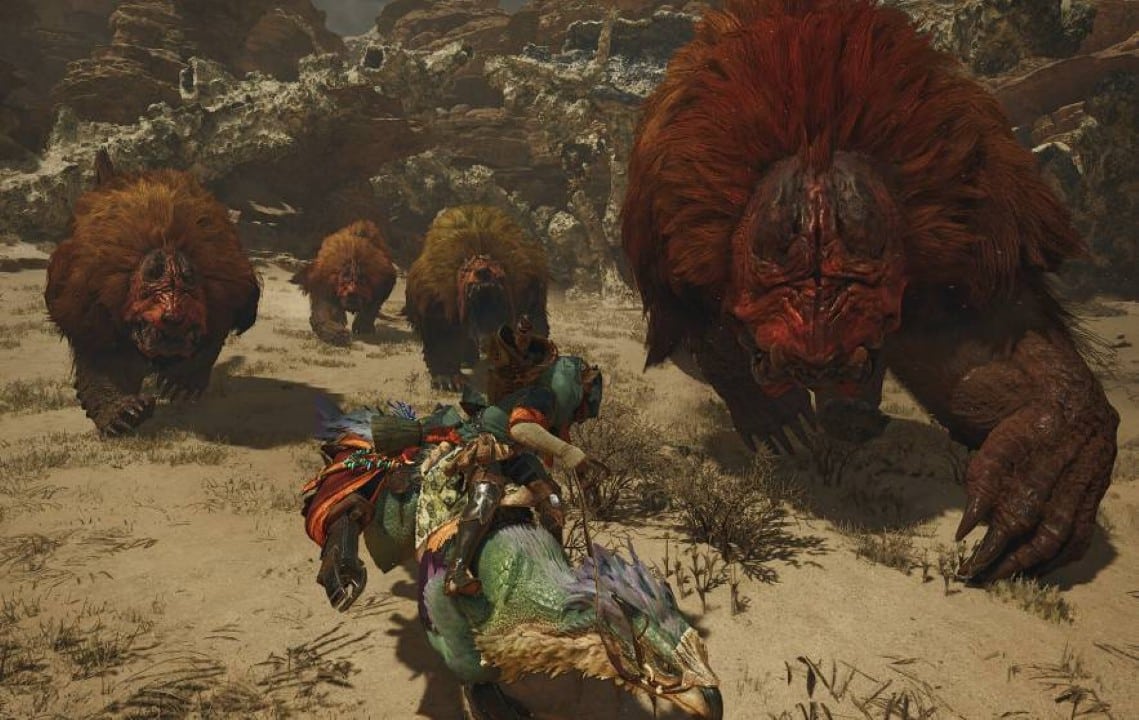
One of the highlights of the leak is the mention of a “FastLoadMode”, a feature supposedly developed for Switch 2. Este mode would be essential for games like Monster Hunter Wilds, which promises a vast and continuous world, without the map divisions present in previous titles in the franchise. The technology would allow the console to transmit large volumes of data quickly and efficiently, avoiding interruptions in gameplay.
The implementation of such a system suggests that the new console will use high-speed storage technology, similar to the SSDs (Solid State Drives) found in the PlayStation 5 and the Xbox Series X|S. Essa feature is essential for running modern games, which require constant loading of textures, 3D models and other graphic elements in real time. The ability to quickly move data from storage to memory is what enables more immersive open worlds and fluid transitions between different areas of the game.
For Capcom, optimizing RE Engine to take advantage of “FastLoadMode” would be a way to ensure that the experience of Reducing waiting times not only improves immersion, but has also become a standard of quality expected by players in the current generation of video games.
Details about graphics optimization on the new console
The leak points out that RE Engine in Switch 2 will use sophisticated optimization techniques to deliver high-quality visuals without compromising the frame rate per second. One of the technologies mentioned is “Occlusion Culling”, a method that prevents the graphics processor from rendering objects that are outside the player’s field of vision, saving precious resources.
Another feature would be an advanced Nível of Detalhe (LOD) system, which dynamically adjusts the complexity of 3D models based on their distance from the camera. Objetos far away are rendered with fewer polygons and lower resolution textures, while those closer receive maximum detail. Essa intelligent approach allows the creation of broad and detailed scenarios while maintaining stable performance.
The versatility of RE Engine from Capcom
RE Engine, Capcom’s proprietary graphics engine, is widely praised for its flexibility and scalability. Desde made its debut, it has been the basis for a variety of successful games, including the remakes of Resident Evil, Devil May Cry 5 and the recent Dragon’s
Its architecture is designed to be efficient, allowing developers to create visually stunning worlds that run well on a wide range of hardware, from high-end PCs to less powerful consoles like the original Nintendo Switch. Optimizing for Switch 2 would be a natural step in the engine’s evolution, allowing Capcom to continue releasing its flagship titles on the popular Nintendo platform.
The experience gained with games like Monster Hunter Rise, which already used an adapted version of RE Engine in the first Switch, provides a solid basis for development in its successor. The company has already demonstrated that it is capable of achieving remarkable visual and performance results on the Nintendo hardware, and the new optimization tools would only expand these possibilities.
This adaptability is crucial to the success of multiplatform developers like Capcom. By ensuring its core graphics engine runs optimally on Switch 2, the company positions itself to capitalize on the console’s massive player base, delivering experiences that are on par with versions on other platforms, both in content and technical quality.
Upscaling technologies to enhance the image
The leak also suggests that the Switch 2 will make use of upscaling technologies such as the AMD FidelityFX Super Resolution (FSR) or a similar solution. Essas techniques allow the game to be rendered at a lower internal resolution and then utilize artificial intelligence algorithms to reconstruct the image at a higher resolution, such as 1080p or even 4K, when connected to a TV.
For a hybrid console, which needs to balance performance and power consumption in portable mode, upscaling is an indispensable tool. Ele alleviates the load on the GPU, allowing developers to achieve higher, more stable frame rates or implement more complex graphical effects, without sacrificing the sharpness of the final image. The use of FSR or equivalent technology is a common industry practice and would be an essential feature for the Switch 2 to compete in today’s market.
Monster Hunter Wilds and Capcom’s strategy
The official confirmation from Capcom is that Monster Hunter Wilds will be released in 2025 for PlayStation 5, Xbox Series X|S and PC. Nenhuma mention was made of a console version of the Nintendo, which fuels speculation that it would arrive alongside the release of Switch 2. The
The decision to prepare RE Levar a title of Wilds’s magnitude for the console at launch, or soon after, could be a huge sales driver for both software and hardware, repeating the success of previous partnerships between the two companies.
Credibility of information and official silence
It is essential to highlight that all this information is based on rumors and has not been officially confirmed by Nintendo or Capcom. The gaming market is often the target of leaks, and while some prove to be true, many others are just speculation. However, the technical details described are plausible and consistent with the direction the gaming technology industry has taken in recent years. Nintendo, known for its discretion, rarely comments on rumors about its future products. The expectation is that an official announcement about the successor to the Switch will occur in the coming months, at which point the veracity of this information may be finally confirmed or denied by the company.
Expectations from the gaming community
The community of players and fans of Nintendo is eagerly awaiting a leap in performance on the new console. The ability to play next-gen titles like Monster Hunter Wilds with improved graphics and without long loading times on a portable device is one of the most desired scenarios for the successor to Switch.
