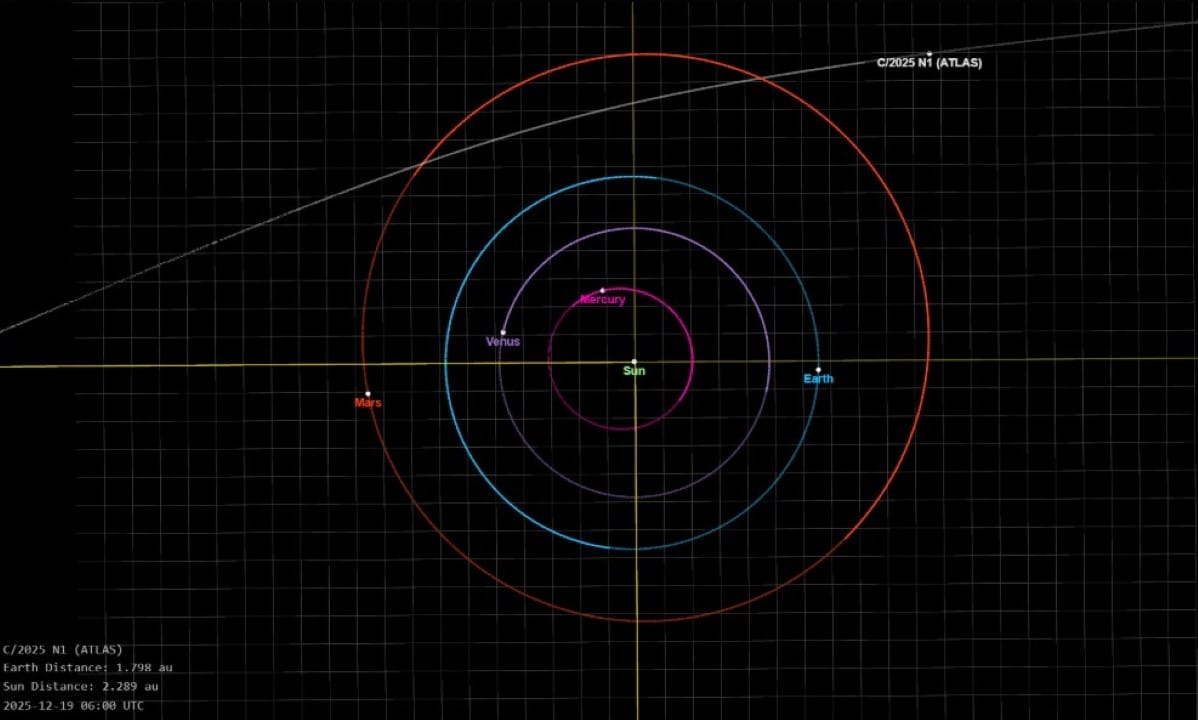
Astrophysicist Avi Loeb, professor at Universidade Harvard, published an article questioning whether the interstellar object 3I/ATLAS carries life forms. Observations from Telescópio Espacial James Webb and the SPHEREx observatory detected organic compounds and methane on the comet after its closest pass to Sol.
The object, discovered in July 2025 by the ATLAS system, passed perihelion in October of the same year. The data reveals the presence of water, carbon dioxide, carbon monoxide and complex organic molecules. Methane emerged only after perihelion, despite its high volatility.
Loeb highlights that this late methane production raises questions about possible biological origins. The scientist compares the case to panspermia processes, in which life spreads between stellar systems through objects such as comets.
Discovery and trajectory of 3I/ATLAS
Comet 3I/ATLAS was identified on July 1, 2025 by the ATLAS telescope on Chile. Ele became the third confirmed interstellar object, after 1I/’Oumuamua and 2I/Borisov. Sua hyperbolic velocity indicates origin outside of Sistema Solar.
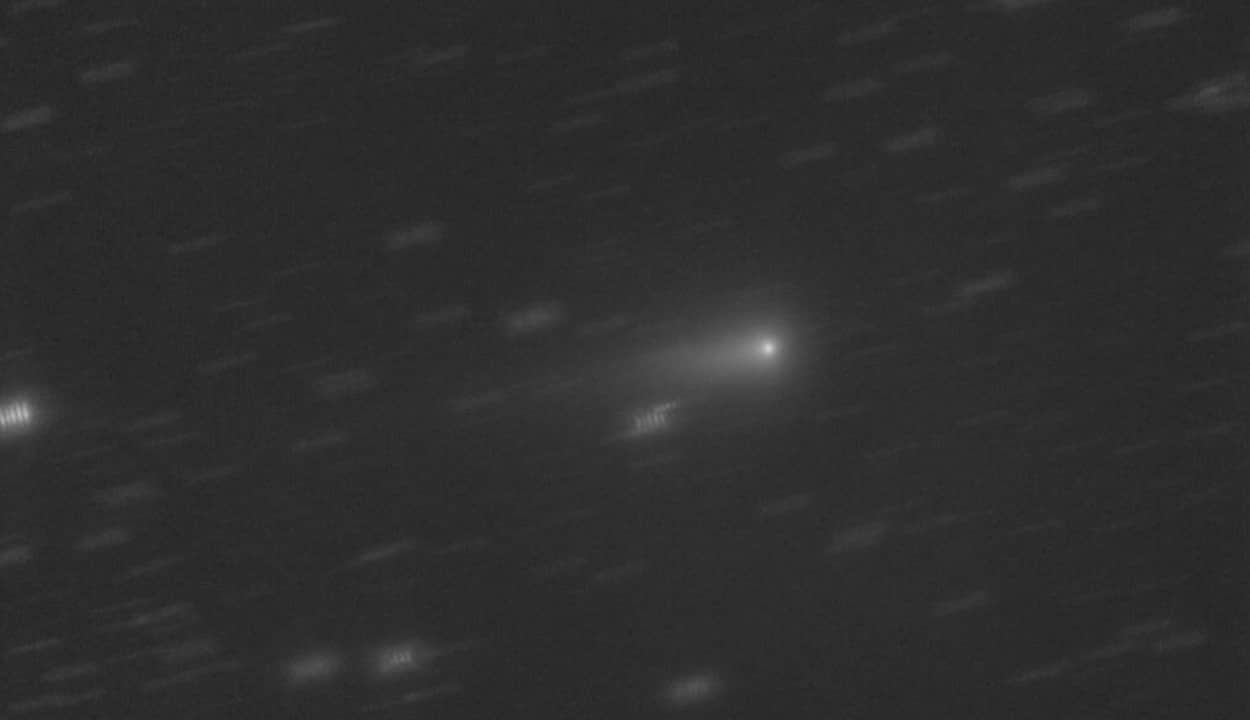
Initial observations of Telescópio Hubble on July 21, 2025 showed bright features and an elongated shape. The object reached perihelion on October 29, 2025, about 1.4 astronomical units from Sol. Imagens in December revealed an extension of 300 thousand kilometers, with gas plumes and an antitail directed towards Sol.
Chemical composition revealed
Data from James Webb identified water, carbon dioxide, carbon monoxide and methane in 3I/ATLAS. The SPHEREx observatory detected organic molecules such as methanol, formaldehyde and ethane. The proportion of methane reached 14% in relation to water in certain phases.
Methane only appeared after perihelion, which intrigues researchers due to the compound’s volatility. Carbon monoxide, more volatile, was detected earlier. Esses elements suggest formation in cold regions of another star system.
Here are the main compounds identified:
- Water (H2O), base for chemical reactions;
- Carbon dioxide (CO2), in high proportions;
- Carbon monoxide (CO), detected early;
- Methane (CH4), with late production observed;
- Organic molecules such as CH3OH and C2H6, indicators of chemical complexity.
Panspermia hypothesis presented by Loeb
Avi Loeb argues that objects like 3I/ATLAS act as natural carriers of life between stars. Ele differentiates natural panspermia, through ejection of rocks, from targeted panspermia, through technological intervention. The comet travels at about 60 km/s, allowing interstellar crossings in billions of years.
The astrophysicist suggests that advanced civilizations could use such objects to seed life on habitable planets. The presence of compounds consumable by microorganisms reinforces the idea. Loeb proposes that a space mission intercept the object to deposit terrestrial life forms.
Historical context of interstellar objects
‘Oumuamua, the first interstellar object detected in 2017, showed initially unexplained non-gravitational acceleration. Borisov, identified in 2019, exhibited similar composition to solar comets. 3I/ATLAS stands out for its chemical richness and high brightness.
These visitors offer glimpses of planetary formation processes in other systems. The trajectory of 3I/ATLAS crosses the ecliptic plane, facilitating detailed observations. Dados collected contribute to understanding the distribution of volatile materials in the galaxy.
Recent observations and images obtained
Images captured between December 8 and 15, 2025 show a pear-shaped dust map with antitail elongation. Seis gas plumes appear nearly circular in infrared observations. The total extension is equivalent to the distance Terra-Moon.
Spectroscopy confirms initial absence of methane in August 2025. Sua later detection suggests release of internal layers heated by Sol. Esses patterns help model behavior of interstellar comets in solar environments.
Debates in the scientific community
Most astronomers consider 3I/ATLAS a natural comet with a peculiar composition. Loeb maintains an open approach to extraordinary explanations when data permits. Ele emphasizes the need for more missions to collect samples of interstellar objects.
Studies compare methane to known biological productions in extreme terrestrial environments. The panspermia hypothesis remains speculative, but it stimulates discussions about the origin of life. Observações future similar objects will test these ideas.
3I/ATLAS continues its trajectory away from Sistema Solar, carrying valuable information about regions distant from Via Láctea. Sua passage reinforces the rarity and importance of interstellar visitors for astrobiology.
