
Xiaomi began a new testing phase for its operating system, releasing the second wave of the HyperOS 3.1 beta program in Chinese territory. The update, which integrates features from the upcoming Android 16, is now available for a greater number of devices, including high-end models such as the Xiaomi 17 and Redmi K90 series. Este movement signals a significant advance in the development of the manufacturer’s interface, which seeks to optimize the user experience before the official launch.
The expansion of the early access program occurs shortly after the release of the first wave, which included devices such as the Xiaomi 15 line and the Xiaomi Pad 7 Ultra tablet. With the inclusion of new models, the company accelerates the pace of development and collection of feedback, essential for the stabilization of the system. Although current tests are restricted to China, internal information suggests that global versions are already in the evaluation process, preparing the ground for future international distribution.
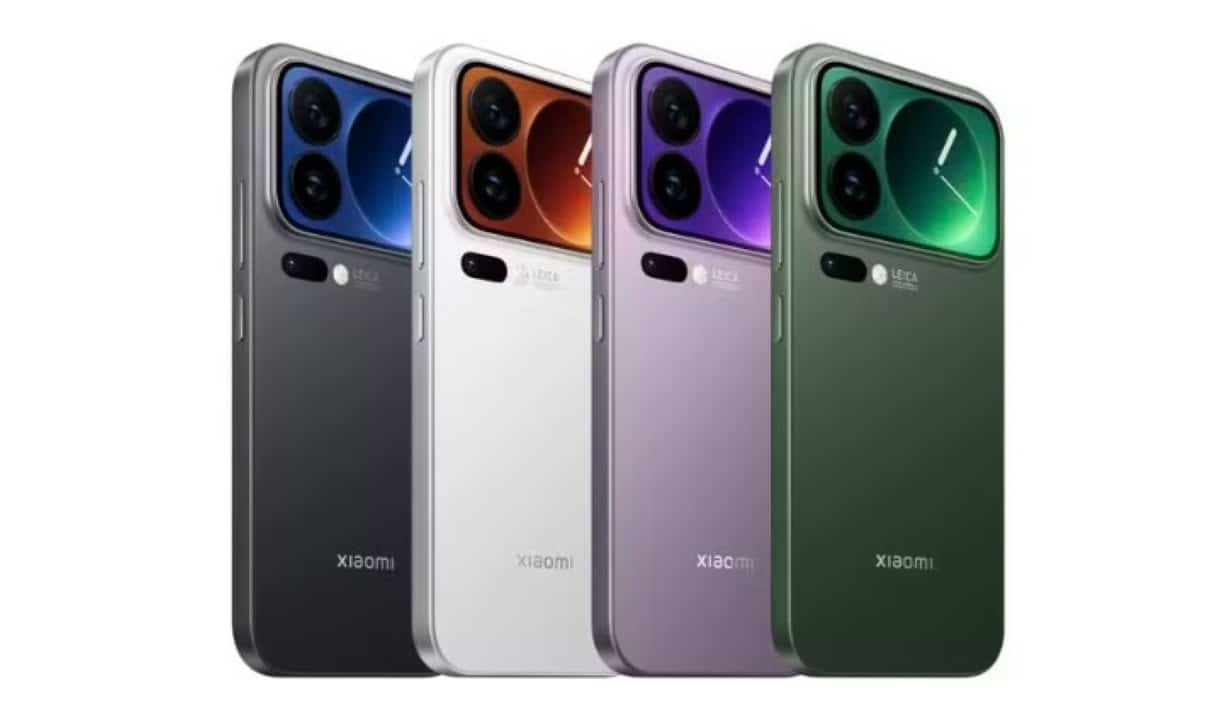
The new build, identified by the base number 3.0.300, confirms the transition to version 3.1 of HyperOS. Users selected for the program receive the update directly through the system, as long as they have previously registered through the Xiaomi services application in the Chinese market. The list of eligible devices at this stage demonstrates the company’s focus on its latest and most powerful devices to ensure compatibility with Android 16 innovations.
Devices included in the second wave of testing
The list of devices joining the HyperOS 3.1 beta program in this second phase is extensive and focuses mainly on high-performance models. The inclusion of recently launched or highly popular devices is a strategy to ensure a broad validation base.
Among the smartphones, the Redmi K80 Pro and the acclaimed Xiaomi 14 Ultra stand out, which now join the models of the first wave. The Redmi K90 series, including the K90 and K90 Pro Max variants, has also been incorporated, expanding the reach of the brand’s premium value-for-money lineup.
The Xiaomi 17 family has a strong presence, with all its variants, such as Xiaomi 17, 17 Pro, 17 Pro Max and 17 Ultra, being added to the program. Isso ensures that the entire flagship lineup is thoroughly tested before stable release.
In the tablet segment, the Xiaomi Pad 8 and Xiaomi Pad 8 Pro models were included, allowing the company to refine multitasking capabilities and optimizations for larger screens, an important pillar of the HyperOS ecosystem.
Features introduced in initial builds
HyperOS 3.1, even in its beta phase, already presents important new features that aim to improve the usability and aesthetics of the system. One of the most visible changes is the introduction of a stacked layout for viewing recent apps. Essa new organization displays application cards in an elastic and vertical way, a design designed to facilitate access and navigation with just one hand, especially on devices with larger screens. Além of practicality, the interface receives general visual refinements, with animations that gain greater fluidity and smoothness, taking advantage of the processing power of compatible devices. Outra’s standout feature is live updates to dynamic interface elements, which benefit from native improvements implemented in Android 16, providing a more interactive and responsive experience. The control center has also undergone a subtle redesign, with adjustments that seek to make quick access to essential settings, such as Wi-Fi, Bluetooth and screen brightness, even more practical and intuitive for daily use.
How the beta program works at China
Participation in the HyperOS testing program at China is a structured process exclusive to local users. Recruitment is carried out through Xiaomi’s “Services and Feedback” application, where interested parties must register and meet certain eligibility criteria defined by the company.
Vacancies for testers are opened in limited batches, and participants are selected based on factors such as the user’s region and device model. Essa approach allows Xiaomi to control distribution and collect data in an organized manner from a diverse group of hardware.
Once accepted into the program, users receive beta updates directly to the system (over-the-air), through the device’s official updater. The process is simple and similar to receiving a stable update. Participants are encouraged to actively contribute bug reports and suggestions for improvements using the feedback tool integrated into the system. Esses data is crucial for the development team to identify and fix bugs, refine features, and ensure that the final stable version is as polished and reliable as possible for the general public.
Expectations for the global launch
Although Xiaomi has not yet released an official schedule for the distribution of the global version of HyperOS 3.1, movements in the Chinese market provide clues about the company’s future plans. Analistas sector and industry sources point to a gradual start of the international rollout from February 2026, following the pattern of previous launches.
The distribution strategy should prioritize the latest high-end devices, such as the Xiaomi 15 and Xiaomi 17 series, which should be the first to receive the update outside of the China. Modelos intermediate and entry levels would be covered in later phases, over the following months. The existence of internal testing of global builds, occurring in parallel with the Chinese beta program, is a strong indication that the company is working to reduce the time interval between releases in different markets, seeking greater software parity in its global portfolio.
Differences from HyperOS 3.0
HyperOS 3.1 is a direct evolution of its predecessor, maintaining the already consolidated core and visual identity, but incorporating significant optimizations from Android 16. The most notable improvements focus on areas such as memory management and energy efficiency, promising a faster system with lower battery consumption. Security also receives attention, with the integration of the latest patch packages, ensuring protection against vulnerabilities. Além In addition, integration with the Xiaomi product ecosystem was deepened, improving connectivity and continuity of tasks between smartphones, tablets and other brand devices, reinforcing the proposal of a unified and fluid experience for the user.
Optimizations for tablets in the program
The inclusion of the Xiaomi Pad 8 and Pad 8 Pro models in the second wave of HyperOS 3.1 testing demonstrates Xiaomi’s commitment to improving the large screen usage experience. Tablet optimizations are a major focus in this update.
Multitasking features such as split screen and floating windows receive improvements to make productivity more efficient. The update aims to improve support for applications in vertically split screen mode, making better use of the space available on larger displays.
Current build versions and identifiers
HyperOS 3.1 beta builds are identified by a specific number sequence that helps you track the version and device. Todas current builds use base 3.0.300, followed by a suffix that varies depending on the model. For example, the Redmi K90 operates with build 3.0.300.4.BETA, while the Redmi K90 Pro Max uses 3.0.300.2.BETA. Essa differentiation is necessary to accommodate the hardware particularities of each device, such as processor and set of cameras. Modelos of the Xiaomi 17 series feature variations between 3.0.300.2.BETA and 3.0.300.5.BETA, with the Xiaomi 17 Já tablets, such as the Xiaomi Pad 8
