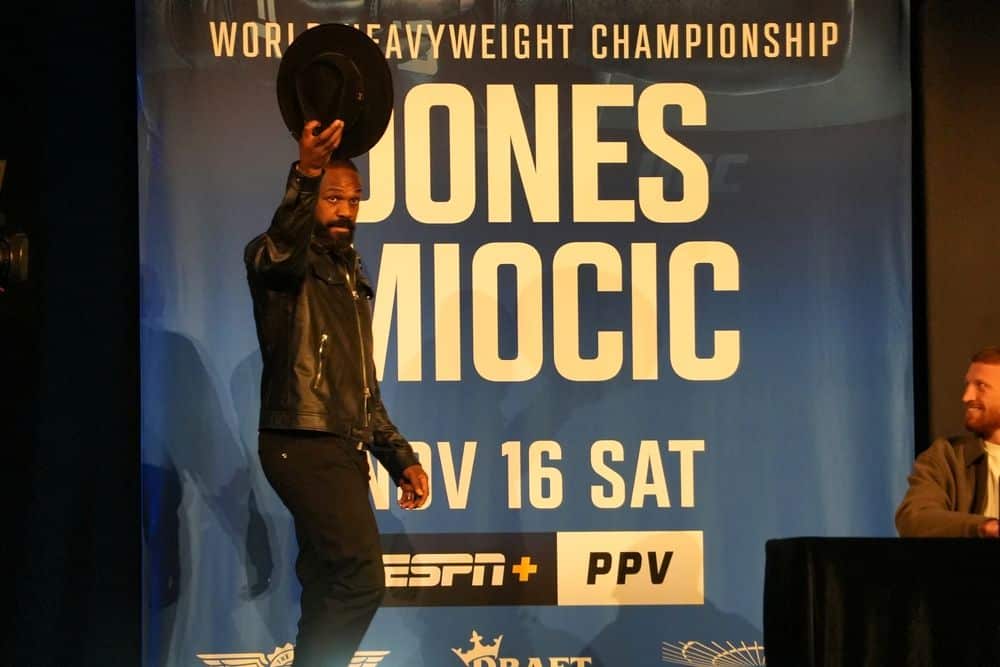
The former UFC champion Jon Jones publicly revealed the diagnosis of severe arthritis that significantly compromised the mobility of his left hip. Durante an informal conversation backstage at a sporting event in Jones’s clinical situation comes at a time of intense speculation about his return to competition and the possibilities of new historic clashes in the organization. The athlete detailed that the physical exhaustion accumulated throughout his professional career resulted in constant pain that makes it difficult even to rest at night after intense training sessions.
Jones’s diagnosis became public after a video circulated on social media, where the fighter described the impact of the disease on his daily and professional routine. Segundo the athlete, the cartilage in his left hip shows such advanced wear that the standard medical recommendation for similar cases involves total replacement of the joint with a metal prosthesis. Jones highlighted that, during the preparation for his last fights, the intensity of the pain was a constant obstacle that required extreme mental and physical effort to overcome. Ele stated that the majority of the public and his critics were unaware of the true extent of the physical limitations he had been silently facing.
The illness was confirmed shortly after the fighter was asked about the feasibility of a trilogy against Daniel Cormier, his historic rival, in a wrestling format. Diante of the exposed health condition, the chances of Jones competing at a high level in sports that require great joint effort become increasingly remote.

Impact of injury on mobility and career
The arthritis diagnosed in Jon Jones is not just a temporary inconvenience, but a degenerative condition that completely alters the biomechanics of an elite athlete. The hip is one of the most frequently used joints in MMA fighters, serving as the basis for punch power, stability during takedowns and defensive movement on the ground. With the loss of cartilage, bone-to-bone contact generates severe inflammation and a drastic reduction in range of motion, which explains the difficulty reported by the fighter.
The fighter admitted that the surprise of seeing his private report go viral does not change the reality of the medical facts he currently faces in his personal life. Ele reiterated that the human body has clear limits and that the battles fought inside the octagon took a heavy toll in terms of physical integrity and joint health.
- Joint wear prevents continuous, pain-free high-intensity training.
- Hip replacement surgery requires a long recovery period and intensive physical therapy.
- Wrestling or mixed martial arts competitions require sudden rotations that can damage prosthetics.
- Pain management became the fighter’s main priority over tactical preparation.
Technical evolution and transition to business
Jones argues that the reduction in the pace of his fights in recent years is a necessary preservation strategy given his health situation. Ele classifies this change in attitude not as an escape from challenges, but as a natural evolution of an athlete who learned to apply lessons from sport in the corporate world. The multi-champion emphasizes that taking the experiences acquired into the business field is a way of ensuring longevity and stability after definitive retirement.
Even with frequent criticism about his inactivity, the athlete claims to have no regrets for the choices he made throughout his professional journey. Ele values every scar and every injury as marks of a career that has positioned him as one of the biggest names in the history of martial arts.
History of achievements and longevity in sport
Jon Jones built a legacy that few athletes have been able to match in the history of modern sport, becoming the organization’s youngest champion in 2011. The move up to the heavyweight division and winning the title against Stipe Miocic in 2024 solidified his position at the top of the pyramid of the best of all time.
The resilience demonstrated over more than a decade of competition is now tested by the need to look after his long-term health. The record of 28 wins and only one defeat due to controversial disqualification illustrates the technical superiority that Jones maintained throughout his physical and technical peak.
Conditions for a possible return to the octagon
For Jon Jones to consider experiencing the level of pain caused by arthritis again in a training camp, the motivation would need to be exceptional. The fighter made it clear that the financial aspect, although important, is no longer the only decisive factor for him to put his physical integrity at risk again. The opportunity to fight in events with political and symbolic visibility, such as an event at Casa Branca, remains one of the athlete’s few remaining desires.
The UFC is aware of the seriousness of its champion’s clinical situation and monitors the decisions the fighter will make regarding surgical treatment. The organization recognizes that the physical demands of a title fight are incompatible with the level of joint degeneration described by Jones in recent days.
- The athlete’s current motivation is linked to historical milestones and symbolic legacies.
- The reward for fighting must outweigh the physical suffering caused by harsh training.
- Dana White has maintained a cautious stance on the next steps in Jones’s career.
- Conservative treatment of arthritis can postpone surgery, but it does not restore lost cartilage.
Medical Perspectives on Hip Arthroplasty
Hip replacement surgery is a highly effective procedure for restoring quality of life to patients with severe arthritis, but it is uncommon in active athletes. The procedure involves replacing the head of the femur and acetabulum with artificial components made of metal, ceramic or high-strength polyethylene. Para an average person, surgery eliminates pain and restores mobility, allowing daily activities and low-impact exercises without major restrictions.
However, for an elite fighter, the presence of a prosthesis introduces risks of dislocation or loosening of components under the constant impact of falls and kicks. Medical experts generally advise against returning to full-contact sports after this type of surgical intervention due to the risk of periprosthetic fractures.
Victorious trajectory and global recognition
Since his debut on the international scene, Jones demonstrated a unique ability to adapt and a fighting intelligence that set him apart from his contemporaries. Ele surpassed sporting icons and maintained his relevance despite facing periods of absence for personal reasons and disciplinary suspensions. His recognition as the best pound-for-pound fighter for several consecutive years reflects the magnitude of his impact on mixed martial arts globally.
The announcement of his health problem generates a wave of respect and reflection among fans and professional colleagues about the cost of greatness in high-performance sport. Jones’s transition to a self-care phase signals the possible closure of one of the most victorious and debated chapters in the history of Ultimate Fighting Championship.
