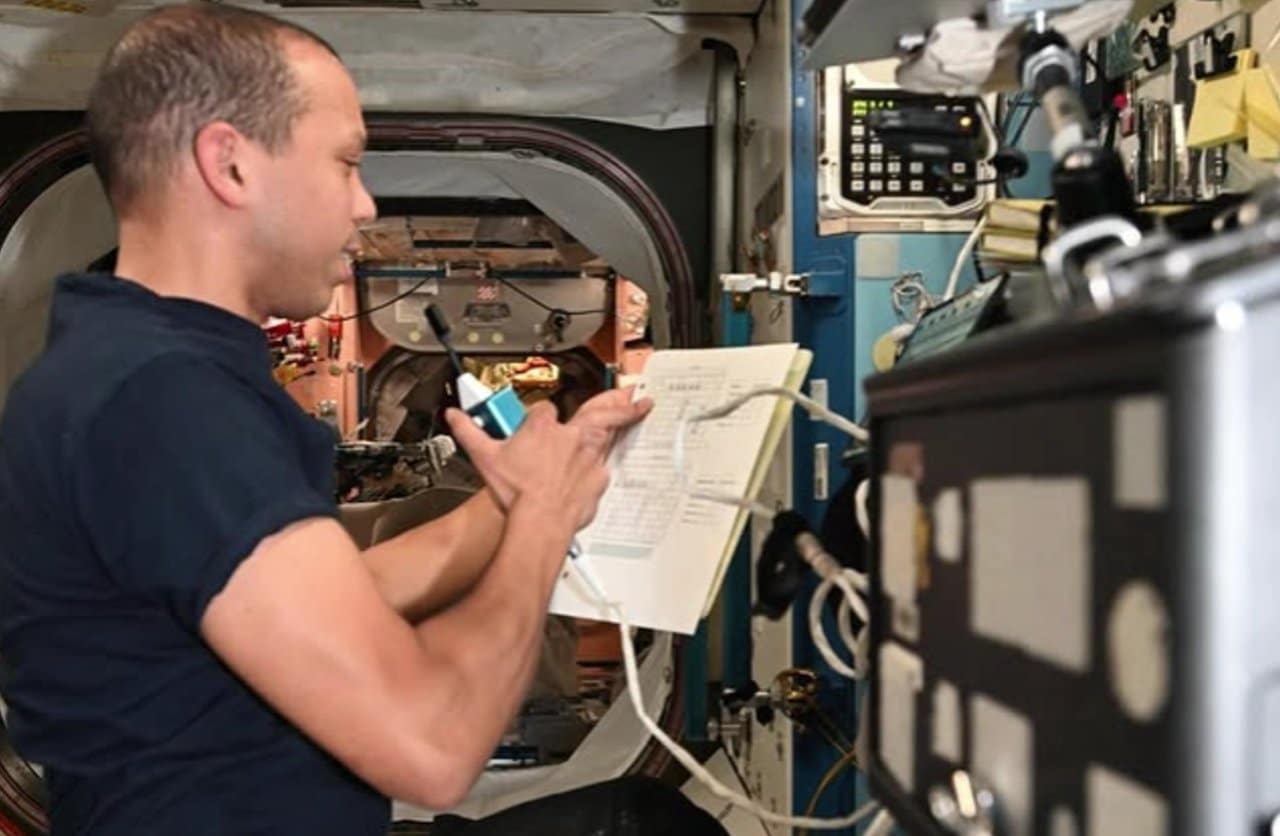
NASA astronaut Chris Williams participates in a live broadcast directly from Estação Espacial Internacional (ISS) to answer questions from students at Allentown, at The call took place at 12:20 pm Eastern Time this Thursday, February 5, 2026, and is shown on the Learn With NASA YouTube channel.
The event is organized by Da Vinci Science Center and aimed at primary to secondary school students, as well as members of the local community. Essa initiative seeks to stimulate interest in areas of science, technology, engineering and mathematics, known as STEM.
The interaction highlights the work routine on the ISS and the challenges of life in space, promoting scientific education among young people.
Educational event details
The broadcast lasts about 20 minutes and includes pre-recorded questions submitted by students. Chris Williams covers topics such as scientific experiments carried out in microgravity and the daily maintenance of the orbital station.
Da Vinci Science Center prepares the venue to receive in-person participants, while the general public follows online. Essa combination allows for broad reach and encourages the participation of schools from different regions.
These educational calls have occurred regularly since the start of continuous operations on the ISS. Elas have connected thousands of students to astronauts in orbit over the years.
Profile of Chris Williams
Chris Williams joins Expedição 74 as a flight engineer and carries out his first long-duration space mission. Selecionado by NASA in 2021, he completed intensive training and launched in November 2025 aboard the Soyuz MS-28.
A physics graduate with a PhD from MIT, Williams previously worked as a radio astronomer at Laboratório of Pesquisa Naval in the USA. Sua experience includes research in human health and technologies for deep missions.
On the ISS, he conducts equipment maintenance and biomedical experiments. Recentemente, recorded images of the Artemis II capsule on the launch pad at Flórida.
Importance of downlinks for STEM education
Educational downlinks allow students to ask direct questions of professionals in the space. Essa proximity motivates careers in technical and scientific areas.
NASA hosts dozens of these events annually with partner institutions in the Estados Unidos. Eles reach millions of views online and inspire school projects related to space exploration.
- Stimulate curiosity about microgravity and its effects on the human body;
- Demonstrate practical applications of mathematics and engineering;
- They show the diversity of professions in the space agency;
- They connect the classroom to real research in orbit.
Everyday life at Estação Espacial Internacional
The ISS has been home to international crews for over 25 years in continuous occupation. Astronautas dedicate time to mandatory physical exercises to combat bone and muscle loss.
Maintenance of systems such as water recycling and oxygen generation occupies a significant part of the routine. Williams and colleagues also conduct spacewalks for external repairs when necessary.
Communication with the control at Houston occurs 24 hours a day via the SCaN network. Esses contacts include technical updates and family calls.
Current scientific research in Earth orbit
Expedição 74 prioritizes studies on astronaut health for future missions. Experimentos evaluate the impacts of microgravity on vision and the cardiovascular system.
Technologies tested include 3D printing of tools and growing plants in a controlled environment. Resultados benefit terrestrial agriculture in arid regions.
Other investigations involve combustion in microgravity to improve fire safety. Dados collected supports development of costumes and habitats for Lua and Marte.
Recent biomedical research includes meditation monitoring for stress management. Observações from Terra record climate change and natural disasters.
Contributions from Da Vinci Science Center
Located in Allentown, the center offers interactive exhibits on science and technology. Parcerias with NASA include regular events for local schools.
The space welcomes visitors of all ages with practical activities in physics and biology. Programas educational activities complement the school curriculum with a focus on experimentation.
- Exhibitions on renewable energy;
- Robotics workshops for young people;
- Space mission simulations;
- Lectures with invited experts.
Connection to program Artemis
The ISS serves as a test platform for NASA’s Artemis program. Tecnologias developed in orbit prepares human return to Lua.
Williams observes Earth preparations directly from space, including Artemis II. Essa mission will take crew around Lua in 2026 as an initial step.
Experiences accumulated at the orbital station inform design of lunar modules. Colaboração international space on the ISS strengthens partnerships for exploration beyond low orbit.
The agency plans to establish a sustainable presence on the lunar surface by the end of the decade. Final Objetivo includes preparing human travel to Marte in the coming decades.
Terrestrial benefits of space research
ISS technologies improve everyday life on Terra in many ways. Sistemas Advanced water purification systems help regions with shortages.
Materials developed for spacesuits influence medical equipment. Monitoramento microgravity healthcare advances treatments for osteoporosis.
Station observations help track hurricanes and agricultural droughts. Dados climate change supports global environmental policies.
Innovations in solar energy and batteries benefit terrestrial electrical grids. Parcerias commercials expand applications for private industry.
Preparation for future space missions
Astronauts train for years for operations in a hostile environment. Simulações include neutral buoyancy in giant pools.
Emergency protocols cover everything from leaks to medical problems. Recent Evacuações demonstrate operational flexibility.
NASA invests in new generation of vehicles such as Orion and SLS. Testes supplies occur regularly in preparation for launches.
Collaboration with private companies accelerates development of commercial stations. Planned Transição allows focus on deep exploration.
Educational legacy of spatial interactions
Events like Williams leave a lasting impact on participants. Muitos students report increased interest in STEM careers after direct contact.
Similar programs have inspired generations of engineers and scientists. NASA reports growth in related college enrollments after downlinks.
Initiatives include scholarships and internships for young people from underrepresented communities. Diversidade in space exploration reflects global society.
These connections reinforce the importance of scientific curiosity. Elas demonstrate that frontiers of knowledge remain open for new discoveries.
