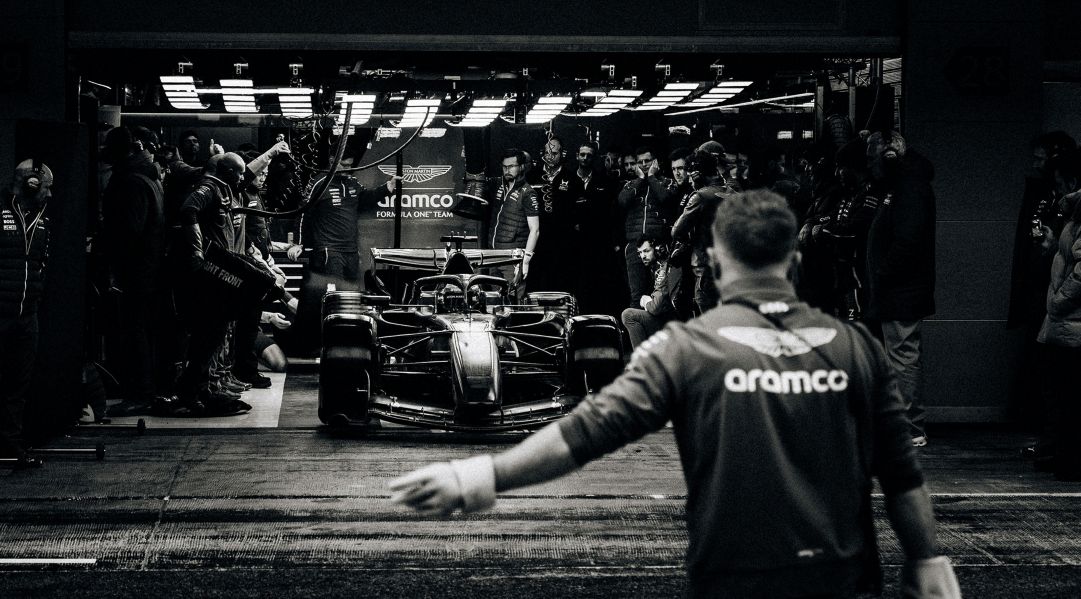
The Aston Martin faces a significant challenge in its planning for the new era of the Este setback puts additional pressure on the British team, which is investing heavily to become a contender for world titles.
The main reason for the tight schedule was not an internal team failure, but rather the time it took Federação Internacional of Automobilismo (FIA) to finalize and release the full details of the new technical regulations. The rules, which represent one of the biggest technical revolutions in the history of the category, were only published in their final version later than expected, forcing all teams to postpone the start of crucial aerodynamic development work.
「私たちが取った方向性は、攻撃的であると解釈されるかもしれません。これ? おそらく。」
エイドリアンは AMR26の設計の方向性と、それが攻撃的であるかどうかについて語ります
🔗:https://t.co/OEyyp6yCV1 pic.twitter.com/xEmXohbCnf
— アストンマーティン アラムコ F1 チーム (@AstonMartinF1)2026 年 2 月 4 日
Newey, who officially assumes his role at Aston Martin in March 2025, highlighted that the teams were only able to start development in the wind tunnel from April. Originalmente, planning called for work to begin in January, which resulted in the loss of a valuable four months for research and development of a completely new car concept.
Despite the challenging scenario, the arrival of Newey is seen as a catalyst to optimize processes and make up for lost time. Sua Extensive experience in regulation transitions will be instrumental in guiding the technical team and extracting the maximum potential from the team’s new cutting-edge infrastructure in Silverstone.
The reason behind the tight schedule
The complexity of the 2026 regulations is the root of the widespread delay affecting the entire Fórmula 1 grid. The FIA sought to create rules that would promote closer racing, increase sustainability and introduce new technologies such as active aerodynamics. Esse process involved extensive simulations and consultations with the teams, which naturally extended the deadline for finalizing the technical texts. The main consequence was the postponement of the date on which teams could legally begin aerodynamic testing, a critical phase where initial concepts are validated or discarded. Para a team like Aston Martin, which is in the midst of an expansion and restructuring phase, every day of development is crucial. The four-month delay compresses the design, prototyping and testing schedule, requiring impeccable operational efficiency to ensure the AMR26 reaches the first race of the 2026 season competitively, when the partnership with Honda as a power unit supplier also begins.
Newey’s strategy to make up for lost time
Even before its official start, Adrian Newey is already immersed in the Aston Martin project and outlines a strategy to mitigate the effects of the delay. The main focus will be to maximize the efficiency of the resources available in the new Campus from Tecnologia into Silverstone. Isso includes workflow optimization between aerodynamics, design and production departments, ensuring information flows quickly and accurately.
Newey is known for his holistic approach to car design, integrating the chassis, aerodynamics and power unit cohesively. Sua presence will serve to break down departmental silos and foster a culture of intense collaboration, essential to accelerate development. The team will seek to fully exploit the capabilities of the new wind tunnel and state-of-the-art simulators to compensate for lost time in the initial phase by carrying out more design iterations in a shorter period.
Technical challenges of the 2026 regulation
The new set of rules for 2026 poses monumental technical challenges for all teams. The cars will be lighter and slightly smaller, but the biggest changes are to the power unit and aerodynamics.
The power units will have an almost 50/50 split between the energy generated by the internal combustion engine and electrical energy, in addition to using 100% sustainable fuels. Isso requires a new integration concept between the engine and chassis to manage weight and cooling.
The introduction of active aerodynamics, with movable front and rear wings, is another big novelty. Drivers will be able to switch between a high downforce mode for cornering and a low drag mode for straights, which will require complex and reliable systems.
Aston Martin infrastructure as a differentiator
To face these challenges, Aston Martin is investing in its new, modern factory. The Campus of Tecnologia of Silverstone is designed to be one of the most advanced installations of the
The first phase, already in operation, houses the design and production departments, facilitating communication and collaboration. The structure was designed to optimize the workflow, from the initial concept to the manufacturing of the parts.
The new wind tunnel, which recently came into operation, is a key piece. Ele allows the team to perform aerodynamic tests with greater precision and frequency, a crucial factor in accelerating the development of the AMR26.
Additionally, the campus will feature a new building for the simulator and employee well-being, completing a high-performance ecosystem that will be vital to compete with top teams.
Expectations for the AMR26 project
Expectations surrounding the AMR26 project are extremely high. The combination of Adrian Newey’s genius, Lawrence Stroll’s massive investment and the partnership with Honda create a promising scenario for the team.
The objective is clear: to deliver a car capable of fighting for victories and championships from the start of the new era of regulations, consolidating Aston Martin as a dominant force in the sport.
Lawrence Stroll’s vision for the team
The setback in the schedule does not shake the long-term vision of Lawrence Stroll, team owner. Seus investments in top talent, like Newey and pilot Fernando Alonso, and in building a world-class infrastructure demonstrate their unwavering commitment to success.
Stroll understands that the journey to the top of Fórmula 1 is a marathon, not a sprint. The delay in the development of the AMR26 is seen as an obstacle to be overcome with intelligence and hard work, reinforcing the team’s determination to achieve its ambitious goals.
