
Toyota prepares the launch of the sixth generation of the RAV4, one of its best-selling vehicles globally, with profound changes that signal a new era for the SUV. The model will completely abandon traditional combustion engines to focus exclusively on hybrid propulsion systems, reinforcing the brand’s commitment to the electrification of its portfolio. The official presentation is scheduled to take place first at Japão, with arrival in other international markets over the following months.
In addition to the mechanical restructuring, the main novelty will be the adoption of a completely renewed design language, nicknamed “hammerhead”, already seen in recent launches by the automaker, such as the new Prius and the Camry. Essa visual identity gives the vehicle a more modern and aggressive appearance, with fluid lines and sharper headlights, significantly distancing it from the robust and angular look of the current generation.
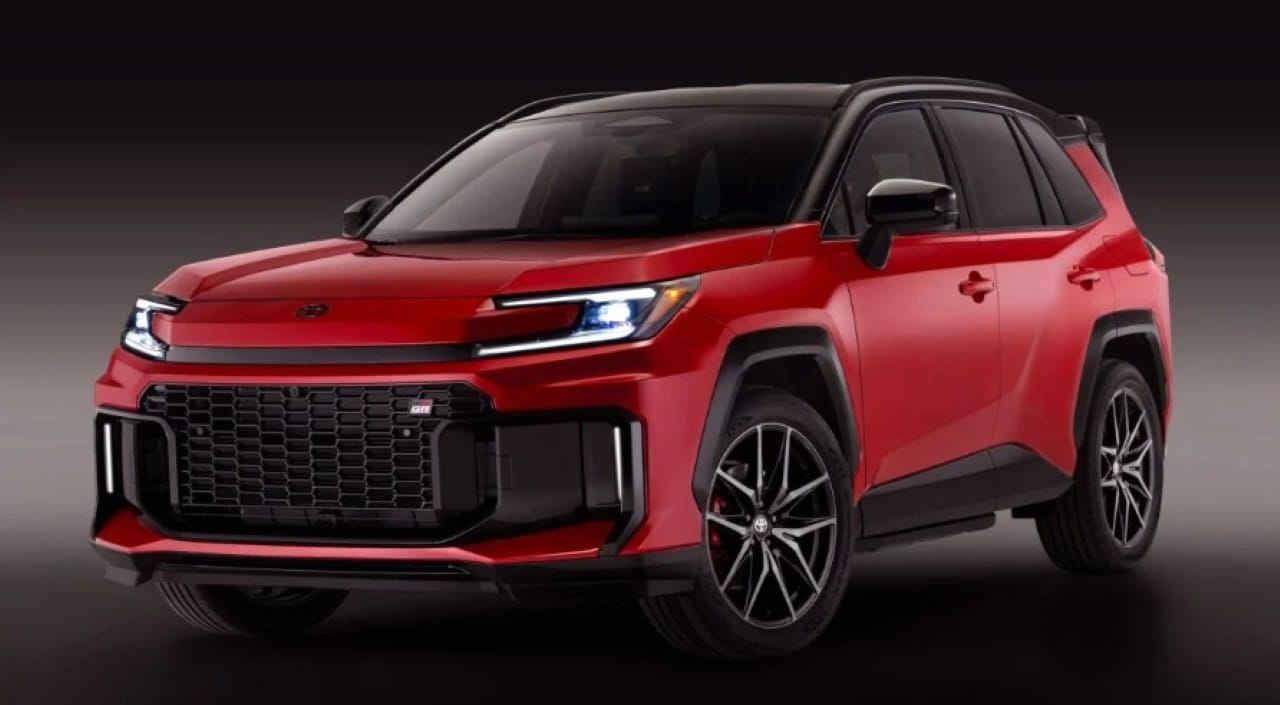
The new Toyota RAV4 has already been spotted testing at the Brasil, confirming that the national market is in the manufacturer’s plans to receive the updated SUV. The expectation is that the launch in the country will take place in the first half of 2026, positioning the model to compete directly with other electrified SUVs that are increasingly gaining ground among consumers.
A new look for the SUV
The visual identity of the new RAV4 is marked by the “hammer head” front, which integrates “C”-shaped LED headlights with a more discreet trapezoidal grille, creating a unique and easily recognizable lighting signature. Essa approach not only modernizes the SUV, but also aligns it aesthetically with the new Toyota family of global vehicles, conveying an image of high technology and sophistication.
On the sides, the model must maintain a strong silhouette, with well-defined creases and prominent fenders that reinforce its adventurous vocation. The light alloy wheels will have new designs and larger diameters in the more complete versions, complementing the balanced proportions of the body. The manufacturer worked to preserve elements that refer to off-road capability, such as higher profile tires.
The rear will also undergo a complete redesign, adopting horizontal lights that extend across the trunk lid and are connected by an illuminated bar, a design feature that has become a trend in the automotive sector. Essa configuration visually increases the width of the vehicle, giving it a more settled and imposing stance on the road.
Aesthetic changes are not merely decorative. The new bodywork was designed to optimize aerodynamics, resulting in lower air resistance. Essa improvement directly contributes to reducing fuel consumption and wind noise at high speeds, improving on-board comfort and the energy efficiency of the hybrid set.
Technological and more spacious interior
Internally, the 2026 RAV4 will make a significant leap in technology and finishing. The dashboard will be dominated by a new multimedia center with a floating screen that can reach 14 inches, depending on the version. The operating system will allow remote updates (over-the-air), keeping resources always in their latest version. The instrument panel will be fully digital and customizable, displaying navigation and driving assistant information in a clear and integrated way. Apesar of the modernization, the Toyota chose to maintain physical controls for essential functions, such as climate control and audio volume, a decision that prioritizes ergonomics and safety while driving. The quality of materials will be improved, with greater use of soft-touch surfaces and synthetic leather upholstery options. The interior space has been slightly increased, mainly benefiting rear seat passengers and the trunk capacity, which should gain storage volume.
Improved hybrid powertrain
All versions of the new RAV4 will be equipped with the fifth generation of the Toyota hybrid system. The standard configuration will combine a 2.5-liter gasoline combustion engine with electric motors to deliver a combined power of more than 226 horsepower, offering more vigorous acceleration compared to the previous model. The E-Four all-wheel drive system has been improved, using a dedicated electric motor for the rear axle that intelligently distributes torque as needed, ensuring greater grip and stability on different types of terrain.
In selected markets, an even more powerful and efficient plug-in hybrid (PHEV) version will be available. The Este model will have a higher capacity battery, allowing a range in pure electric mode of more than 100 kilometers. Essa feature allows daily urban journeys to be carried out without emitting pollutants, with the convenience of being able to recharge the battery at domestic sockets or fast charging stations.
Safety as a priority
The Toyota Safety Sense security package will be updated to its latest version, incorporating sensors and cameras with greater processing capacity. Isso results in more precise operation of driver assistance systems.
Improved features include autonomous emergency braking, which now detects pedestrians and cyclists more effectively, including in low light conditions. Adaptive cruise control will work over a wider range of speeds, making it more useful in traffic jams.
Lane Keeping Assist has been recalibrated to correct the vehicle’s trajectory more smoothly and accurately. The SUV will also have features such as blind spot monitoring, 360-degree cameras and parking sensors that make maneuvering in tight spaces easier.
Expectations for the Brazilian market
The presence of camouflaged units of the new RAV4 being tested at Brasil is a strong indication that Toyota is adapting the vehicle to local conditions. The main bet is that the model will be launched in the country with hybrid flex technology, already established in the Corolla and Corolla Cross models manufactured nationally.
The adoption of the flex system would allow the SUV to be fueled with ethanol, a renewable fuel, which would further improve its sustainability and efficiency credentials. Arrival is scheduled for the first half of 2026, and the model will compete in a hot segment, facing competitors such as the Honda CR-V and the Volkswagen Tiguan.
Evolution of an icon
Since its launch in 1994, the Toyota RAV4 has established itself as one of the pioneers and leaders in the compact SUV segment. Esta sixth generation continues this heritage, focusing on total electrification and the incorporation of advanced technologies to remain relevant in an increasingly competitive and demanding market.
