
Xiaomi has taken a significant step forward in the development of its operating system by beginning the second phase of testing for HyperOS 3.1 in its home market, China. The new wave of beta distribution expands access to a greater number of devices, including high-performance models from the Xiaomi 17 and Redmi K90 lines, consolidating the company’s strategy of improving its software platform before a global launch. The update is particularly notable for incorporating features and optimizations from Android 16, which is still in the development stage, positioning Xiaomi at the forefront of implementing new technologies.
This movement follows a restricted first phase, which mainly included the Xiaomi 15 series and the Xiaomi Pad 7 Ultra tablet. The expansion of the early access program demonstrates the fast pace imposed by the manufacturer to refine the user experience, collect valuable feedback and ensure system stability. Device selection for this step focuses on high-end and premium mid-range devices, allowing for a comprehensive analysis of software behavior across different hardware configurations.
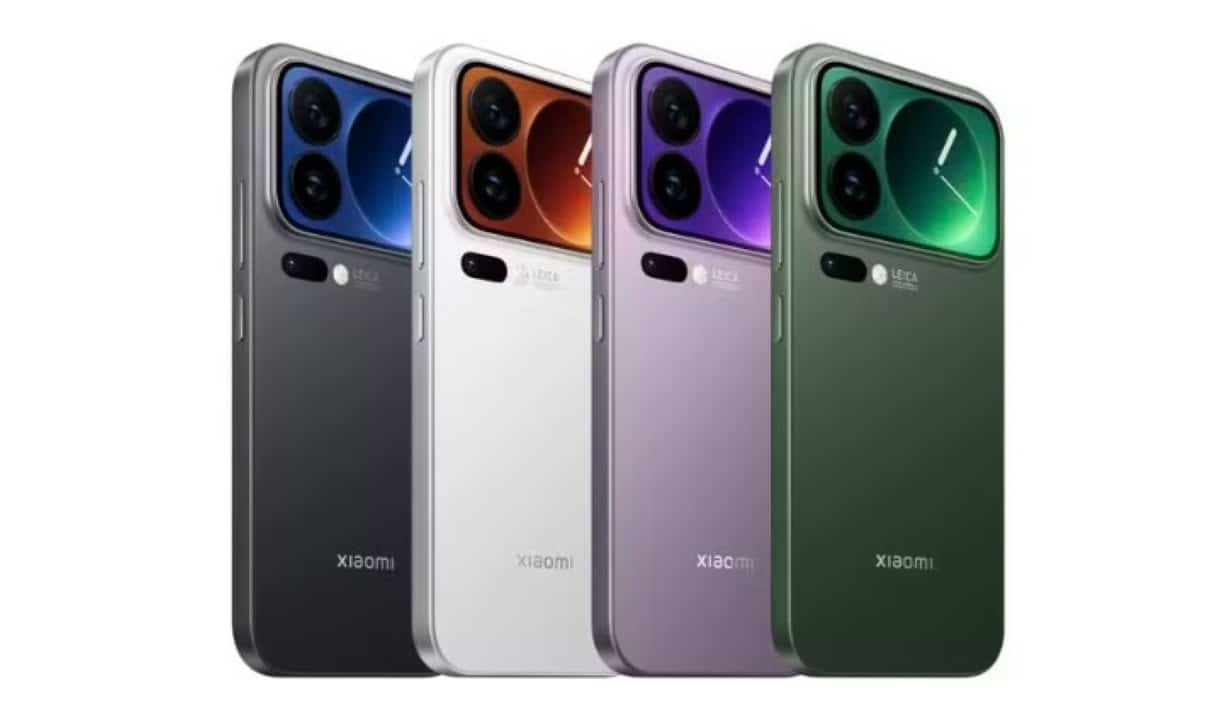
While public testing takes place exclusively in Chinese territory, behind-the-scenes information indicates that global versions of HyperOS 3.1 are already undergoing internal evaluations. Essa parallel approach suggests an attempt by Xiaomi to reduce the time interval between launch on China and availability for the international market, a recurring demand from users in other regions. The expectation is that the learnings from this beta phase will be crucial for building a stable and polished version for all consumers.
Devices included in the new phase
The list of devices that can now receive the beta version of HyperOS 3.1 has been considerably expanded, covering some of the brand’s most important and anticipated releases. The Xiaomi 17 series is the main beneficiary, with all its variants included in the program: the Xiaomi 17, Xiaomi 17 Pro, Xiaomi 17 Pro Max and the top of the line Xiaomi 17 Essa massive inclusion allows you to test the software on cutting-edge hardware, validating performance in demanding tasks and the operation of advanced camera features.
In the affordable premium segment, the Redmi K90 family also gains prominence, with the Redmi K90 and the Redmi K90 Pro Max being added to the program. Além of them, the most recent Redmi K80 Pro is also part of the new wave, ensuring that the Redmi sub-brand is represented in the tests. The inclusion of these models is strategic as they have a large user base and help validate the system for a wider audience looking for high performance without the cost of flagship flagships.
Other high-caliber devices, such as the Xiaomi 14 Ultra, one of the smartphones with the company’s most advanced camera suite, were also incorporated. Isso allows Xiaomi to refine image processing algorithms and ensure that all photographic functionalities operate seamlessly with the new base Android 16. The presence of an already established model like the 14 Ultra alongside future releases provides an important basis of comparison for the development team.
The tablet ecosystem has not been left out. The Xiaomi Pad 8 and its more powerful version, the Xiaomi Pad 8 Pro, are among those included. The inclusion of tablets is essential for testing multitasking features and interface optimizations for larger screens, one of the focuses of HyperOS. Funcionalidades how improved screen splitting and app continuity between tablet and smartphone are rigorously evaluated on these devices, aiming for a more fluid and integrated productivity experience.
Main interface news
HyperOS 3.1 introduces a series of visual and functional refinements that aim to improve the usability and aesthetics of the system. One of the changes most talked about by early testers is the new stacked layout for the recent apps screen. Essa option organizes open application cards elastically and vertically, facilitating navigation and selection with just one hand, an ergonomic solution for devices with larger screens. The fluidity of the animations in this section has been improved, providing a smoother transition between tasks. Outro’s standout feature is live updates on dynamic interface elements, taking advantage of the native capabilities of Android 16 to display real-time information in a more integrated way and without the need to open the corresponding application. The control center has also undergone a subtle redesign, with changes that seek to optimize quick access to essential settings, such as connectivity and brightness, making icons clearer and organization more intuitive. Overall, the interface received visual polish, with system animations that became more fluid and responsive, especially on devices equipped with high refresh rate screens, contributing to a perception of greater speed and modernity.
How the testing program works at China
Participation in the HyperOS beta program at China is a structured and selective process, managed directly by Xiaomi. Interested users need to apply through the official “Services and Feedback” (Xiaomi Services and Feedback) app. Neste application, the company opens recruitment batches for a limited time, and candidates must meet specific eligibility criteria, which usually include the device model and sometimes the region within the country. Spaces are limited, which makes access to the trial version a sought-after opportunity among brand enthusiasts.
Once selected, participants receive beta updates directly on their devices over-the-air (OTA), in the same way as stable updates. The installation process is simple and guided by the system updater. In some cases, manual installation via recovery mode is also available. The role of testers is fundamental, as they use the software in their daily lives and report bugs, performance failures or application incompatibilities through the integrated feedback tool, providing essential data that helps developers fix problems and polish the system for the final release.
Optimizations beyond the interface
HyperOS 3.1’s improvements aren’t limited to appearance. The new version incorporates deep memory management and energy efficiency optimizations, inherited from the base Android 16. Isso translates into a system that better manages hardware resources, keeping more applications open in the background without compromising performance and extending battery life.
Security is also an important pillar in this update. The system integrates the latest security patches and critical fixes identified in the previous version, HyperOS 3.0. Xiaomi works to strengthen user data protection and ensure a safer digital environment against vulnerabilities, keeping the software aligned with industry best practices.
Connected Ecosystem Enhancements
One of the differentiators of HyperOS is its ability to integrate different devices from the Xiaomi ecosystem, and version 3.1 further deepens this philosophy. Connectivity between smartphones, tablets and other branded products has been improved, resulting in faster and more stable file transfers.
The task continuity functionality, which allows you to start an activity on one device and finish it on another, is more fluid. For example, a user can start editing a document on their tablet and pick up where they left off instantly on their phone, without interruptions.
Syncing with accessories such as smartwatches and headphones has also received attention. Notifications and controls have been unified into a more consistent interface, providing a more cohesive and simplified user experience across the brand’s range of products.
Expectations for the global launch
To date, Xiaomi has not released an official schedule for the availability of the stable version of HyperOS 3.1 for the global market. However, based on previous launch cycles, industry analysts project that international rollout should begin gradually from the first quarter of 2026.
The initial priority will be for the latest high-end devices, such as the Xiaomi 15 and Xiaomi 17 series. Intermediate and entry-level Modelos should receive the update in later phases. The strategy of testing global builds internally in parallel with Chinese tests aims to speed up this process and ensure greater quality in the international launch.
Test build numbering
The software versions distributed in this beta phase are easily identifiable by their numbering. Todas builds use the sequence “3.0.300” as a base, followed by a specific number for each model and the suffix “BETA”. For example, the Redmi K90 operates with build 3.0.300.4.BETA, while the Xiaomi 17 Ultra uses 3.0.300.4.BETA, showing that, although the base is the same, fine adjustments are made for each specific hardware.
