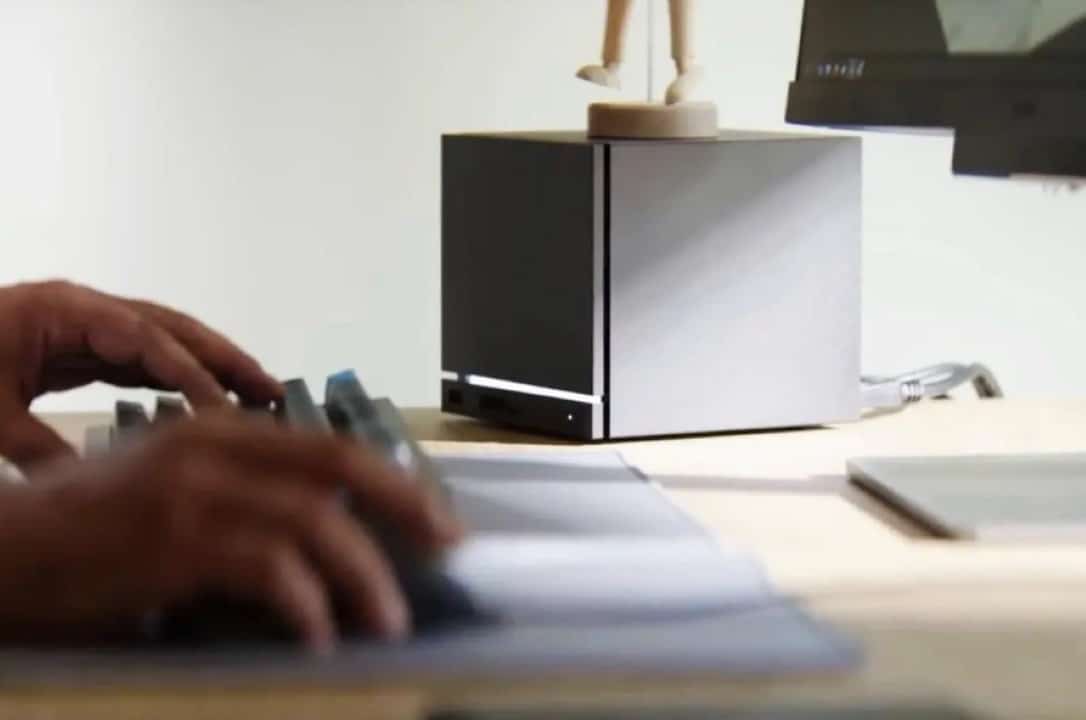
Internal test results released by Valve indicate that the new Steam Machine is capable of running most of the games in its catalog in 4K resolution at 60 frames per second. Performance is achieved with the help of FidelityFX Super Resolution (FSR) technology, developed by AMD, which is crucial to the device’s performance.
The console, which was announced in November 2025, maintains its performance target despite challenges related to the global supply of components. The company continues with software optimizations to expand compatibility before launch.

The device is scheduled to launch during the first half of 2026. Valve highlighted that, for more demanding titles, the use of variable refresh rate (VRR) will be essential to ensure visual stability and a fluid gaming experience.
Technical hardware specifications
The heart of the Steam Machine is an AMD Zen 4 processor with six cores and 12 threads, working in conjunction with a semi-custom graphics unit based on the RDNA 3 architecture. The Essa combination provides approximately six times greater graphics performance than the Steam Deck.
The device will be sold in two internal storage versions, with options of 512 GB or 2 TB SSD. Valve also confirmed that users will be able to perform upgrades, expanding storage with compatible SSDs available on the market.
Central role of FSR in performance
AMD’s FSR technology is an essential element for the Steam Machine to reach the target of 4K and 60 FPS. The upscaling technique allows games to be rendered internally at lower resolutions, such as 1080p, and then upscaled to 4K, preserving visual quality.
For games with high graphical demands, Valve suggests that players make settings adjustments or use more aggressive FSR modes to keep the frame rate stable. The company works on constant driver updates to improve compatibility.
Internal tests show that the vast majority of the catalog available on Steam can achieve the performance objective without significantly compromising image quality, offering a high-fidelity experience on modern televisions.
Delays and schedule adjustments
The original planning for the launch of Steam Machine was slightly adjusted due to global shortages of essential components. The high demand for RAM and SSD drives, driven mainly by the artificial intelligence sector, impacted the supply chain.
Despite the setback, the company reaffirmed that the launch window for the first half of 2026 is maintained. The logistics team monitors the supply market to avoid further delays.
The console will be sold in a package that includes the new Steam Controller, designed to offer a complete experience optimized for use on televisions. The strategy aims to consolidate the Valve hardware ecosystem.
Official prices have not yet been released, but the company has signaled that it seeks a competitive market positioning, targeting the high-performance PC segment for living rooms.
Continuous software optimizations
Following a similar strategy to that adopted with the Steam Deck, the Valve plans a cycle of frequent software and driver updates for the Steam Machine. Essas continuous improvements aim to improve support for technologies such as ray tracing and VRR, as well as optimizing integration with the SteamOS operating system. The company is dedicating teams to testing hundreds of games, with a special focus on the most popular titles and recent releases, to ensure that performance is optimized from the first day of using the console.
This focus on post-launch updates is an approach that allows hardware to maintain its relevance and competitiveness for years to come. The effectiveness of this model has already been proven with the Steam Deck, which, even with specifications considered modest by current standards, continues to receive regular performance improvements. Essa long-term support philosophy ensures that players have a constantly evolving platform, capable of adapting to new technological challenges in the gaming industry.
Additional features and customization
The Steam Machine is designed as a living room PC, featuring a compact design that makes it easy to install in home theater racks and other entertainment spaces. Embora core component upgrades such as processor and graphics card are not supported, the Valve offers flexibility in other areas. Users will be able to easily swap out SSDs for higher capacity models, ensuring space for a growing game library. Além In addition, the company authorized third-party manufacturers to produce customized front panels, allowing consumers to customize the aesthetics of the device. The console will also feature modern connections, including multiple USB ports and a digital audio output for advanced sound systems.
Comparison with Steam Deck
The new Steam Machine represents a significant evolution in firepower when compared to the Steam Deck. Enquanto the portable device focuses on mobility and gaming experience anywhere, the new console was designed to be the center of entertainment in the room, prioritizing stationary performance in 4K resolution.
