
Toyota has begun preparations for the launch of the sixth generation RAV4, one of its best-selling vehicles globally. The project promises one of the biggest transformations in the model’s history, with a completely renewed design and an engine strategy focused exclusively on hybrid systems, eliminating purely combustion options. The new SUV is expected to hit the market to redefine the segment with improved technology and efficiency.
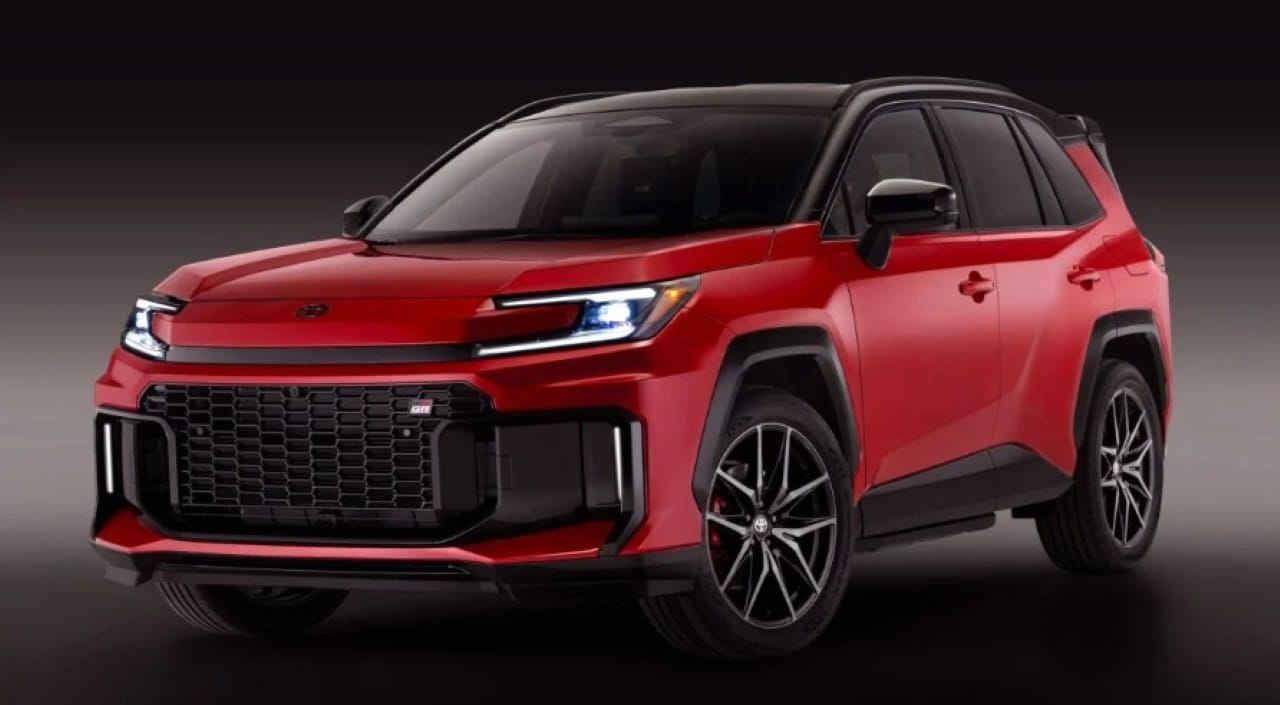
The new look, inspired by the “hammerhead shark” design language already seen in recent launches such as the Prius and the C-HR, will be one of the main attractions. Essa approach gives the vehicle a more aggressive and modern appearance, in line with the brand’s new visual identity. The change signals the automaker’s commitment to a bolder design to stand out in an increasingly competitive market.
Built on the latest evolution of the TNGA platform (Toyota New Global Architecture), the future RAV4 promises significant improvements in drivability, safety and comfort. The new structural base allows for a lower center of gravity and greater torsional rigidity, resulting in a more stable and responsive drive, in addition to optimizing internal space and the accommodation of hybrid system components.
The model is expected to be officially presented at the end of 2025, with global sales starting progressively throughout 2026. With this complete renewal, Toyota seeks not only to maintain the RAV4’s leadership in the SUV segment, but also to reinforce its commitment to electrification and the reduction of carbon emissions in its fleet.
A design that redefines the SUV
The “hammerhead shark” visual identity will be the central point of the new generation of the Toyota RAV4. The front will be marked by “C”-shaped headlights with LED technology, integrated into a more tapered and aggressive front grille, which abandons the hexagonal shape of the current model. Essa configuration creates a unique light signature and gives the SUV an imposing presence. The bumper was also redesigned to improve aerodynamics and incorporate functional air intakes, reinforcing the sporty appeal.
In profile, the new RAV4 will feature more sculpted lines and a more dynamic silhouette, with striking creases that run along the sides and connect the front to the rear. The use of the TNGA platform allows for shorter front and rear overhangs and a potentially longer wheelbase, which improves stability and expands cabin space. The rear, in turn, will feature LED lights interconnected by a horizontal bar, an element that has become a trend in automotive design and which gives the vehicle a wider and more sophisticated appearance.
Technology and comfort in the interior
The interior of the new RAV4 will undergo a complete modernization, with a focus on technology and high-quality materials. The dashboard will be redesigned to house a new multimedia center with a touch screen, which can reach 14 inches in the most equipped versions.
This new infotainment system will feature the latest software from Toyota, offering a faster, more intuitive interface and high-resolution graphics. Connectivity will be a strong point, with wireless support for Apple CarPlay and Android Auto, as well as improved voice command capabilities.
The instrument panel will also be fully digital, with a configurable screen that will display essential driving, navigation and hybrid system information. The Toyota will also invest in a more refined finish, with the use of soft-touch materials, new seat covering patterns and LED ambient lighting.
Occupant comfort will be improved with a new seat design, offering better ergonomic support, and superior sound insulation to reduce cabin noise. The internal space, already one of the model’s strong points, must be optimized to provide more comfort for the legs and shoulders, especially in the rear seat.
Exclusively hybrid and more powerful
The main technical change of the sixth generation RAV4 will be the exclusive adoption of hybrid engines. The Toyota will abandon conventional gasoline engines to focus on two electrified variants, reinforcing its commitment to sustainability. The entry-level version (HEV) will combine a 2.5-liter Atkinson cycle combustion engine with electric motors, in an evolution of the current system. Espera The combined power is expected to exceed the 222 horsepower of the current model, providing more vigorous acceleration and, at the same time, greater fuel consumption efficiency. The transmission and AWD-i all-wheel drive system will also be improved to offer a more immediate and safer response in different road conditions. The second option will be a plug-in hybrid version (PHEV), which will use a larger capacity battery to offer a range in pure electric mode of more than 100 kilometers. The Esta variant will be the most powerful in the line, ideal for those looking for maximum performance and the possibility of making daily journeys without consuming a single drop of gasoline, consolidating the RAV4 as a reference in technology and efficiency in the segment.
Improved security with new Toyota Safety Sense
Safety will continue to be a top priority for the RAV4, which will come equipped with the latest version of the Toyota Safety Sense suite of driver assistance technologies. Este system has been enhanced with higher resolution sensors and cameras, allowing for more accurate and faster detection of potential hazards.
Among the new features, the pre-collision system will have its detection capacity expanded to include motorcyclists and offer greater protection at intersections. Adaptive cruise control (ACC) has been refined to operate more smoothly in traffic jams, and lane keeping assist now acts more proactively to keep the vehicle centered.
Launch and competition in the global market
The official launch of the sixth generation of the Toyota RAV4 is expected for the second half of 2025, with arrival in main markets, such as Estados Unidos and Europa, scheduled for the beginning of 2026. Arrival in other regions, including the Brasil, should occur in the following months. The new SUV will face stiff competition from models such as the Honda CR-V, Ford Escape (Kuga na Europa) and Hyundai Tucson, all with strong proposals in design, technology and electrification.
