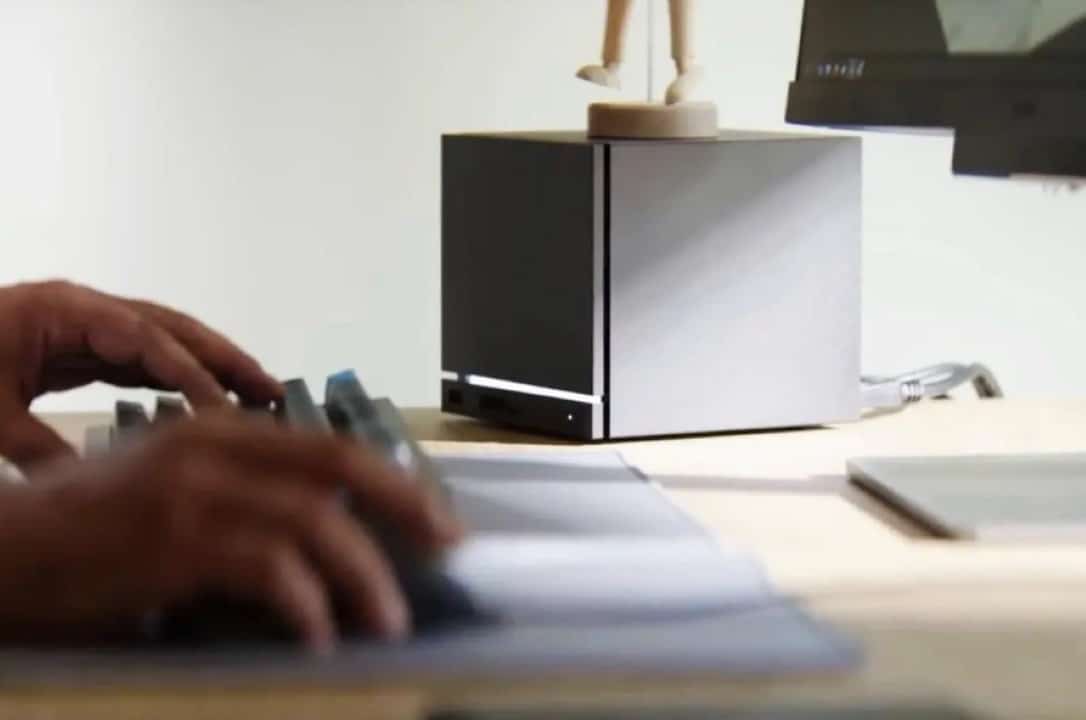
Internal test results released by Valve indicate that its new Steam Machine is capable of running most of the games in its catalog in 4K resolution at 60 frames per second. Este performance milestone is achieved primarily through FidelityFX Super Resolution (FSR) technology, developed by AMD, which has become a crucial component for the viability of the project and for delivering a high-fidelity visual experience on modern televisions.
The console, which was originally announced in November 2025, maintains its performance target despite challenges faced in the global component supply chain. The company continues to optimize the device’s software to expand compatibility with the Steam platform’s vast library of games, ensuring a robust experience from launch.

The launch window for the new hardware is confirmed for the first half of 2026.
Technical specifications of the new hardware
At the heart of the new Steam Machine is an AMD processor based on the Zen 4 architecture, with six cores and twelve threads, which works in conjunction with a custom graphics unit based on the RDNA 3 architecture.
The device will be sold in two internal storage versions, with options of 512 GB or 2 TB NVMe SSD drives. Seguindo its open hardware philosophy, Valve confirmed that users will have the freedom to upgrade, expanding memory with compatible SSDs available on the market, which guarantees the longevity of the device and the ability to house a growing library of games.
The central role of FSR in performance
AMD’s FidelityFX Super Resolution (FSR) technology is the indispensable building block that enables the Steam Machine to achieve its ambitious 4K resolution and 60 FPS goals. The upscaling technique works by rendering games internally at lower resolutions, such as 1080p, and then using advanced algorithms to reconstruct the image at 4K, preserving a high level of visual quality with a much smaller impact on hardware. For games with particularly high graphics requirements, Valve suggests that players adjust settings or use more aggressive FSR modes to maintain a stable frame rate. The company is committed to ongoing driver updates to improve the compatibility and efficiency of the technology across an ever-expanding range of titles, ensuring that the vast majority of the catalog available on the Steam can achieve the promised level of performance without noticeable image degradation.
Delays and schedule changes
The original plans for the launch of the Steam Machine were slightly adjusted due to a global shortage of components essential for its manufacture.
The high demand for RAM and SSD storage units, driven mainly by the exponential growth of the artificial intelligence sector, directly impacted the supply chain.
Despite the setback, the company reaffirmed that the launch window for the first half of 2026 was maintained, with the logistics team monitoring the market to avoid further postponements.
Continuous software optimizations
Adopting a similar strategy to Steam Deck, Valve plans a cycle of frequent software and driver updates for Steam Machine.
These ongoing improvements aim to improve support for technologies such as ray tracing and VRR, as well as optimize integration with the SteamOS operating system.
A dedicated team is testing hundreds of games, with a special focus on the most popular titles and recent releases, to ensure performance optimization from day one.
This long-term support philosophy ensures that the hardware maintains its relevance and competitiveness for years to come, offering gamers a constantly evolving platform.
Additional functions and customization
The Steam Machine is designed as a living room computer, and its compact design makes it easy to install in home theater racks and other entertainment spaces.
While upgrades to core components such as the processor and graphics card are not supported, the Valve offers flexibility in other important areas.
Users will be able to easily swap out SSDs for higher capacity models, ensuring space for an ever-growing game library.
Additionally, the company has authorized third-party manufacturers to produce custom faceplates, allowing consumers to tailor the device’s aesthetics to their tastes.
Comparison with Steam Deck
The new Steam Machine represents a significant evolution in firepower when compared to the Steam Deck. Enquanto the portable device focuses on mobility and the gaming experience anywhere, the new console was designed to be the center of home entertainment.
The main focus of the new hardware is stationary performance at 4K resolution, aiming to compete directly with high-performance PCs and next-generation consoles, offering a premium experience on the television screen.
Valve hardware ecosystem
The console will be sold in a package that includes a new Steam Controller, designed to offer a complete experience optimized for use on televisions. Essa strategy aims to consolidate Valve’s hardware ecosystem, creating a synergy between its different products and strengthening its position in the PC gaming market.
