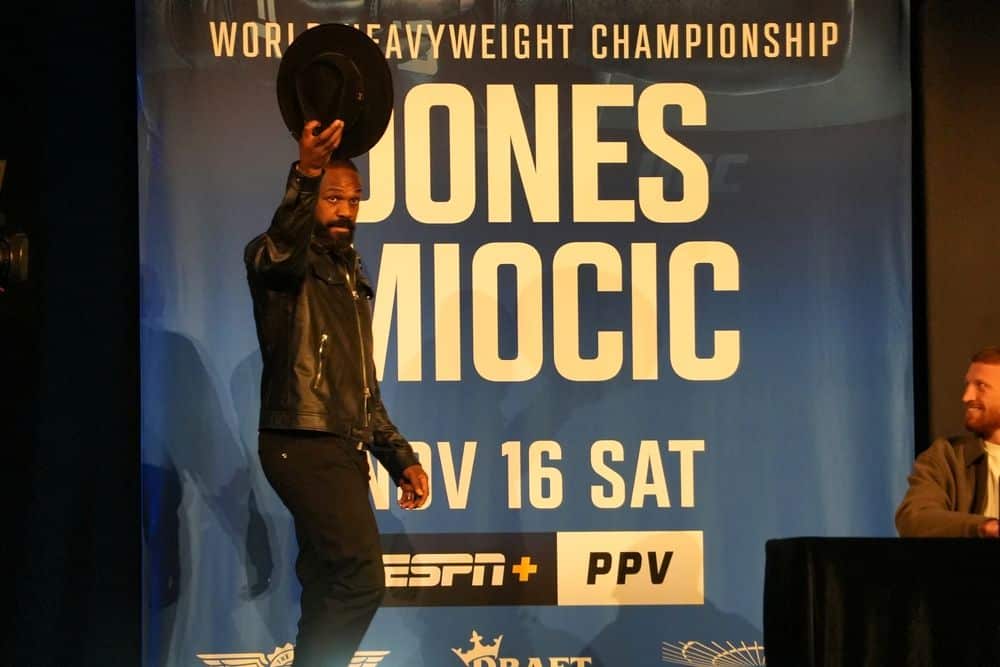
The future of one of the biggest names in MMA history is in doubt due to a serious health condition. UFC heavyweight champion Jon Jones has publicly revealed that he suffers from severe arthritis in his left hip, a diagnosis that qualifies him for total joint replacement surgery with a metal prosthesis. The news, released through an informal video on social media, generated a wave of speculation about the continuation of his dominant career.
At 37 years old, the fighter faces advanced wear and tear of his hip cartilage, resulting in direct contact between the bones. Essa condition causes constant pain that affects not only your training, but also routine activities and rest. The revelation casts a shadow over his reign in the heavyweight division and expectations for future title defenses, putting his recent performances and the frequency of his fights into perspective.

This physical battle was being fought by Jones silently, away from the spotlight of the specialized media and the public. The athlete confessed that the health problem has been with him for some time, but only now has the seriousness of the situation been shared openly, contextualizing the challenges he faced behind the scenes as he prepared for his commitments in the octagon.
The diagnosis that became public
The confirmation of Jon Jones’s health problems gained notoriety through an informal conversation recorded behind the scenes of a sporting event in Houston, on Texas. In the video, the fighter candidly explains the seriousness of the situation, stating that the joint is practically “bone on bone”, a common description for advanced cases of osteoarthritis.
He highlighted that, during the preparation for his last fights, the intensity of the pain represented an extreme obstacle, requiring monumental mental and physical effort to overcome. The revelation of this condition creates a new context for analyzing his performance and the frequency of his appearances in the octagon in recent years, explaining possible limitations that were not visible to the public.
The reality of chronic pain in everyday life
The impact of arthritis on Jones’s life goes far beyond the octagon. The champion described his difficulties sleeping after intense training sessions, highlighting how the degenerative disease significantly affects his quality of life. Constant pain and limited movement are daily challenges that require careful management.
The issue reached a critical point when he was asked about the possibility of a trilogy against his historical rival, Daniel Cormier, in a wrestling format. The nature of the injury makes participation in physically demanding competitions an increasingly remote possibility, as specific wrestling movements could further aggravate the condition.
The fighter admitted that most people, including critics of his career, were unaware of the real extent of his physical limitations. Ele handled the situation in secret to remain competitive at the highest level of the sport, which makes his recent achievements all the more remarkable.
Implications for a legendary career
In MMA, the hip joint is a central biomechanical element. Ela is essential for generating power in strikes, ensuring stability in takedowns and allowing fluid movement on the ground, which has always been a strong point in Jones’s fighting style.
With the loss of cartilage, direct friction between the bones causes severe inflammation and a drastic reduction in range of motion. Isso directly compromises the ability to train at a high level and execute techniques with the explosiveness and precision necessary to compete at the elite level.
As a result, pain management became a priority in his routine, often taking precedence over tactical and technical preparation for a fight. The current scenario demands a complete reassessment of the viability of continuing to compete at the pinnacle of the sport.
Jones’s physical condition places him at a crossroads, where long-term health needs to be weighed against the desire to continue building his legacy. The surgery, although it could alleviate the pain, would present immense risks for playing a contact sport, and could mean the end of his career.
Hip replacement surgery in elite athletes
Total hip arthroplasty is a highly effective surgical procedure for patients with severe arthritis, aiming to restore quality of life and eliminate chronic pain. The operation consists of removing the head of the femur and the surface of the acetabulum (the hip socket), replacing them with artificial components made of metal, ceramic or high-density polyethylene. Para an average person, recovery allows you to return to daily activities and low-impact exercise with great success.
However, for an elite fighter, the scenario is drastically different. A prosthesis is not designed to withstand the repetitive trauma, high-speed rotations, and impact falls characteristic of MMA. Returning to a full-contact sport after such an intervention is strongly discouraged by the medical community due to the high risk of serious complications, such as displacement of the prosthesis, loosening of components or fractures in the bones around the implant, which could result in permanent and disabling damage.
Preservation strategy and new horizons
Faced with criticism related to his relative inactivity in recent years, Jon Jones argues that the reduction in the pace of fights was a conscious strategy to preserve his body. Ele does not see this phase as an escape from challenges, but as a natural evolution of an athlete who has learned to manage his career and his health in a more strategic way. Essa change in mentality reflects a maturity acquired over years at the top of the sport, where longevity becomes as important as victories. The champion understands that listening to his body is essential to prolong his presence in the sport and ensure a healthy life after retirement. Simultaneamente, Jones has focused on the business world, seeking to apply the lessons of discipline, resilience and strategy learned in sport in new ventures. Essa transition is seen by him as fundamental to ensuring financial stability and purpose after his eventual departure from the octagon, revealing a vision of the future that transcends sporting achievements.
The future in the octagon
With the heavyweight belt in his possession, Jon Jones’s health condition puts highly anticipated title defenses and the continuation of his legacy in the new weight class in doubt. The decision between undergoing surgery to have a better quality of life or continuing to struggle with pain and limitations represents the biggest challenge of his career to date.
