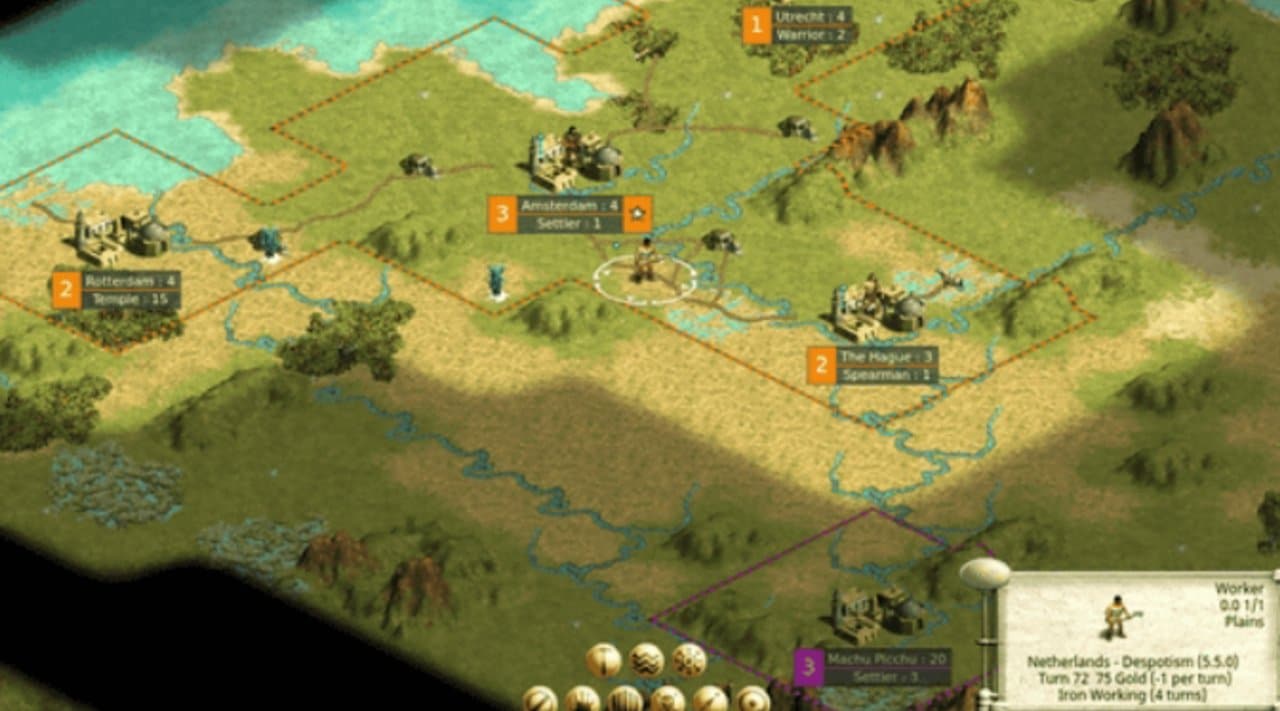
An ambitious project, led by a community of enthusiasts, is redefining the experience of one of the most iconic strategy games in history. “OpenCiv3” appears as an open source and multiplatform version of “Sid Meier’s Civilization III”, seeking to modernize and expand the possibilities of a title that marked generations.
Developed from scratch, the initiative not only recreates the essence of the original game, but also implements significant improvements. With a focus on flexibility for modders and compatibility with contemporary operating systems, the proposal promises to innovate without losing the identity that made the Civilization III a phenomenon.
The initiative aims to serve both veterans who appreciate the depth of the original game and new players interested in a robust and updated strategic experience without the technical limitations of the past.
Revitalizing the legacy of a classic
The universe of “Civilization” is vast and dates back to a board game released in 1982, evolving into the world of computers in 1991 with “Sid Meier’s Civilization”. The third title in the main series, released in 2001, gained a loyal fan base, who to this day keep the game alive through modifications and discussions on forums. Civilization III’s enduring popularity lies in its captivating gameplay, which allows players to guide a civilization from Idade to Pedra to the space age, making crucial decisions in diplomacy, warfare, and technological development.
However, the limitations of technology from two decades ago, such as fixed screen resolutions and compatibility with modern operating systems, presented increasing challenges. The game’s original structure, although innovative for its time, imposed barriers to the creation of more complex and ambitious mods, frustrating the vision of many amateur developers who wanted to take gameplay to new heights. OpenCiv3 was born to overcome exactly these obstacles, offering an entirely new foundation that not only preserves the soul of the game, but projects it into the future.
The vision of the team behind OpenCiv3 is clear: to rebuild Civ3 as it should be, meeting the expectations of modders and modern players. Isso involves removing technical limitations, fixing historical bugs, expanding modding functionality and, crucially, offering support for the latest graphics and platforms. The ultimate goal is ambitious: not just emulate, but surpass the original Civ3, while keeping all of the game’s core gameplay and content intact.
The engineering behind innovation
OpenCiv3 is a total reconstruction project, independently developed by the fan community and does not copy any original material from “Civilization III”. Essa approach ensures that the project is legally autonomous and focused on innovation, without relying on proprietary assets. It’s a collaborative effort that capitalizes on fans’ collective knowledge and passion, resulting in a genuinely new product.
The choice of Godot Engine, an open source, cross-platform 2D/3D game engine, was strategic for the development of OpenCiv3. Essa tool offers the flexibility and power needed to create a complex game like Civilization III, while aligning with the project’s open source philosophy. The combination of Godot Engine with the C# programming language provides a robust and modern environment for the development team.
This project seeks to leverage the best elements of the turn-based strategy genre, incorporating lessons learned over years of developing mods for the original Civilization III. Modders’ experience creating custom content for the game has provided valuable insights into what works, what can be improved, and what features are most desired by the community, informing each step of the recreation process.
“Dutch” version 0.3 preview and access
A significant preview of OpenCiv3 development is version 0.3, dubbed “Dutch”, announced for December 2025. Esta version represents an important milestone for the project, introducing advanced functionality and demonstrating the progress made by the team. The name “Dutch” reflects a new phase of expansion and polish, bringing substantial improvements to the gaming experience.
One of the highlights of the “Dutch” version is the “Independente Mode”. Anteriormente, to fully enjoy OpenCiv3, it was necessary to have a copy of the original Civilization III, mainly to import the graphics. With version 0.3, the game can be run using only OpenCiv3 files, eliminating dependence on the original title and making it more accessible to all interested parties. Isso represents a fundamental step towards the project’s complete autonomy, attracting an even larger audience.
OpenCiv3 is currently in active development, in the pre-alpha phase. Although it is already possible to enjoy the basic mechanics of the game, it is important to note that many features and content related to the end of the game are still missing. Interested players can download the files directly from the official OpenCiv3 website and explore the project in its current state. The community is invited to test, provide feedback, and even contribute to the game’s ongoing development.
Challenges and the future of development
The development of a project as ambitious as OpenCiv3 is not without challenges, especially as it is a complex reconstruction of a legacy game. The team is constantly faced with the task of translating the intricate logic of Civilization III to a new architecture, ensuring that the essence of the gameplay is preserved while modernizing the underlying systems. Compatibility with multiple operating systems and hardware also adds an extra layer of complexity, requiring rigorous testing and continuous optimization to ensure a smooth experience for all users.
The pre-alpha phase, while promising, naturally has bugs and content gaps that need to be filled. It is an iterative process of identifying problems, developing solutions and integrating new features, all while maintaining project cohesion. The open source community plays a crucial role here, with contributors reporting bugs and even proposing and implementing fixes, speeding up the development cycle. The transparency of the process, with details available on GitHub, allows anyone to track progress and identify areas where they can contribute.
There is still a long way to go before OpenCiv3 achieves its full vision. Implementing endgame mechanics, optimizing large-scale performance, and stabilizing all systems are ongoing priorities. The project depends on the engagement and passion of its community to continue moving forward, whether through direct code contributions, exhaustive testing or the simple act of sharing the work. The future success of OpenCiv3 lies in the ability to maintain this collaborative energy and overcome technical obstacles as they arise.
Continued popularity and side projects
The enduring popularity of titles like Civilization III reflects the timelessness of good game mechanics and the passion of fans. Mesmo With the release of new titles in the series, such as “Sid Meier’s Civilization VII” in February 2025, the older games continue to be highly appreciated. Essa’s longevity is a testament to the cultural impact and design excellence that the Civilization series has achieved over the decades.
The success of OpenCiv3 could inspire other similar open source projects for classic games. A notable example is “OpenCiv1”, which is underway with the goal of making the original 1991 “Sid Meier’s Civilization” open source through a process of disassembly and reengineering. Essas initiatives demonstrate the community’s value in preserving and innovating on the legacy of video games.
