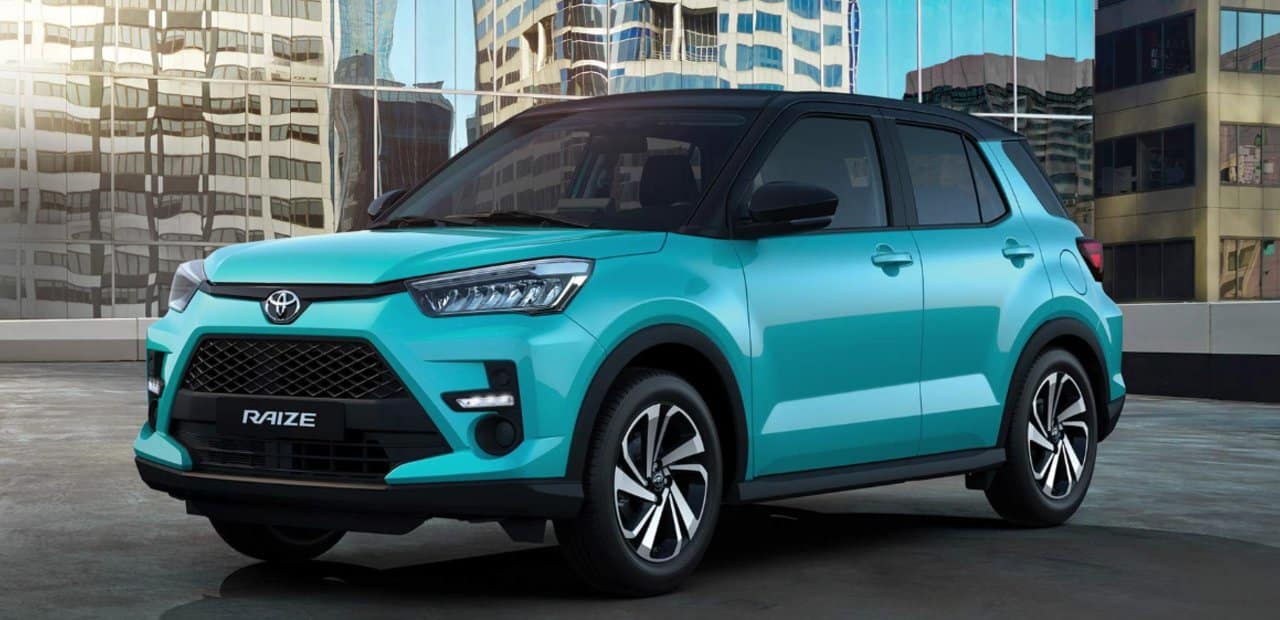
Toyota and its subsidiary Daihatsu are advancing the development of new versions of their popular compact SUVs, designed to accommodate up to seven passengers. The future models, which should be named Raize Space and Rocky Space, will be built on an extended version of the five-seater vehicle platform and will feature an efficient hybrid propulsion system. The launch is scheduled for the Japanese market, with a focus on families looking for more versatility without having to opt for higher category vehicles.
The automakers’ initiative aims to meet a growing demand for utility vehicles that combine compact dimensions, ideal for urban traffic, with the capacity to transport more passengers. By using the basis of already consolidated models such as the Raize and Rocky, companies seek to optimize production costs and accelerate the arrival of new products on the market, taking advantage of the good reputation that their smaller brothers have already built among consumers. The main novelty, in addition to the expanded internal space, will be the introduction of e-Smart Hybrid technology, which promises to combine performance and low fuel consumption.
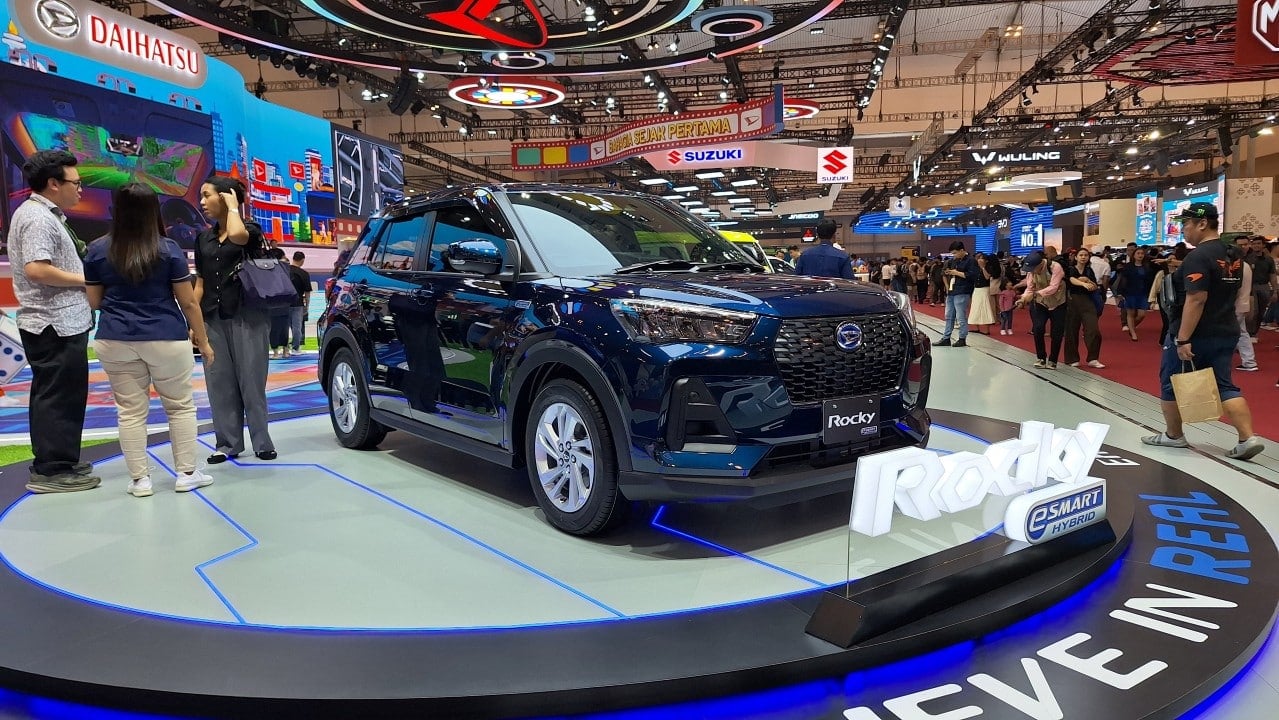
The strategy of expanding the line of compact SUVs reflects a global trend, in which consumers increasingly value multifunctionality. The new models are expected to offer a complete package, including modern design, onboard technology and, most importantly, the flexibility that a third seat provides for daily use and occasional trips. With this move, Toyota and Daihatsu are preparing to compete in a highly competitive market niche, offering a practical solution for family transport.
DNGA platform expansion for greater versatility
The viability of the new seven-seater SUVs lies in the flexibility of the DNGA (Daihatsu New Global Architecture) architecture, which serves as the basis for the current models. Para To accommodate the extra row of seats, engineers are making a significant extension to the vehicle’s structure. Estima The total length is expected to be increased by approximately 40 centimeters compared to the five-seater versions, which currently measure just under four meters. Essa dimensional change is accompanied by an increase in the wheelbase, a crucial measure to ensure not only the vehicle’s directional stability at higher speeds, but also to create more generous interior space, especially for the legs of second and third row occupants. The technical challenge is to carry out this stretching without compromising the torsional rigidity of the body and safety standards in the event of a collision, maintaining the low weight that characterizes the DNGA platform and contributes to its energy efficiency. The result will be a vehicle with a more elongated profile, but which preserves the agility and essence of a compact SUV.
e-Smart Hybrid motorization highlighted
The major technological difference of the future Raize Space and Rocky Space will be the e-Smart Hybrid propulsion system. Trata is a series hybrid, a configuration in which the combustion engine has no mechanical connection to the wheels. Sua’s sole function is to operate as a power generator, feeding a small capacity battery and the electric motor, which is solely responsible for propelling the vehicle. Essa approach provides a driving experience very similar to that of a 100% electric car, with immediate responses to the accelerator and silent operation.
The main advantage of this technology is efficiency. Como the 1.2-liter three-cylinder gasoline engine works only to generate electricity, it can operate constantly in its ideal speed range, maximizing the use of every drop of fuel and, consequently, reducing pollutant emissions. Para the driver, this translates into linear, jerk-free acceleration, ideal for urban traffic, as well as remarkably low fuel consumption. The system combines the smoothness of electric propulsion with the practicality of a combustion vehicle, as refueling is done conventionally.
Functional design and visual adaptations
Regarding design, the front part of the new seven-seater SUVs must maintain much of the visual identity of the original models. Elementos like the front grille, headlight shape and robust bumper, which contributed to the success of the Raize and Rocky, will be preserved.
The most profound changes will be concentrated from the central column backwards. Para ensure that there is enough headroom for third-row occupants, the roofline will be extended and the trunk lid will adopt a more vertical design.
This reconfiguration will result in a longer rear overhang and larger rear side windows, which will change the vehicle’s silhouette. The side profile will have an appearance that combines SUV characteristics with those of a compact minivan.
These changes, although aesthetic, are primarily functional. The objective is to optimize the maximum use of internal space and facilitate access to the last row of seats, a critical point for vehicles with a family purpose.
Interior designed for families
The internal arrangement of the new models will follow the 2+3+2 configuration, offering a versatile layout for transporting passengers and cargo. Modularity will be one of its strong points, allowing owners to adapt the vehicle to their daily needs.
The second row of seats is expected to be mounted on rails, allowing longitudinal sliding. Essa functionality is essential to adjust legroom and create a wider access aisle for those in the third row.
Although the last row is more suitable for children or for use on short journeys by adults, its presence gives the vehicle extra practicality. Quando are not in use, the seats can be folded down, creating a flat surface and a considerably larger luggage compartment.
The technology behind efficiency
The 1.2-liter three-cylinder combustion engine, although it does not directly power the car, is a centerpiece of the e-Smart Hybrid system. Sua operation as a generator has been finely tuned to achieve high thermal efficiency, ensuring that electricity is produced with minimal fuel consumption.
The electric traction motor, responsible for moving the vehicle, must deliver a power of close to 106 horsepower and a torque of 170 Nm. Esses numbers ensure agile performance in the urban cycle and enough strength for safe overtaking on roads, all with the smoothness and silence characteristic of electric propulsion.
Release forecast and prices
According to information from the press specializing in the Japão, the official debut of the new Toyota Raize Space and Hybrid should amount to around 2.9 million yen.
Positioning in the Japanese market
With this launch, Toyota and Daihatsu seek to fill an important gap in the market. The models are positioned as an alternative for families who need the flexibility of seven seats, but consider traditional minivans too large for the Japão’s narrow streets and parking spaces.
By offering a vehicle with contained external dimensions, but with increased passenger capacity and high energy efficiency, the brands intend to attract an audience that values practicality. The proposal is to combine the adventurous look of an SUV with the functionality of a multipurpose vehicle, creating a competitive and desirable product.
