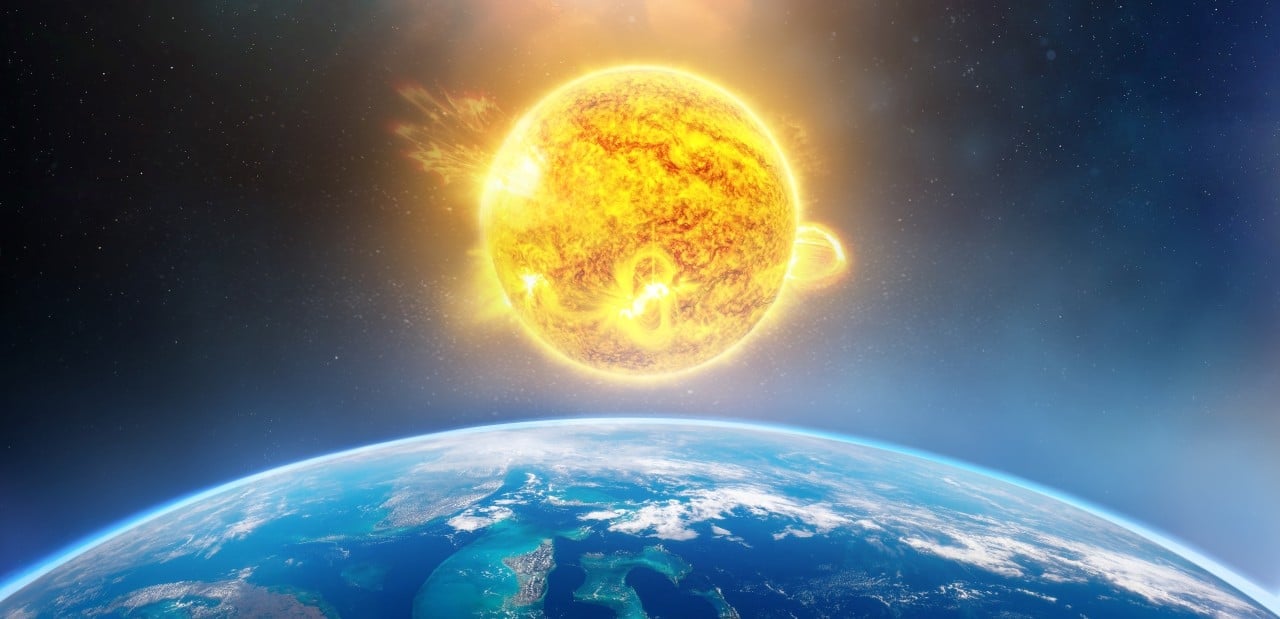
Terra records impacts from a geomagnetic storm classified as G1, the lowest level on the NOAA scale, triggered by a series of intense solar flares that occurred in early February 2026.
The material ejected by Sol, known as a coronal mass ejection, reached the Earth’s magnetic field from February 5th, with effects expected until the end of the week. Observatórios spacecraft have monitored at least six X-class eruptions, including one of magnitude X8.1, considered one of the most powerful of the current cycle.
Experts highlight that events of this type occur most frequently during the peak of the 11-year solar cycle. The interaction of solar particles with the Earth’s atmosphere generates visible phenomena and limited technical interference.
- Intensification of northern lights in polar regions;
- Possible slight interruptions in high frequency radio signals;
- Temporary degradation in GPS navigation systems at high latitudes.
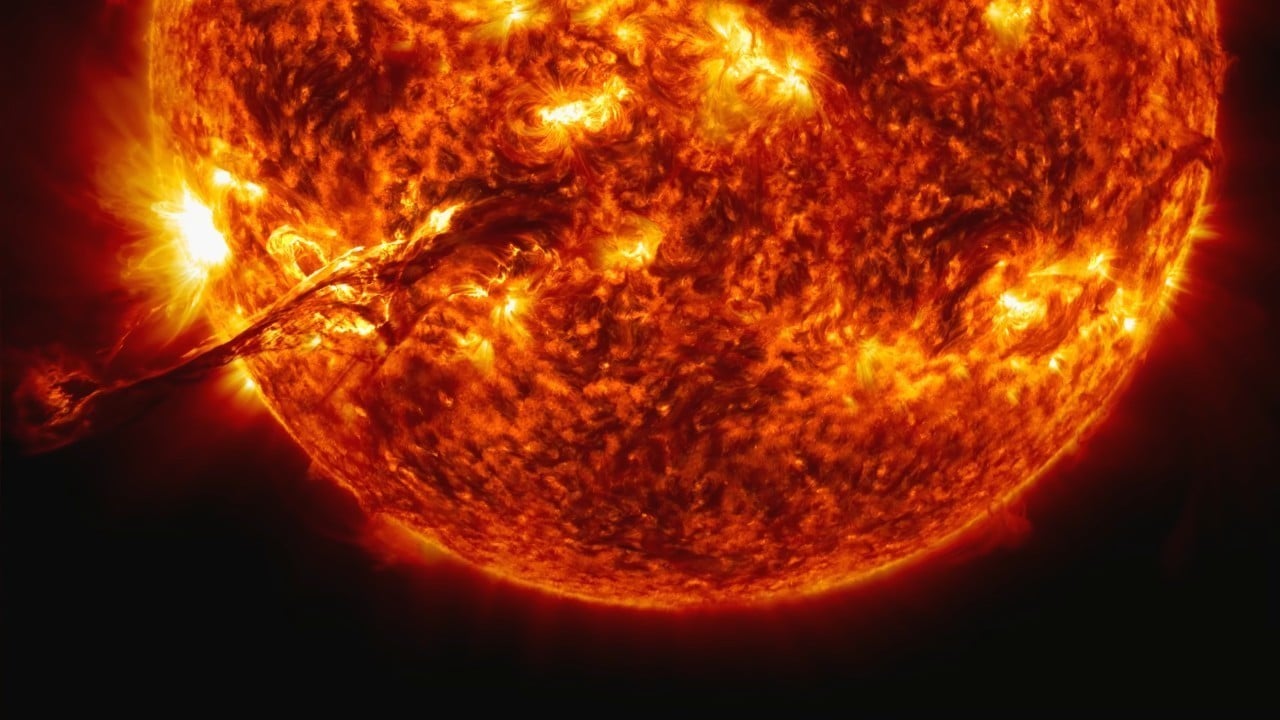
Characteristics of the AR4366 active region
The AR4366 region emerged in the visible solar disk in late January and grew rapidly, developing high magnetic complexity. Essa configuration favors the release of accumulated energy in the form of flares and coronal mass ejections. Observações indicate that the spot maintains a beta-gamma-delta structure, typical of areas prone to strong explosions.
Records confirm that the area produced class X flares in a rare sequence, with intervals of a few hours between the main events. Satélites like Solar Dynamics Observatory captured radiation and plasma emissions in detail.
Solar Flare Rating Scale
Solar eruptions are classified alphabetically according to the intensity of X-rays emitted. Class X represents the highest level, with numerical subdivisions indicating relative potency. An X8.1 explosion releases energy equivalent to billions of nuclear bombs, although most of it dissipates into space.
Comparatively, class M events cause minor impacts, while class C remains almost imperceptible in Terra. The sequence observed in AR4366 included rapid transitions between these categories.
Mechanism of coronal mass ejections
Coronal mass ejections occur when unstable magnetic fields in the Sol release billions of tons of plasma. Esse material travels at speeds ranging from 300 to more than 2,000 km/s, depending on the strength of the initial eruption. Upon reaching Terra, the plasma interacts with the planetary magnetic field and compresses the magnetosphere.
This compression allows charged particles to penetrate the upper layers of the atmosphere, especially at the poles. The process generates excitation of oxygen and nitrogen atoms, producing the characteristic lights of auroras.
Effects observed in the Northern Lights
The northern lights gained greater intensity at high latitudes during the G1 storm period. Regiões like Alasca, north of Canadá, Noruega, Suécia and Observadores reported more vivid green and red tones in the night sky.
Under normal conditions, these phenomena remain restricted to polar circles. Durante geomagnetic events, visibility extends to mid-latitudes, although less likely in light storms.
Impacts on communication systems
Geomagnetic storms mainly affect radio communications at high frequencies. Operadores ham radio and polar aviation face temporary signal degradation. Sistemas GPS also record small variations in positioning in affected regions.
Electrical networks at high latitudes undergo reinforced monitoring, but G1 events rarely cause significant current induction. Operadores maintain standard protocols during solar plasma passage.
Monitoring carried out by space agencies
Agencies such as NOAA and NASA maintain constant surveillance through satellites positioned at strategic points. Space Weather Prediction Center issues alerts hours or days in advance of anticipated events. Modelos computational simulates the trajectory of coronal mass ejections.
This global network includes contributions from European and Asian observatories. Dados in real time are available to critical infrastructure operators.
Current solar cycle and perspectives
Solar cycle 25, which began in 2019, reaches a phase of maximum activity in 2025-2026. Estatísticas show a progressive increase in the number of sunspots since the previous minimum. Previsões indicate that the peak may extend with intensity above the average of recent cycles.
Active regions such as AR4366 exemplify the typical behavior of this phase. Complex Manchas appear with greater frequency and duration.
Favorable places for aurora observation
Observers in polar regions expect better conditions during G1 storms. Specific Áreas include:
- North of Canadá and territory of Yukon;
- central and northern Alaska;
- Scandinavia above the Arctic Circle;
- Iceland and islands Faroe;
- North of Rússia and Sibéria.
Clear skies and the absence of light pollution increase the chances of visual recording. Aplicativos aurora forecast helps with planning.
Differences between classes of geomagnetic storms
The G scale varies from G1 to G5 depending on the intensity of disturbances in the Earth’s magnetic field. Eventos G1 causes minimal effects, while G5 can cause extensive blackouts in electrical networks. The current episode remains in the initial category, with no significant risk to infrastructure.
History shows that extreme storms occur every few decades. Modern Monitoramento reduces vulnerabilities identified in past events.
Recent solar wind behavior
The solar wind maintained moderate speeds during the arrival of the ejected plasma. Medições indicate values between 400 and 600 km/s on the main impact days. Flutuações in the southern magnetic component contributed to particle penetration.
These variations explain the prolonged duration of auroral effects. Condições gradually return to normal after the magnetic cloud has completely passed.
Importance of studying solar activity
Research on solar activity contributes to the understanding of stellar processes in general. Dados collected helps protect space missions and astronauts in orbit. Satélites in geotationary orbit receive alerts for preventive maneuvers.
Advances in modeling improve forecast accuracy. Colaboração international guarantees continuous monitoring coverage.
