
The first solar eclipse of 2026 will take place on February 17th, in the form of an annular event. The Esse phenomenon produces the well-known “ring of fire” visual effect, when the Lua positioned at a greater distance from the Terra leaves a luminous circle around its dark silhouette. The complete annular phase will be visible only in remote areas of Antártida, while selected regions of the southern hemisphere will record a partial version of the alignment.
Astronomers confirm that the event is part of the series Saros 121, with a cyclical repetition of approximately 18 years. The magnitude of the eclipse will reach 0.963, indicating coverage of about 96% of the solar disk at its maximum point.
The phenomenon will not be visible in Brazilian territory, according to projections from specialized observatories. Limited Parcialidade will appear at extreme southern points of América, Sul and África.
Annular eclipse mechanism
The annular eclipse results from the positioning of Lua at the apogee of its elliptical orbit. In the Nessa configuration, the natural satellite has an apparent diameter smaller than that of the Sol, preventing total blocking of sunlight.
The precise alignment between Sol, Lua and Terra generates the umbral shadow that crosses the Earth’s surface. Observadores within this narrow band register the characteristic luminous contour of the ring.
Detailed shadow trajectory
The umbral shadow will initiate contact with Terra at Oceano Pacífico south. It will then head towards the Antarctic continent, covering inhospitable regions.
Scientific stations such as Concordia and Amundsen-Scott are positioned close to the center line. Pesquisadores at these bases will prepare instruments to capture data during the passage.
The point of greatest eclipse will occur at around 12:13 UTC time. The maximum duration of the annular phase will reach 2 minutes and 20 seconds at specific coordinates.
Extreme climate conditions on Antártida pose additional challenges for ground-based observations. Equipes international teams coordinate efforts to accurately record the event.
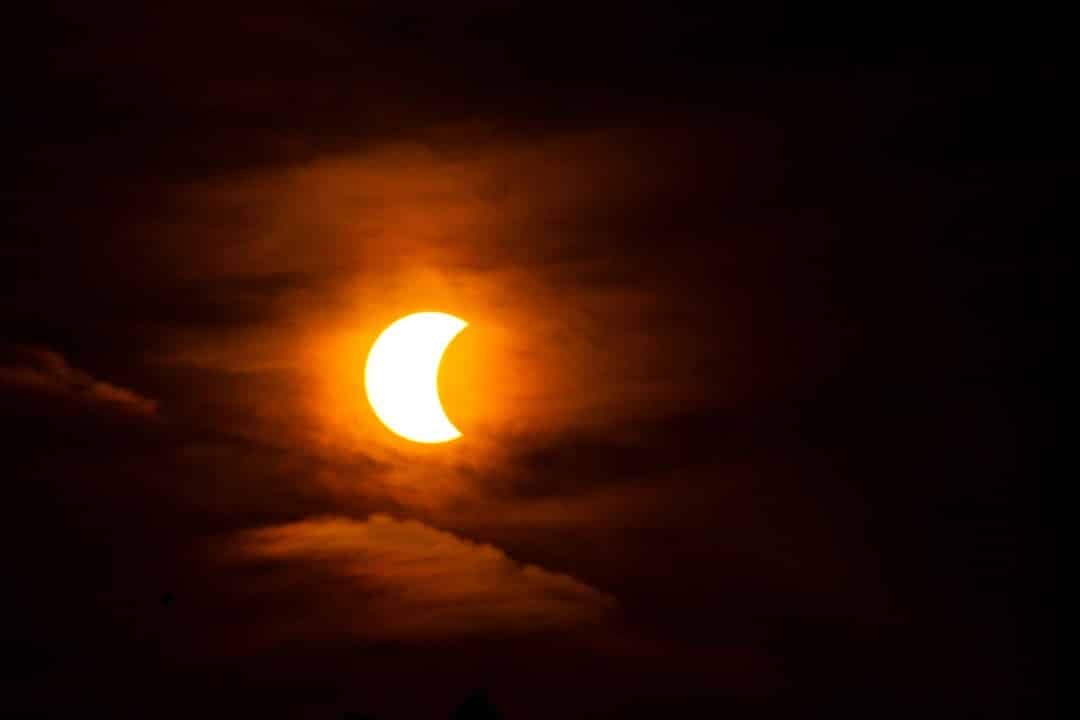
Regions of visible bias
Countries in the extreme south of América of Sul will include Chile and Argentina in the partiality zone. Cidades as well as Punta Arenas and Ushuaia will observe moderate obscuration of the solar disk.
In the southern África, nations such as África of Sul, Namíbia and Madagascar will record varying percentages of coverage. Maximum obscuration in these areas will not exceed 30% in favorable locations.
Oceanic islands in the southern Atlântico and Índico will also be part of the partial visibility map. Observadores in these positions will need a clear horizon to follow the morning phenomenon.
Precautions for Safe Observation
Observing any solar eclipse requires adequate eye protection. Olhar directly to Sol causes irreversible damage to the retina, even during partial phases.
- Use certified glasses with specific solar filter for eclipses;
- Use indirect projection methods, such as a box with a hole or shade trees;
- Avoid common sunglasses or improvised filters without certification;
- Monitor children during attempts to observe the phenomenon.
Experts recommend optical equipment with filters approved by international standards. Técnicas projection allows safe group viewing.
Scientific importance of the event
Annular eclipses provide unique opportunities for studies of the outer solar corona. Instrumentos positioned at Antártida will capture data about the solar atmosphere during the alignment.
Research at Antarctic bases includes measurements of ionospheric variations. The event will contribute to understanding interactions between Sol and the Earth’s upper atmosphere.
Upcoming astronomical events
The year 2026 still holds a total solar eclipse on August 12th. Esse phenomenon will cross regions of Europa and Ártico, lasting longer in the totality phase.
Eclipse cycles maintain a predictable pattern thanks to precise orbital calculations. Observadores can plan trips in advance based on official maps.
Selected local times
At Punta Arenas, at Chile, the partial eclipse will begin close to sunrise at local Sol. Maximum coverage will occur minutes after sunrise.
At Cidade of Cabo, África of Sul, the phenomenon will appear during the morning. Observadores will register a partial bite on the upper solar disk.
At Antarctic stations, Sol will remain low over the horizon throughout the event. Essa configuration will facilitate professional photographic captures with specialized equipment.
