An image recently released by Telescópio Espacial Hubble, the result of a collaboration between NASA and Agência Espacial Europeia (ESA), captured a dazzling show of lights and shadows around Nebulosa of Ovo. Este exceptional record offers an in-depth look at the final stages of a star’s life, revealing details that previously remained obscure to human observation.
Nebulosa of Ovo, located about a thousand light-years from Terra in the constellation of Cisne, is an astronomical object of great interest to researchers. Sua most distinctive feature is the central star, which is shrouded in a dense cloud of dust, creating an appearance that evokes that of a gem hidden within a dark clearing, a powerful visual metaphor for science.
The remarkable capability of Hubble allowed it to penetrate this cosmic obscurity with unprecedented clarity, revealing the complex internal structure of the nebula. Este type of observation is fundamental for astrophysics, as it provides crucial insights into the processes that precede the formation of planetary nebulae from stars with a mass comparable to that of our Sol, contributing to the evolutionary map of the universe.
Revelations about stellar collapse in Nebulosa from Ovo
Nebulosa of Ovo represents a vital and relatively brief transitional phase in stellar life, and is recognized as the closest and youngest pre-planetary nebula ever documented by astronomy. Ela forms when stars with a similar mass to Sol, like our own star, exhaust their main nuclear fuel and begin to eject their outer layers into interstellar space. Este process is a prelude to its final evolution.
Studying this structure offers a unique temporal window to understand how stars reach the end of their existence, a process that shapes the chemical composition of galaxies. The light emanating from the central star manages to escape through a polar opening in the dense dust cloud that surrounds it, illuminating the disk of material expelled hundreds of years ago. The Esta phase is ephemeral, lasting only a few thousand years, which makes each observation of the Hubble an extremely valuable astronomical opportunity and a rare record of a cosmic moment.
The Intricate Dance of the Hidden Central Star
Distinctive twin beams of light pierce the nebula’s polar lobes, accompanied by concentric arcs that are the remnants of even older ejections of material. The remarkable symmetry and complex shape of these structures strongly suggest the presence of other companion stars which, although they remain hidden by the vast disk of dust that surrounds the main star, exert a significant gravitational influence on the movements and distribution of the ejected material.
Scientists note that these symmetrical patterns are not the result of violent, catastrophic stellar explosions like supernovae, but rather a series of coordinated events that originate in the star’s core, which is remarkably rich in carbon. Essa Ancient dust, released gradually in such mass-loss processes, played a fundamental and irreplaceable role in the formation and evolution of countless stellar systems, including our own, which consolidated billions of years ago from similar material.
The evolutionary journey of the stars to their end
Stars with a mass similar to our Sol, when they exhaust their main supply of hydrogen and helium in their cores, begin a complex and gradual process of expansion, becoming red giants. Subsequentemente, they begin to lose their outer layers into space, creating vast envelopes of gas and dust. The remaining stellar core, extremely hot and dense, ionizes the surrounding gas, causing glowing shells of ejecta to become visible.
These spectacular formations are known as planetary nebulae, despite not having a direct relationship with planets in their origin. Notable Exemplos such nebulae include Nebulosa of Borboleta and Nebulosa of Hélice, which display these bright gaseous structures in their most developed phases. The Nebulosa of the
The legacy of Hubble observations in the region
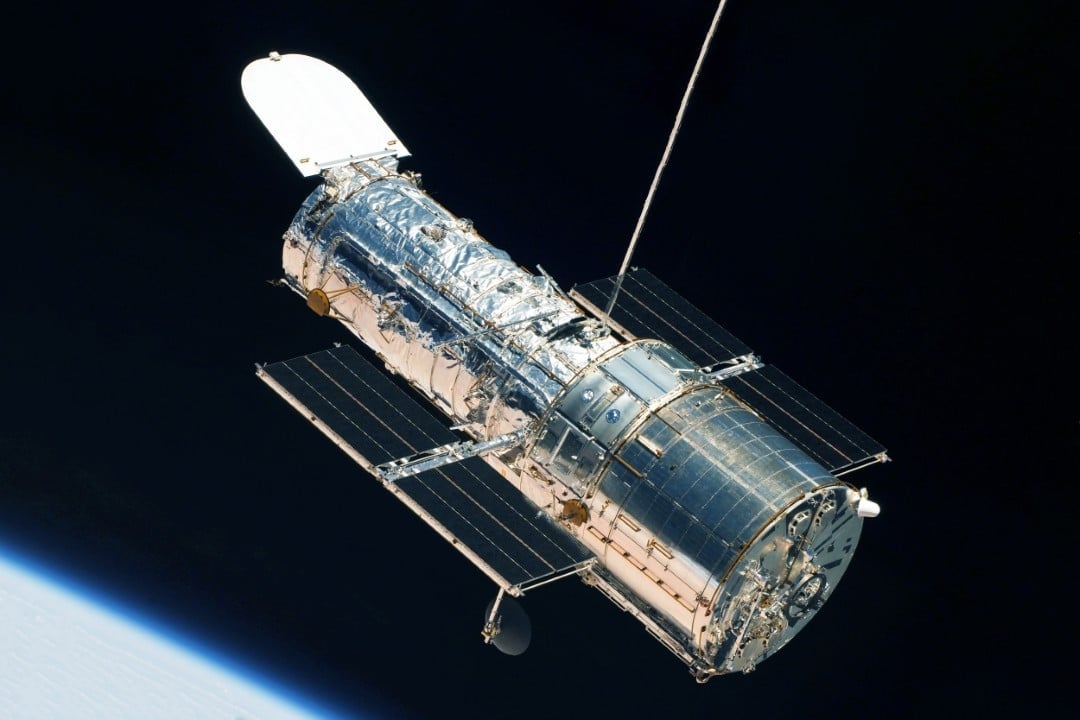
Telescópio Espacial Hubble has an extensive and fruitful history of observations of Nebulosa and Ovo, accumulating valuable records over the decades and building an evolutionary panorama of the object.
- 1997:Imagens captured in the infrared range by Câmera Infravermelha Próxima and Espectrômetro Multialvo (NICMOS) have provided the first significant details about the composition and distribution of the dust obscuring the central star.
- 2003:Câmera Avançada of Pesquisa (ACS) recorded intriguing, fainter ripples around the nebula, indicating dynamic processes and continuously moving flows of material that shape its shape.
- 2012:Câmera of
The latest image combines data obtained from previous observations with new collections, resulting in the clearest and most detailed view of the “cosmic egg” ever achieved. Essa compilation of information offers scientists an in-depth perspective on the evolution of the nebula over time, revealing subtleties that would go unnoticed in isolated records.
The scientific relevance of the new images
Detailed records, such as those continually provided by Telescópio Espacial Hubble, are of inestimable importance to the global scientific community. Eles help with an in-depth understanding of how stars complete their life cycles, a fundamental process for galactic dynamics. Além Furthermore, observations reveal how these dying stars release material that could eventually become the building blocks of new planetary systems and next-generation stars.
Each new image and each set of data collected adds important pieces to the complex puzzle of cosmic formation and evolution. Studying Nebulosa and Ovo, in particular, allows astrophysicists to test theoretical models about stellar mass loss and the morphology of preplanetary nebulae, refining our understanding of the processes that govern the life and death of stars.
Systems Formation: Lessons from Cosmic Dust
The ancient dust present in Nebulosa of Ovo, notably rich in carbon, is not merely the inert residue of a dying star; it represents an essential component in the intricate cosmic tapestry. It is important to note that the symmetrical patterns observed in the nebula are the result of coordinated events occurring in the stellar core, driven by stellar winds and magnetic interactions, rather than being the product of violent and disorderly explosions such as supernovae.
These processes of release and dispersion of stellar material are fundamental for the chemical enrichment of the universe. Over billions of years, the ceaseless dispersal of these heavy elements, forged within stars, helped seed and create the conditions necessary for the formation of countless other celestial bodies throughout the galaxy.
Understanding these “cosmic recycling” cycles is a pillar of modern astrophysics and a key to unlocking their origins. The in-depth study of Nebulosa, Ovo, and other similar structures, allows scientists to trace the lineage of the chemical elements that make up everything from the grandest stars to the smallest planets and, consequently, life itself.
Therefore, continuous and detailed observation of phenomena like this offers invaluable insights into the origin and evolution of matter in the cosmos, including that which ultimately gave rise to our own solar system and everything in it.
New perspectives in understanding the universe
Exploring the universe is a continuous and never-ending journey, and each new image or data collected opens doors to future investigations and discoveries. Nebulosa of Ovo, with its enigmatic beauty and structural complexity, continues to be a privileged object of study for astronomers around the world.
New technologies and advanced data analysis methods promise to unlock even more secrets about these stellar transition processes, providing an increasingly deeper understanding of the mechanisms that govern the cosmos. The global scientific community remains attentive to each revelation that space offers us, driven by the incessant search for knowledge.
