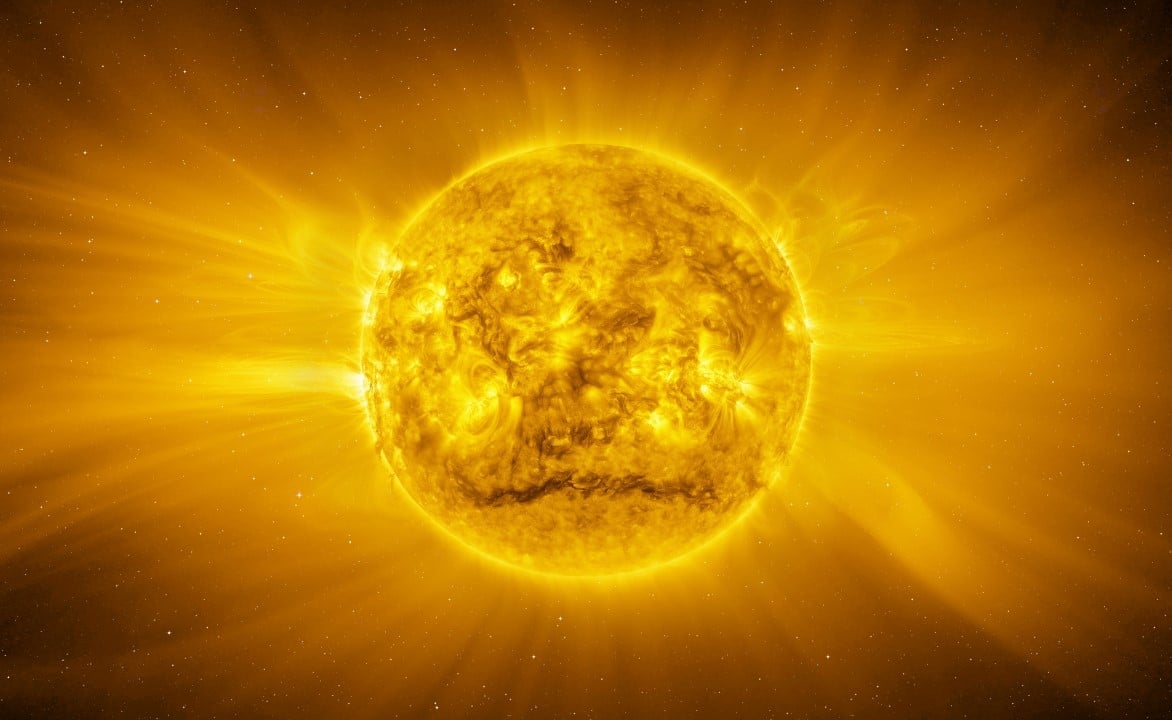
An impressive sequence of instability in our system’s central star resulted in more than twenty explosions recorded in an interval of less than 24 hours, marking one of the periods of greatest recent activity. The phenomenon was driven by a single, gigantic active region, which demonstrated extremely volatile behavior and captured the attention of space monitoring agencies around the globe. Astrônomos and space weather experts maintain constant vigilance as the region continues to show signs of complex magnetic growth.
The region responsible, technically identified as sunspot AR4366, has established itself as one of the most powerful areas on the current solar surface, generating three eruptions of Classe X, the most intense category on the solar X-ray measurement scale. Além of these events of great magnitude, the monitoring recorded no less than 17 other explosions of lesser intensity, creating a scenario of constant bombardment of radiation towards the inner space of the solar system.
These energetic manifestations have already caused tangible consequences in the Earth’s atmosphere, causing significant interruptions in communication systems that depend on the ionosphere. The magnitude of the disruption highlights the vulnerability of modern technologies to severe space weather events and reinforces the need for security protocols for satellites and electrical grids at peak times in the solar cycle.
NOAA’s Centro of Previsão of Clima Espacial (Administration Nacional Oceânica and Atmosférica) classified the immediate effects as an R3 level radio blackout, considered severe. The persistence of activity in the AR4366 spot suggests that new events may occur in the coming days, keeping alert teams on standby to mitigate possible damage to global technological infrastructure.
Immediate impacts on global communications
The culmination of this series of events occurred on February 1, when instruments detected a massive explosion of magnitude X8.1. The abrupt release of electromagnetic energy traveled at the speed of light, reaching Terra in just over eight minutes and ionizing the upper layers of the atmosphere. Este process drastically altered the propagation conditions of radio waves, preventing the reflection of signals at different frequencies.
Navigators and amateur radio operators in the Oceano Pacífico Sul region were the first to notice the effects, experiencing a sudden silence on frequencies below 30 MHz.
Signal loss in high frequency (HF) bands represents a significant operational risk for industries that rely on long-distance communications without the use of satellites. Durante the event:
– Embarcações seafarers lost temporary contact with land bases.
– Aeronaves on transoceanic routes needed to resort to alternative satellite communication systems.
– Serviços emergency services using HF radio bands faced immediate coordination difficulties.
– Sistemas of precision geolocation showed momentary signal degradation.
Experts warn that, as long as the spot remains facing Terra, the ionosphere will remain unstable. Extreme ultraviolet radiation and X-rays emitted during explosions increase the density of layer D of the ionosphere, absorbing radio waves instead of refracting them, which causes so-called communication “blackouts.”
Evolution and complexity of the AR4366 stain
The magnetic structure of the AR4366 spot evolved rapidly after appearing on the eastern limb of Sol, showing growth that surprised solar physicists. Historicamente, scattered sunspots tend to be less dangerous, but this particular region has coalesced, forming a dense, dark core that now rivals in size some of the largest sunspots ever recorded, evoking comparisons with the famous Evento Carrington of 1859.
The determining factor for the violence of the explosions is the magnetic configuration of the region, classified as “Delta”. Nesta configuration, magnetic fields of opposite polarities (north and south) are forced to exist in extreme proximity within the same penumbra. Essa magnetic tension is unsustainable in the long term and results in violent magnetic reconnections, the physical process that releases stored energy in the form of solar flares and intense heat.
Detailed observations show that the spot continues to develop new cores, maintaining high instability. The energy accumulated in this region is enough to fuel new Classe X explosions, which keeps the risk of new radio blackouts high. The scientific community is monitoring whether the structure will maintain its integrity or fragment in the coming days, which could change the type of threat presented.
Risks of Ejeção of Massa Coronal
In addition to electromagnetic radiation, the main concern now turns to the possibility of Ejeções of Massa Coronal (CME). Diferente of the flashes of light that arrive in minutes, CMEs are gigantic clouds of plasma and magnetic field that travel more slowly through space, and can take one to three days to reach our planet. Quando these clouds collide with the Earth’s magnetosphere, they can trigger geomagnetic storms.
Coronagraphs at the SOHO observatory are analyzing the images to confirm whether the X8.1 explosion launched significant material toward Terra. Caso a terrestrial component is confirmed, the interaction with the planet’s magnetic field could induce electrical currents in the ground and upper atmosphere. Isso represents a danger for power transmission networks in high latitudes, which can suffer from overloads and damage to transformers.
Geomagnetic storms are also responsible for the expansion of the upper atmosphere, which increases drag on low-orbit satellites. Operadores of satellites need to be alert to perform orbit correction maneuvers, preventing the equipment from losing altitude or going into safety mode unnecessarily. On the other hand, the phenomenon also promises visual spectacles, with the possibility of northern lights and southern lights visible at lower latitudes than usual.
Context of Ciclo Solar 25
The intensity of recent events confirms that Ciclo Solar 25 is exceeding initial predictions made by international panels. The solar cycle, which lasts an average of 11 years, alternates between periods of calm and maximum activity. Atualmente, Sol passes through its Máximo Solar, a phase characterized by an increase in the number of spots and the frequency of violent explosions.
Preliminary models suggested that Ciclo 25 would be moderate, similar to its predecessor. However, the observed reality shows much more dynamic behavior, with sunspot counts consistently above forecast curves. Isso indicates that the internal dynamics of the solar dynamo — the mechanism that generates the star’s magnetic field — is operating in a high-efficiency regime.
The continuity of this high activity requires adaptation on the part of the technological sectors. With increasing dependence on GPS systems for precision agriculture, aviation and logistics, space weather has become critical data for the global economy. The resilience of modern infrastructures will be tested as the cycle progresses, and the AR4366 spot serves as a potent reminder of our star’s unstoppable force.
SEO Keywords: X8.1 solar storm, radio blackout, sunspot AR4366, NOAA space weather, solar flare today.
Links researched:
https://www.swpc.noaa.gov/
https://spaceweather.com/
https://www.nasa.gov/solar-cycle-25/
