
The Japanese automaker officially announced the arrival of the new entry-level sports utility vehicle at Brazilian dealerships, marking a complete renewal of its portfolio for this year. The model arrives on the national market strategically positioned below the HR-V and ZR-V brothers, with the mission of attracting consumers looking to migrate from hatchbacks to the fastest growing segment in the country. The commercial strategy focuses on two well-defined versions, EX and EXL, both equipped with a robust technological package.
Developed on the global platform that equips the City family, the vehicle has dimensions that favor family use and urban traffic. The engineering project resulted in a car measuring 4.32 meters long and with a wheelbase of 2.65 meters, measures that guarantee comfortable accommodation for five occupants. The functional highlight is the 458-liter trunk, a volume higher than the category average.
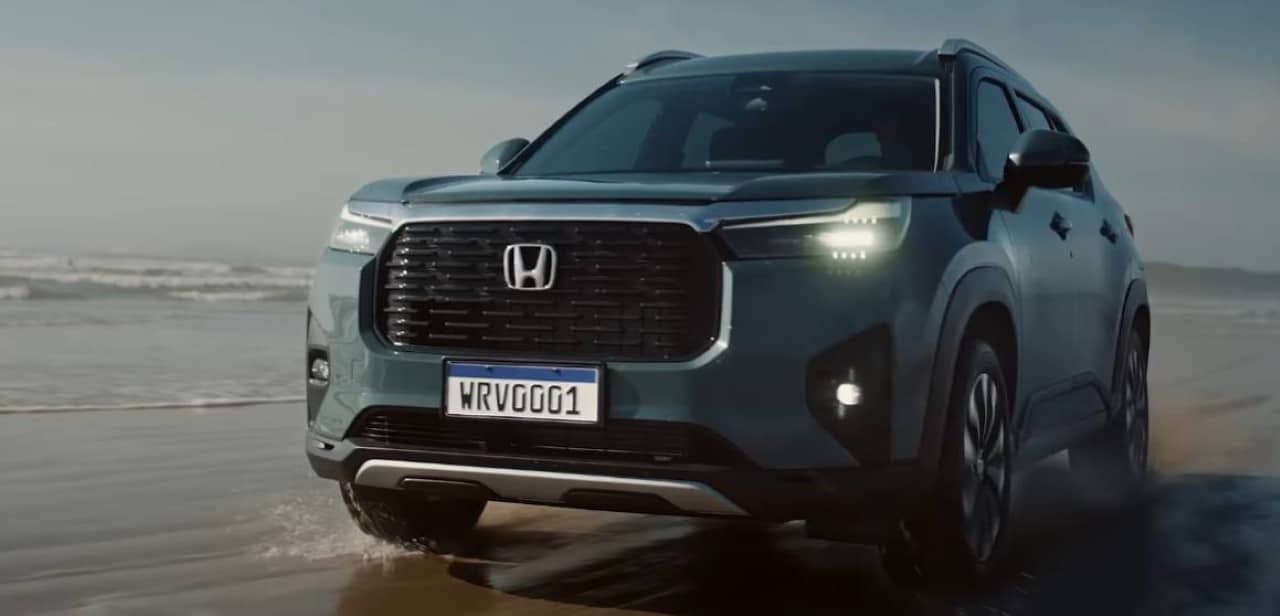
The aesthetic renewal breaks with the design of the previous generation, abandoning the minivan silhouette to adopt straighter and more imposing lines. The front features a tapered LED optical assembly, integrated into a front grille with a chrome finish, while the rear features flashlights that invade the trunk lid. The ground clearance of 22.3 centimeters reinforces its ability to face the uneven asphalt of Brazilian cities.
Interior and technological features
The cabin received special attention in terms of finishing and distribution of controls, aiming for ergonomics and perception of quality. The top-of-the-line EXL version offers synthetic leather covering on the seats and steering wheel, as well as digital air conditioning with automatic temperature control. The instrument panel mixes analog displays with a configurable 7-inch TFT screen.
In the center of the dashboard, the 10-inch multimedia center acts as the car’s electronic brain, offering wireless mirroring for Apple CarPlay and Android Auto. Connectivity is expanded by the My Honda Connect system, which allows the owner to monitor the vehicle’s status, track its location and perform remote commands via a smartphone app.
For rear seat passengers, the automaker included dedicated ventilation outlets, an item frequently demanded in this segment. Legroom has been optimized thanks to the elongated wheelbase, providing greater comfort on long journeys. The internal versatility is complemented by modular seats, which allow for different load configurations.
Security as standard
One of the main competitive differentiators of the launch is the inclusion of the Honda Sensing package in all available configurations. The driving assistance system uses cameras and sensors to mitigate accident risks. Entre active features include adaptive cruise control (ACC) and the collision mitigation braking system.
The occupant protection package is reinforced by the following factory items:
– Seis airbags (front, side and curtain) in all versions.
– Assistente lane keeping with direction correction.
– Controle stability and traction (VSA) and ramp start assistant.
– Sistema child seat attachment Isofix and multi-view rear camera.
Performance and energy efficiency
Under the hood, the manufacturer maintained its commitment to the reliability of the 1.5 i-VTEC flex-aspirated engine, which delivers up to 126 horsepower. The engine works together with a CVT automatic transmission, which simulates seven speeds and offers manual changes through paddles on the steering wheel in the more expensive version. The mechanical package prioritizes smoothness of ride and fuel economy over sportiness.
The consumption data measured by the Inmetro positions the model as an efficient option for daily use. With gasoline, the SUV records averages of 12 km/l in the urban cycle and reaches 12.8 km/l on highways. Quando fueled with ethanol, the figures are 8.2 km/l in the city and 8.9 km/l on the highway, guaranteeing good autonomy for travel.
The suspension was calibrated specifically for the local market, absorbing impacts competently without compromising stability in curves. The progressive electrically assisted steering facilitates maneuvers at low speeds and becomes firmer as acceleration increases.
Pricing table and positioning
The pricing policy adopted puts the launch in direct competition with consolidated rivals such as Volkswagen Nivus and Fiat Pulse. The entry-level version, called EX, hits the market with a suggested price of R$147,100. Esta configuration already offers the complete security package and multimedia center, focusing on cost-benefit.
The top-of-the-line option, EXL, has a listed price of R$152,100. The difference of five thousand reais adds convenience and aesthetic items, such as leather seats, induction cell phone charger and LED fog lights. Ambas versions come with a three-year warranty, with no mileage limit.
Immediate availability in stores and the brand’s after-sales reputation are bets to boost registrations in the first half of the year. The model is expected to account for a significant portion of the automaker’s total sales volume this year.
