
The interstellar comet 3I/ATLAS, a visitor from another star system, had its first appearance recorded by a telescope at Chile ten days before its official discovery. Este extraordinary event occurred during calibration tests of equipment not yet operational, the Observatório Vera C. Rubin.
The unprecedented capture, which took place on June 21, 2025, highlighted the advanced technical capabilities of the telescope, which, even in the testing phase, managed to immortalize the passage of the celestial body. The retrospective analysis of archive images was crucial to identify the trail of the interstellar comet, which was already beginning to eject organic material.
Although Embora’s formal discovery was credited to the automated ATLAS system at a later date, photographs of Vera Rubin revealed that the comet was already present in the data. Este initial record underlines the importance of high-precision instruments in detecting fleeting and unexpected astronomical phenomena.
Cosmic Visitor Advance Registration
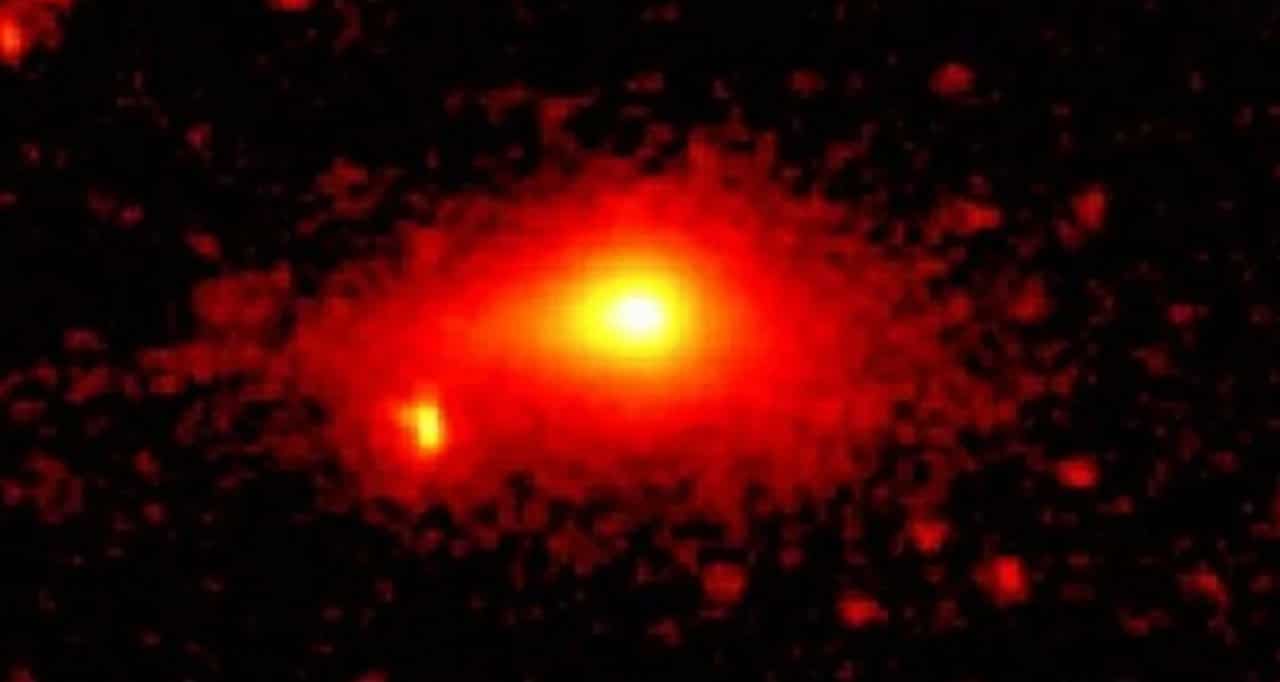
On June 21, 2025, just two days before its official opening, the 8.4-meter-diameter telescope, renamed in honor of scientist Vera Rubin, was carrying out test observations. The technical team was focused on calibrating the complex optical and electronic systems, without the primary intention of making scientific discoveries.
The archival images, generated during these routine procedures, were later re-examined by astronomers. It was during this process that the unmistakable trail of comet 3I/ATLAS was identified, clear evidence of its presence in the skies before any formal announcement to the global scientific community.
The unique features of Vera Rubin
The Observatório Vera C. Essa feature is complemented by unprecedented light gathering power, capable of detecting extremely faint and distant objects.
Essa combination of broad coverage and high sensitivity proved to be decisive for the 3I/ATLAS registration. The area of the sky where the comet was during its initial passage was not being monitored by other detection systems at the time, making the capture of Vera Rubin a fortuitous and valuable occurrence.
Unraveling the nature of interstellar comets
Observing objects from other star systems offers a unique window into understanding the formation and evolution of stars and planets outside our solar system. Análises of the composition, orbit and speed of comets like 3I/ATLAS provide clues to the primordial material of distant nebulae.
Estes cosmic visitors are relatively rare and difficult to track due to their high speeds and hyperbolic trajectories, which take them quickly outside the solar system. Cada detection contributes significantly to knowledge about the diversity of celestial bodies that roam the galaxy.
The contribution of the ATLAS automated system
The formal discovery of comet 3I/ATLAS was later attributed to the automated system ATLAS (Asteroid Terrestrial-impact Last Alert System). Este system is designed to continuously scan the night sky, identifying and tracking moving bodies that could pose threats or new astronomical discoveries.
Organic material and life in the universe
Comet 3I/ATLAS has proven particularly interesting for ejecting organic material during its approach to the Sun. The presence of organic compounds, which are the building blocks of life, in interstellar objects suggests that these elements may be widely distributed throughout the universe.
Analysis of these materials can provide important data on the chemical processes that occur in different stellar environments, in addition to strengthening the panspermia hypothesis, which postulates the transfer of life or its precursors between planets through celestial bodies. The in-depth study of the composition of 3I/ATLAS will be crucial for astrobiology.
Challenges in Intercepting Fast Celestial Objects
Objetos that originate in other star systems and transit through our Sistema Solar are characterized by their high speed and unique trajectories. The Essa characteristic implies that they remain observable for extremely short periods, usually only when they are sufficiently close to the Terra and acquire sufficient brightness to be detected.
The interception and study of these bodies require instruments with advanced monitoring capabilities. Telescópios need to cover large portions of the sky continuously and with observation depth, ensuring that no passing event escapes detection before the object moves away into interstellar space again.
The future of exploration with LSST
The gigantic camera of the Legacy Survey of Space and Time (LSST), an integral part of the Observatório Vera C. Graças to it, it was possible to construct a detailed timelapse of the movement of comet 3I/ATLAS as it approached Sol.
Este technological resource is vital for providing accurate data on the trajectory, speed and physical changes of these cosmic visitors. Vera Rubin is poised to significantly improve the detection and tracking of transient celestial objects, including asteroids, supernovae, and especially more interstellar comets.
The telescope’s ability to monitor the entire southern sky with unprecedented frequency opens new frontiers for astronomy. Pesquisadores hope to identify more of these enigmatic objects, expanding understanding of the dynamics of the universe and the formation of stellar systems beyond our own. The Observatório Vera C. Rubin establishes itself as an indispensable tool for future astronomical discoveries.
