
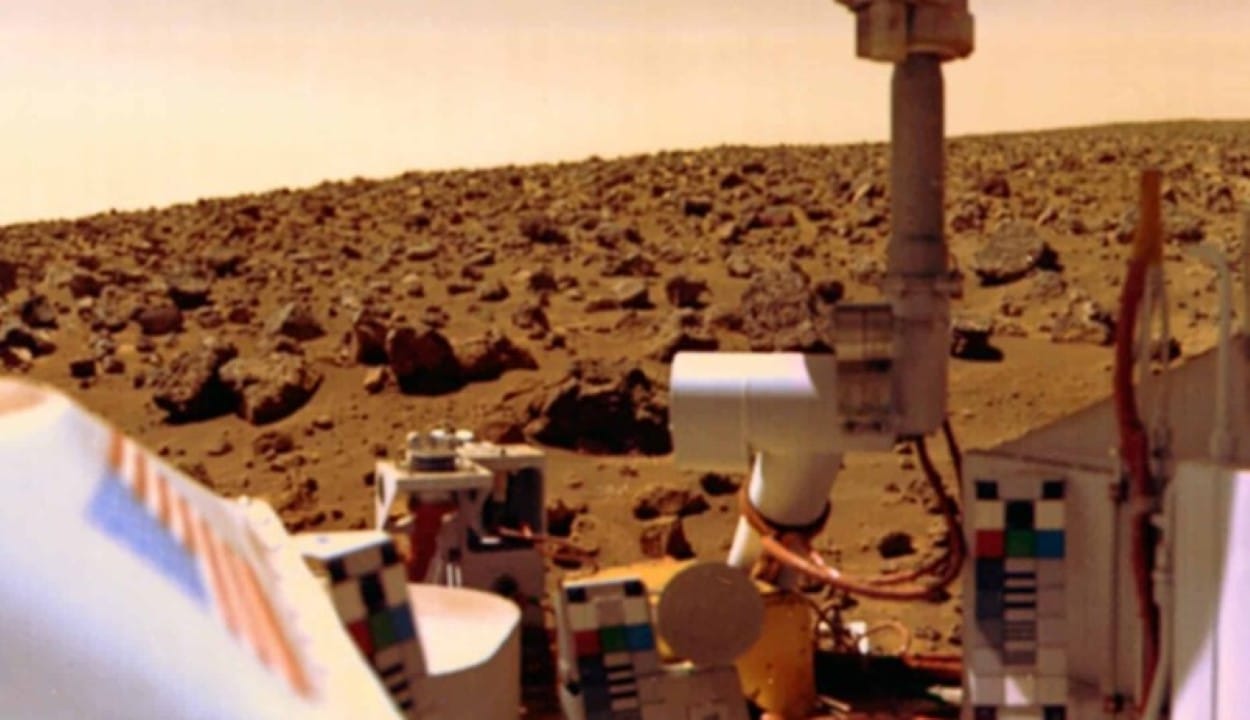
The Viking 1 and 2 probes, launched by NASA in 1975 and which landed on Marte in 1976, carried out the first direct biological experiments on the surface of the red planet. The results of the tests, conducted almost 50 years ago, generated controversial interpretations at the time, with the agency concluding the absence of life due to the lack of organic compounds detected.
Scientists have revisited this data recently, proposing that positive signals in some experiments may indicate microbial activity, but the thermal methods applied destroyed potential evidence. The discovery of perchlorate in Martian soil by later missions, such as Phoenix in 2008, offers an explanation for the ambiguous results, suggesting that heating the samples reacted with oxidizing salts and organic compounds, producing gases rather than preserving complex molecules.
The biological experiments included three main modules in each lander: tracer release, pyrolytic release and gas exchange. Eles added radioactively labeled nutrients to the soil and monitored gas releases, with responses that, in some cases, resembled metabolic processes. The GC-MS instrument, responsible for chemical analysis, heated the samples to high temperatures, detecting only methyl chlorides and carbon dioxide, which led to the interpretation of sterility. Current Pesquisas indicate that perchlorate, abundant in Marte, decomposes organics during heating, masking its original presence.
- The landers landed in different locations: Viking 1 on Chryse Planitia (20 July 1976) and Viking 2 on
- The probes operated for years longer than planned, sending back more than 50,000 images and data on the atmosphere, soil and geology.
- Biological experiments were performed in duplicate in both modules to validate results.
Recent review of data from the Viking mission
Scientists such as Steven Benner, from Fundação to Evolução Molecular Aplicada, argue that organic molecules were detected indirectly through their degradation products in thermal tests. Essa perspective comes after confirmations of organic compounds by rovers like Curiosity and Perseverance in more recent samples. The presence of perchlorate explains why GC-MS did not directly identify complex molecules, as the process destroyed potential evidence rather than preserving it.
The model proposed by Benner, called BARSOOM, describes hypothetical microorganisms that breathe oxygen stored in the soil, justifying gas releases observed in experiments. Essa hypothesis integrates positive results from the marker release experiment, defended by Gil Levin, responsible for the test at the time. The review emphasizes that the original conclusion of the absence of life may have been hasty, delaying advances in Martian astrobiology.
Biological experiments and ambiguous results
The tracer release experiment added carbon-14 nutrients to the soil and measured radioactive CO2 production, recording increases consistent with microbial metabolism in samples from both landers. The pyrolytic release exposed soil to light and nutrients to detect carbon fixation, with initial positive signals. Já the gas exchange system monitored variations in oxygen and other gases when moistening the soil, revealing rapid release of oxygen.
These patterns were not replicated in sterile controls, strengthening the biological possibility at the time. However, the absence of organics in the GC-MS prevailed in the official decision. Estudos later studies demonstrated that perchlorate reacts with organics at 120°C or more, generating the detected chlorides and releasing CO2.
Perchlorate and its influence on the 1976 tests
The Phoenix probe confirmed perchlorate in 2008, an oxidizing compound present throughout the planet. Rafael Navarro-González showed in 2010 that this substance, when heated with organic matter, produces methyl chloride and carbon dioxide, exactly as observed in the GC-MS of Vikings. Essa chemical reaction explains the negative results for organics without the need for terrestrial contaminants.
The presence of perchlorate also suggests that any microorganisms on the surface would need extreme adaptations to survive. Current Missões seek samples in deeper layers, where oxidizing salts are less dominant, to avoid similar destruction.
Advances in subsequent missions reinforce debate
Rovers like Curiosity have detected organic molecules preserved in ancient rocks, indicating that Marte had conditions favorable to life in the past. Perseverance collects samples for return to Terra, focusing on biosignatures in lake sediments. Esses modern findings contextualize the Viking data, suggesting that the 1976 interpretation underestimated indirect evidence.
The scientific discussion remains open, with calls for rigorous debate ahead of manned missions that could alter the Martian environment. The Vikings results remain a fundamental reference in the search for extraterrestrial life.
