
A recent analysis highlights that current understanding of interstellar objects may be significantly distorted, influenced by a form of survivorship bias. Este phenomenon, originally identified in a military context to understand the vulnerability of aircraft in Segunda Guerra Mundial, suggests that scientific observations are focused only on celestial bodies that, due to their intrinsic characteristics, can be detected by available technology. Assim since military strategists of the time focused on the points of least damage on the returning planes, ignoring that the points of no damage on the non-returning aircraft were fatal, astronomy may be observing only the “survivors” that cross our solar system and fall within our observation limits, leaving a vast population unseen.
The detection methodology used so far, which is based on surveys developed for other purposes, has revealed only a tiny fraction of the universe of interstellar objects. Esses cosmic visitors that are large, bright, active or close enough end up being the only ones to be catalogued, creating a non-representative sample of the totality. Isso raises crucial questions about the true nature, composition and prevalence of these enigmatic space travelers.
This scientific perspective highlights a fundamental gap in our knowledge, suggesting that the properties we attribute to interstellar objects may not reflect reality. The diversity of the few identified objects, although intriguing, may be masking the presence of many others with completely different characteristics, which remain hidden due to the current limitations of observation instruments.
Understanding bias in space observation
It is essential to differentiate survival bias from the more well-known selection bias. Selection bias occurs when a researcher consciously or unconsciously chooses an unrepresentative subset of a population that is, in principle, accessible. For example, when studying only bright galaxies in a catalog that contains both bright and faint galaxies, distortion is introduced by the sample choice.
However, the problem of detecting interstellar objects is substantially different. Não we are selecting a biased sample from an existing, accessible catalog. The sample we analyzed is the totality of all interstellar objects ever detected – just three to date. The bias is not in the data analysis, but in the data itself, as objects that are very small, dark, fast or poorly positioned were never recorded and therefore left no observational trace.
Known interstellar objects
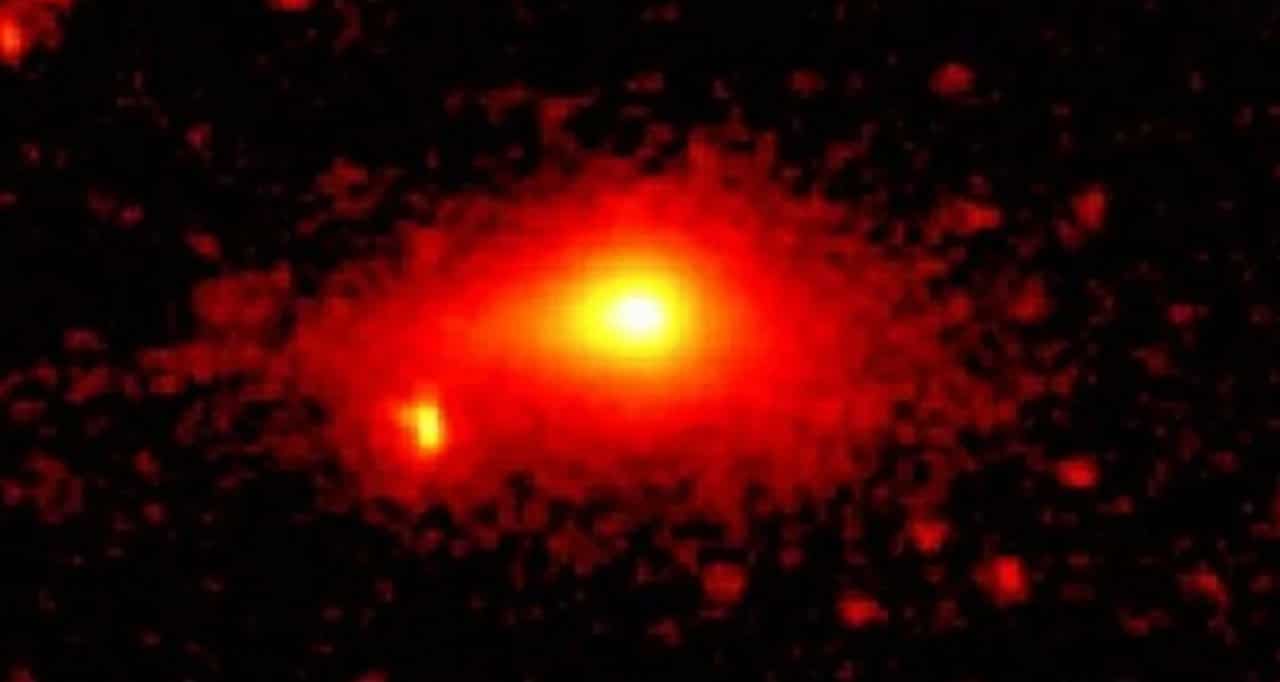
The small sample of known interstellar objects (ISO), although limited, already demonstrates remarkable diversity, and the circumstances of their discoveries are as illuminating as the objects themselves. The first confirmed, 1I/’Oumuamua, detected in 2017 by Pan-STARRS1, exhibited no detectable coma or outgassing, but its anomalous acceleration and elongated shape generated intense debate. Sua detection was fortuitous, occurring because it passed a minimum distance from Terra. In 2019, 2I/Borisov was spotted by amateur astronomer Gennadiy Borisov, presenting a classic cometary coma, which made it more conventional in its detection. Já 3I/ATLAS, identified in 2025 by the ATLAS survey, turned out to be the most massive and complex, with its brightness amplified by a dust coma that was crucial to its identification. Observações’s subsequent Telescópio Espacial Hubble confirmed that, without this coma, 3I/ATLAS would not have been detected, clearly illustrating how the properties of the observed ISOs reflect detection thresholds more than the actual population of these celestial bodies.
The representation trap: a warning for science
A crucial cognitive dimension compounds the statistical problem, distinguishing this conceptual framework from purely astronomical discussions of completeness. The three known interstellar objects – 1I/’Oumuamua, 2I/Borisov, and 3I/ATLAS – exhibit remarkably distinct properties: ‘Oumuamua was inert and anomalous, Borisov conventional and cometary, and ATLAS chemically complex and massive.
Such diversity activates what psychologists Kahneman and Tversky called the representativeness heuristic. Esta is the tendency to judge a small sample as representative of a larger population when it exhibits internal variety. The illusion of population coverage arises, creating a convincing but misleading sense that the population has been adequately sampled.
Research on cognitive biases in science, such as confirmation bias and aversion to null results, demonstrates how positive findings in small samples can be overestimated. Conclusões Premature decisions are reinforced by selective attention to supporting evidence, and teams of experts can promote rapid consensus even with limited data.
Three data points, drawn exclusively from the detectable portion of the parameter space, cannot effectively constrain the properties of the undetectable majority, no matter how different these three objects appear from each other. The astronomical community must therefore resist drawing hasty conclusions about the nature of the interstellar population.
Four axes of cosmic invisibility
The survival bias structure has immediate quantitative implications, indicating that current population estimates are merely lower bounds for the true numerical density of interstellar objects. When evaluating the fraction of parameter space currently accessible, four axes of observational sensitivity are considered.
First, size: current surveys are sensitive to objects with effective diameters of at least 100 meters. Contudo, power-law extrapolation of solar system size distributions suggests that smaller objects outnumber larger ones by several orders of magnitude, indicating that most of the true size distribution remains inaccessible.
Second, albedo: because optical surveys rely on reflected sunlight, they preferentially detect objects with moderate to high albedo. Corpos with geometric albedo below approximately 0.02, similar to the darkest known asteroids, would fall below detection thresholds at distances greater than 0.5 AU, making about 70% of the albedo distribution currently invisible.
Third, speed: the need for multiple nighttime arc detections to confirm an object and calculate its orbit imposes an upper speed limit of about 200 km/s. Faster Objetos, which produce faint bands or single frame detections, are discarded by current systems. Estima 40% of expected interstellar objects are expected to be below this limit.
Finally, the activity: two of the three detected objects (2I/Borisov and 3I/ATLAS) showed outgassing and dust production, amplifying their apparent brightness by significant factors. Corpos inactives of equivalent size would be orders of magnitude weaker. The only inactive detection, 1I/’Oumuamua, required an exceptional approach to Terra. Estima It is expected that only 10% of interstellar objects exhibit sufficient activity to increase coma at the distances covered by current surveys.
Proposals for more comprehensive detection
To overcome multidimensional survivorship bias, a single instrument is not enough; a complementary architecture is needed, where each modality addresses a specific axis of invisibility. Observatório Vera C. Rubin, with its Legacy Survey of Space and
For complete temporal and geographic coverage, a complementary observatory in the northern hemisphere, such as the planned Argus Array, and an Rede Abrangente of Objetos Interestelares (CISON) that combines wide-field discovery with rapid characterization and intercept missions is needed. Além Additionally, real-time machine learning methods are crucial to capturing visitors faster by operating on the basis of unique exhibits.
In the long term, gravitational detection represents a fundamental solution, as space-based gravitational wave experiments could detect test mass perturbations caused by dark objects. Embora still dependent on future detector sensitivities, this capability is completely independent of electromagnetic radiation, albedo or outgassing, opening a new window onto the universe.
The Future of Cosmic Visitor Exploration
Astronomy has a history of overcoming survivorship bias, with each advance in instrumentation revealing populations invisible to previous technology. The “detectable bombers” we observe tell us that the interstellar medium brings us material, but the next generation of observatories needs to tell us about the true statistical and physical nature of these travelers. Future advances in detection capability should not only identify more objects, but also reveal qualitatively different types that currently remain beyond our reach.
