
The European division of Honda officially renewed the XL750 Transalp, presented to the public during the Salão of Milão, consolidating important updates for the medium displacement segment. The adventurous model now has the E-Clutch system, an electronic clutch technology that eliminates the need to operate the left lever during gear changes, although it maintains the possibility of manual use depending on the driver’s preference. The new feature aims to increase comfort on urban journeys and facilitate riding on rough terrain, where traction control is essential.
Innovation in transmission and comfort
The E-Clutch system appears as the main competitive differentiator of the new Transalp compared to rivals in the global market. The technology electronically manages the engagement and disengagement of the clutch, allowing the rider to shift up or down gears just by using the gearshift pedal. The system acts instantly, smoothing out the jerks common during sudden downshifts and preventing the engine from “dying” at low speeds, a valuable feature for heavy traffic in large cities or technical off-road passages.
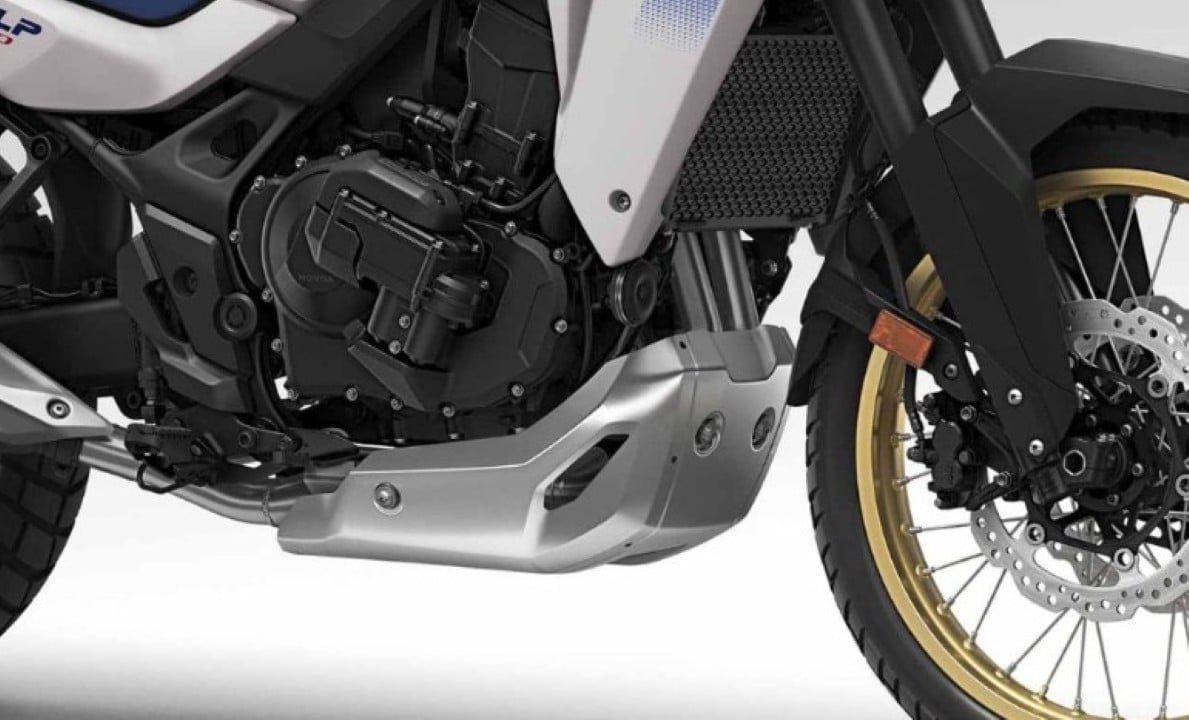
In addition to operational ease, the Honda maintained the conventional clutch lever, ensuring that purists or pilots in specific situations can intervene on the system at any time. The integration of this technology did not significantly change the weight of the package, keeping the motorcycle agile and balanced, characteristics that have defined the line since its original launch in the 1980s.
Cycling and suspension improvements
Responding to frequent demand from consumers for the previous version, the Japanese manufacturer implemented substantial improvements to the adventurer’s suspension set. The components, supplied by Showa, now offer complete adjustments at both the front and rear. The 43 mm inverted fork and rear shock absorber with Pro-Link system allow preload and return adjustments, allowing the rider to adapt the bike to their weight, presence of a pillion or amount of luggage.
The new suspension configuration directly impacts driving dynamics, offering greater stability on highways and better shock absorption on dirt roads. The geometry of the steel diamond-type chassis was maintained, preserving the robustness necessary for mixed use, while the spoked wheels — 21 inches at the front and 18 at the rear — remain standard, reinforcing the model’s off-road capability.
Engine and technology package
At the heart of the motorcycle, the Honda maintained the 755 cm³ Unicam parallel twin-cylinder engine, shared with the CB750 Hornet. The engine delivers 92 horsepower at 9,500 rpm and a torque of 7.6 kgf.m, numbers that position the Transalp among the most powerful in its category. Energy efficiency has also been preserved, with a declared average consumption of 23 km/l, which projects a range of close to 390 kilometers thanks to the 16.9 liter tank.
The electronics package remains robust, offering five different riding modes: Standard, Sport, Rain, Gravel and User. Cada mode changes power delivery, engine braking and intervention from traction control (HSTC) and ABS, which can be switched off at the rear wheel for use on dirt. The interface with the pilot is via a 5-inch color TFT panel, which offers connectivity via the brand’s proprietary app.
Aesthetically, the renovation brought a slightly modified front look, inspired by the Africa Twin, with a new LED optical assembly that improves nighttime lighting. The color palette was updated for the European market, including options such as the classic Ross White Tricolor, the sober Mat Ballistic Black Metallic and the new Pearl Deep Mud Gray, giving the set a more modern and aggressive look.
