
Samsung announced a significant update to the Galaxy Wearable application, responsible for managing the company’s wearable devices. Essa change directly affects users of older models of smart bracelets, such as the Galaxy Fit and Galaxy Fit, launched in 2019. The update, which began to be distributed gradually from the Coreia and Com isso, proprietários dos wearables afetados precisam avaliar opções para continuar utilizando os dispositivos de forma eficiente.
The end of support means that, after installing the new version of the app, it will no longer be possible to configure or customize old bracelets directly via your smartphone. The South Korean company justified the measure as part of an effort to optimize the application for newer technologies. Usuários who choose not to update Galaxy Wearable will be able to maintain current features, but lose access to future improvements. Essa strategy reflects a common trend in the technology sector, where support for legacy hardware is gradually reduced to focus on new innovations.
- The original Galaxy Fit offers basic fitness tracking like step counting and sleep monitoring.
- The Galaxy Fit is a more compact version, with an emphasis on notifications and long battery life.
- Both models were popular for their affordable price and integration with the Samsung ecosystem.
- The update mainly impacts those who use these devices for daily fitness without the need for advanced features.
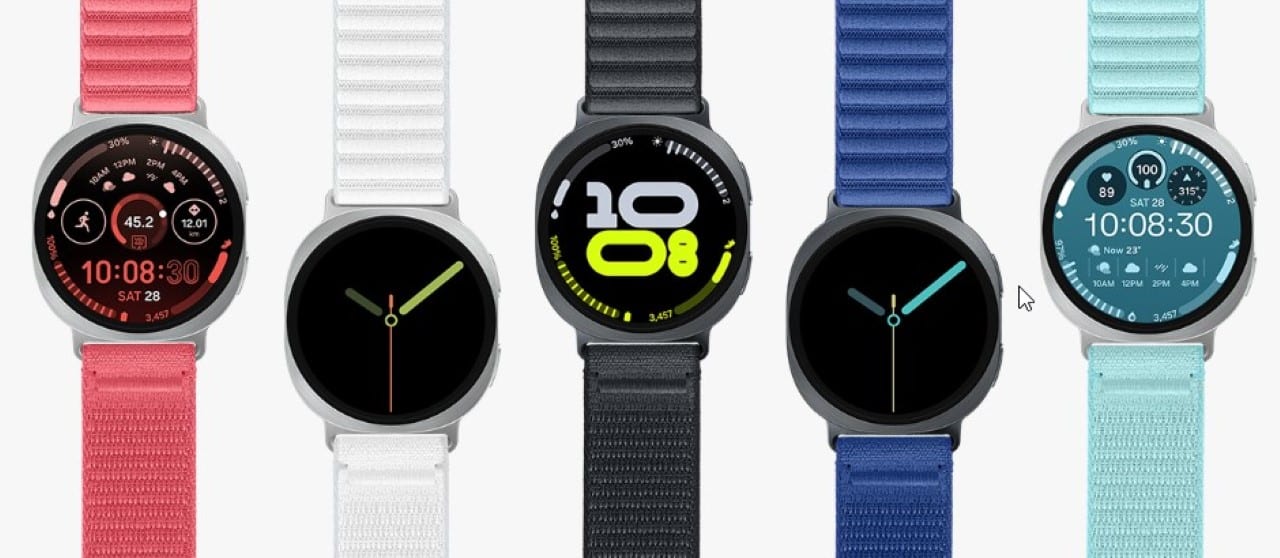
This transition comes at a time of expansion for Samsung’s wearables line, with the imminent launch of new headphones and smartphones. The company plans to present the Galaxy Buds 4 and Galaxy Buds 4 Pro during the Galaxy Unpacked event, scheduled for February 25, 2026. commitment to integrated updates.
Evolution of the Galaxy Wearable app and its main features
The Galaxy Wearable has evolved considerably since its initial launch, serving as a central hub for connecting smartwatches, headphones and bracelets to your smartphone. Inicialmente focused on basic synchronization, the app now includes advanced tools for health monitoring and interface customization. The latest version incorporates visual elements from One UI 8.5, making navigation more intuitive and aligned with the design of Samsung mobile devices. Essa update guarantees a unified experience for users who have multiple brand gadgets.
Users report that the new layout makes it easier to access quick settings, such as adjusting notifications and firmware updates. Removing support for older models allows the app to be optimized for more powerful hardware, reducing bugs and improving overall performance. Para who migrates to current wearables, such as the Galaxy Fit 3, the application offers integration with the Samsung Health, allowing detailed analysis of fitness data. Essa integration is essential for amateur athletes looking for accurate metrics without complex equipment.
Impacts for users of legacy wearable devices
Galaxy Fit and Galaxy Fit owners face immediate challenges with the upgrade. Sem official support, manual configuration becomes limited, requiring alternative solutions such as third-party apps or manual device maintenance. Muitos users choose to keep the old version of the app to preserve functionality, but this can expose the system to security vulnerabilities. Samsung recommends purchasing newer models, which offer longer-lasting batteries and improved sensors for measuring heart rate.
The company’s decision reflects standard practices in the industry, where the product life cycle is finite to prioritize innovations. However, this generates discussions about sustainability, as functional devices are discarded prematurely. Environmental Organizações suggests manufacturers extend support to reduce electronic waste. Para To mitigate the impact, Samsung offers discounts on exchanging old wearables for new ones, encouraging upgrades without excessive cost.
This change also affects the secondary market, where used bracelets lose value due to lack of support. Revendedores need to inform buyers about limitations, avoiding post-purchase frustrations. In online forums, user communities share tips to overcome the problem, such as using old APK versions of the app. Essas solutions, however, are not endorsed by the manufacturer and may compromise system stability.
Alternatives in the smart bracelet market
Faced with the end of support, users are looking for options compatible with the Samsung ecosystem or independent. The recently launched Galaxy Fit 3 stands out for its AMOLED screen and tracking of more than 100 sports activities. Seu affordable price makes it a natural transition for those using older models. Além also integrates seamlessly with the updated Galaxy Wearable, offering regular updates and support for new features like fall detection.
Competitive brands, such as Fitbit and Xiaomi, offer bracelets with similar features at competitive prices. The Fitbit Charge 6, for example, includes built-in GPS and stress monitoring, overcoming limitations of the legacy Galaxy Fit. Já to Mi Band 8 from Xiaomi focuses on long battery life and broad compatibility with Android. Essas alternatives allow users to maintain fitness habits without relying exclusively on Samsung.
For those who prefer to stay within the South Korean company’s ecosystem, the Galaxy Watch 7 offers a more complete experience, with independent calls and native apps. Embora more expensive, justifies the investment for advanced users. Lojas online facilitates comparisons, helping to choose based on specific needs such as water resistance or integration with virtual assistants.
Migrating to new devices also involves data transfer, facilitated by tools in the Samsung Health app. Usuários can export activity histories to avoid losing information accumulated over the years.
Samsung Wearables History and Lessons Learned
The Galaxy Fit line began in 2019 with a focus on accessibility, competing with products like the Apple Watch in basic fitness niches. The original model sold millions of units globally, driven by marketing campaigns that emphasized durability and simplicity. Seu ergonomic design attracted casual users, while the Galaxy Fit and targeted emerging markets with reduced price. Esses launches consolidated Samsung’s presence in the wearables sector, which grew 15% annually according to market reports.
Over time, the company expanded the line to include smart rings like the Galaxy Ring, diversifying options for health monitoring. The Wearable update reflects this evolution, prioritizing compatibility with technologies such as AI for data analysis. Past Experiências with similar updates, as in Galaxy Watch 4, show that users adapt quickly, with an increase in sales of new models. Samsung learned to communicate changes in advance, reducing complaints.
Preparations for Galaxy Unpacked and expected news
The Galaxy Unpacked event on February 25, 2026 promises innovations beyond wearables. The Galaxy S26 series will bring more efficient processors and improved cameras, integrating with the Wearable app for seamless synchronization. Os Galaxy Buds 4 Pro, with active noise cancellation, complement the line, offering immersive audio for calls and music. Essa integration strengthens the ecosystem, encouraging brand loyalty.
Analysts predict that One UI 8.5 will bring improvements in privacy and performance, benefiting all connected devices. The gradual updating of the app guarantees stability, avoiding overload on the servers. Usuários in regions like Brasil should receive the news in the following weeks, with notifications via Galaxy Store.
Upgrade Benefits for Current Users
The new version of Galaxy Wearable improves usability for new device owners. The refreshed design speeds up tasks like pairing and updates, saving time. Suporte to Buds 4 allows custom settings such as preference-based sound equalization. Para smartwatches, the app now includes advanced sleep metrics, helping with daily health management.
This optimization reduces battery consumption on smartphones, extending the life of the devices. Usuários businesses benefit from integrations with productivity tools like synced calendars. Samsung continues to invest in regular updates, ensuring longevity for current products.
Future trends in wearable technology
The wearables sector is moving towards greater intelligence, with sensors for detecting early diseases. Samsung leads with partnerships in medical research, incorporating biometric data into the Wearable app. Concorrentes like Google and Apple drive innovation, forcing constant updates. In the future, integration with augmented reality is expected, expanding uses beyond fitness.
Consumers demand greater sustainability, putting pressure on manufacturers to extend support. The Samsung transition can inspire more inclusive policies, balancing innovation and environmental responsibility.
Migration strategies for those affected
Users affected by the end of support can adopt simple strategies to minimize disruptions. Manter the outdated app preserves basic functionality, but requires security monitoring. Adquirir a Galaxy Fit 3 involves assessing needs such as swimming or cycling tracking. Lojas officials offer migration guides, making it easy to transfer profiles.
Online communities provide peer-to-peer support by sharing upgrade experiences. Samsung provides customer service channels for queries, ensuring personalized assistance.
