
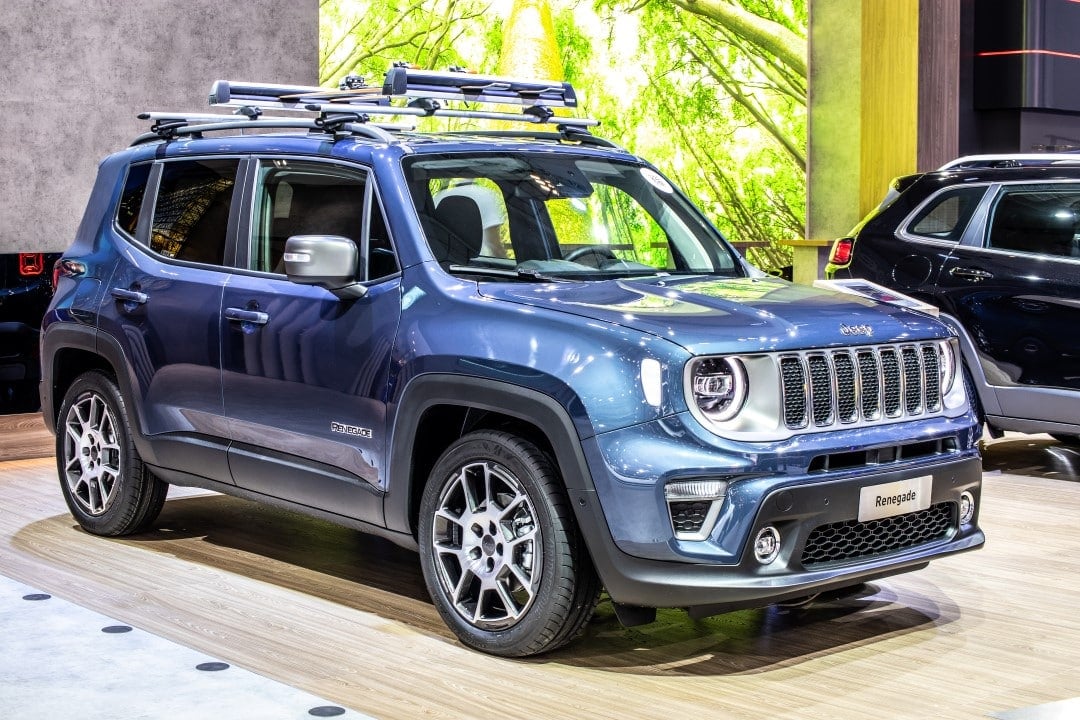
Stellantis finalizes preparations for the introduction of the 2027 Jeep Renegade line on the national market, with the official launch confirmed for the month of April. The automaker’s strategic move involves the technological update of one of the best-selling sports utility vehicles in the country, which is now manufactured with new specifications at Polo Automotivo from Goiana, at Pernambuco. The main change lies in mechanical engineering, which adopts light electrification solutions to meet new energy efficiency demands and current environmental standards.
The industrial schedule indicates that the units are already in the assembly and storage process to guarantee supply to the dealership network simultaneously with the official announcement. The mid-cycle update aims to maintain the model’s competitiveness in the face of the arrival of new Asian and European competitors in the compact segment. Além mechanics, the project includes aesthetic and equipment revisions that seek to modernize the perception of the vehicle’s value among the Brazilian consumer.
Automotive sector experts await the arrival of the model as a barometer for the acceptance of entry-level hybrid technologies in intermediate price ranges. The preservation of the Small Wide 4×4 platform, already consolidated, allowed the Jeep engineering team to integrate the new electrical components without the need for profound structural changes to the car’s body or chassis.
The brand’s commercial strategy positions the renewed SUV in a market range that should act as a bridge between the future launch of the Jeep Avenger and the entry-level versions of the Jeep Compass. With production at an accelerated pace in the Nordeste, the expectation is that the initial distribution volume will meet the pent-up demand for new products in the category, maintaining the registration rates that historically support the brand’s operation in the Brasil.
Implementation of the 48V Bio-Hybrid system
The big technical novelty of the 2027 line is the incorporation of the 48-volt mild hybrid system, commercially named by Stellantis as Bio-Hybrid. Esta architecture replaces the conventional alternator and starter motor with a multifunctional electrical generator coupled to the combustion engine via a reinforced belt. The device is powered by an auxiliary lithium-ion battery, strategically installed so as not to compromise internal space or trunk load capacity.
The system’s operation prioritizes efficiency in urban traffic, where the electric motor with approximately 28 hp and 5.6 kgfm of torque operates at critical moments of consumption. Durante when starting and resuming speed, the electric unit provides additional torque to the crankshaft, relieving the strain on the thermal propellant and reducing fuel injection. In situations of deceleration or braking, the system reverses its polarity to act as a generator, recovering the kinetic energy that would be dissipated as heat to recharge the 48V battery.
The electronic management of the powertrain allows advanced features, such as “coasting” or intelligent freewheeling, where the combustion engine can be decoupled or turned off at cruising speeds under low load demand. The start-stop system also gains refinement, providing almost imperceptible engine shutdowns and restarts at traffic light stops, eliminating the vibrations characteristic of conventional 12-volt systems.
Preliminary engineering estimates indicate a reduction in fuel consumption and pollutant emissions of around 10% in the combined cycle. The six-speed automatic transmission was recalibrated to communicate with the immediate delivery of torque from the electric motor, smoothing shifts and optimizing the working speed range of the 1.3 turbo engine for highway and urban use.
Version catalog restructuring
The commercial offer of the Jeep Renegade 2027 was reorganized to meet different consumer profiles, segmenting access to new propulsion technology. The intermediate and top versions, specifically the Altitude, Longitude and Sahara, leave the factory equipped with the Bio-Hybrid system as standard. Essa decision aims to democratize access to light electrification in configurations with higher sales volume, offering a tangible technological difference.
On the other hand, the entry-level version Sport remains with the traditional mechanical set, using exclusively the 1.3 turbo flex T270 engine without electrical assistance. Essa maintenance aims to preserve a more aggressive initial price for fleet owners and consumers looking for the gateway to the brand, without the additional costs inherent to hybrid technology.
At the top of the range and focused on off-road use, the Willys version maintains its characteristic robust configuration. Este model continues to be equipped with the 4×4 traction system, nine-speed automatic transmission and terrain selector, but does not adopt the mild hybrid system at this time. The engineering choice prioritizes extreme mechanical reliability and the ability to immerse and overcome obstacles, essential characteristics for the off-road public looking for the Trail Rated seal.
Aesthetic updates and visual identity
The exterior design of the Renegade receives specific interventions that seek to align the model with the new global language of the Jeep, without detracting from its iconic square lines. The front features a new seven-slot grille with a textured finish and redesigned moldings, giving the vehicle a more three-dimensional appearance. The bumpers were remodeled to improve approach and departure angles, in addition to incorporating new niches for the fog lights.
The optical set has also undergone revisions, with main headlights that maintain their circular shape, but receive a new LED signature and projectors with greater light efficiency. At the rear, the lights gain new internal graphics in a stylized “X” shape, with darkened lenses in some versions to reinforce sportiness. The alloy wheel catalog has been renewed, featuring exclusive aerodynamic designs for the hybrid versions.
Interior modernization and connectivity
The cabin of the sport utility vehicle undergoes a process of sophistication inspired by its bigger brother, the Jeep Compass. The instrument panel receives soft-touch materials and new textures, increasing the perception of construction quality. The ergonomics have been revised with new climate controls and an updated multifunctional steering wheel, which now bears the brand’s new logo in the center.
The technological highlight is the new floating multimedia center with a 10.1-inch screen. The equipment offers Full HD resolution and faster processing, allowing fluid navigation between menus and applications. The system features wireless mirroring for smartphones via Android Auto and Apple CarPlay, as well as connected services that allow remote vehicle monitoring, location and mechanical health diagnosis through a mobile app.
Maintenance of performance and technical data
Despite the introduction of electrification, the powertrain of the Renegade 2027 continues to be the T270 engine. The 1.3 turboflex four-cylinder block delivers 176 hp when fueled with ethanol and 170 hp with gasoline. The maximum torque remains at 27.5 kgfm, available at low speeds, which guarantees agility in urban traffic and safety when overtaking on the highway.
The calibration of the hybrid set is not aimed at increasing the final combined power, but rather at filling the torque “voids” before the turbine enters. Isso results in a more linear and responsive driving, mitigating the effect of “turbo lag”. The four-wheel independent suspension, one of the model’s dynamic references, maintains its geometry unchanged, ensuring a balance between driving comfort and stability in curves.
Market context and national production
The Goiana factory continues to operate at an optimized rate to meet the projected demand for the new model. With an average sales figure of around 4 thousand units per month, the Renegade is a key part of the Stellantis’s leadership in the South American market. The update to the 2027 line reinforces the automaker’s commitment to the region and to the gradual energy transition, using ethanol as a complementary fuel to electrification.
The launch takes place at a time of intense movement in the industry, with several brands announcing investments in hybrid flex models. Jeep is betting on the strength of the brand and the loyalty of its customer base to keep the
