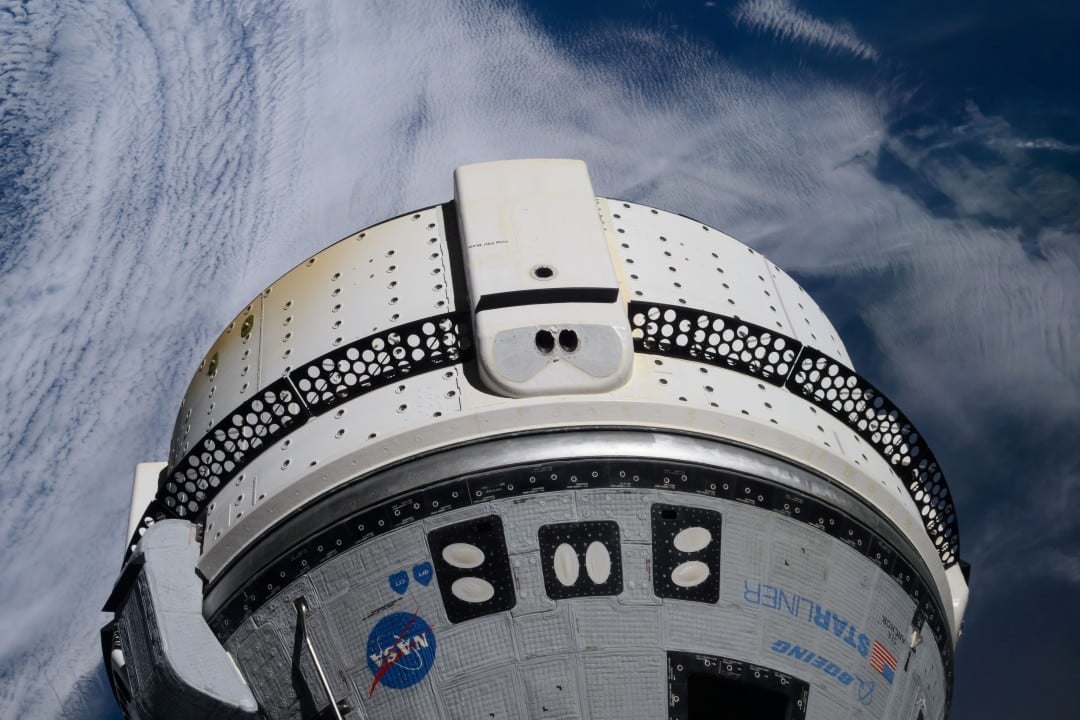
NASA released a detailed report that classifies the manned test flight of the Starliner spacecraft, developed by Boeing, as a type A accident, the most serious category of incident at the agency. Astronauts Butch Wilmore and The agency acknowledged that the decision to launch the spacecraft with a crew exposed significant risks, and the investigation points to technical deficiencies combined with failures of leadership and oversight.
The incident occurred during the first manned test mission of Starliner, which took off on June 5, 2024 from Cabo Canaveral, on Flórida. Problemas with thrusters appeared shortly after launch, including temporary loss of control and multiple unit failures during approach to the ISS. Apesar although the docking was successfully completed after manual maneuvers carried out by the astronauts, subsequent analysis confirmed that the spacecraft did not present safe conditions for the manned return to Terra.
Classification as type A accident
Type A designation applies to events involving loss of a manned vehicle, damage exceeding US$2 million, or risk of fatal injury or permanent disability to the crew. In the case of Starliner, the costs associated with the failures and investigations far exceeded this threshold, and the investigation highlighted that different decisions could have led to catastrophic results.
NASA emphasized that retroactive classification serves to capture lessons and implement rigorous fixes before any future flights. The program has already consumed investments of US$4.2 billion to date, and the agency is working with Boeing to resolve the identified deficiencies.
Technical failures in the propulsion system
Thrusters presented anomalies during the orbital flight, with excessive firing, high fuel consumption and failure in ten units. Testes on the ground at White Sands Test Facility, at Novo México, confirmed vulnerabilities in the system design and qualification.
The technical root cause is still under final analysis, but preliminary results indicate that previous tests did not adequately represent actual mission conditions. Boeing and NASA continue efforts to definitively identify and correct these issues.

Leadership and supervisory decisions
Meetings between NASA and Boeing teams featured intense disagreements and unprofessional conduct, including heated discussions about crew return options. The investigation found that programmatic pressures exceeded reasonable safety limits at times.
The agency admitted that oversight over the vehicle accepted for launch was not sufficient to mitigate known risks from previous unmanned test flights. Mudanças in leadership and internal processes are being implemented to avoid recurrences.
Return of astronauts and mission sequence
Wilmore and Williams remained on the ISS until March 2025, when they returned to Terra aboard SpaceX’s Crew Dragon capsule, integrated into the Crew-9 mission. Starliner returned unmanned in September 2024, landing autonomously at White Sands Space Harbor.
The experience reinforced the importance of redundancy in manned vehicles. NASA plans to launch Starliner on an unmanned resupply mission to the ISS in April 2026, as a step to validate corrections before new crewed flights.
Ongoing investigations and fixes
The independent research team examined technical, organizational and cultural factors from the beginning of the program. Relatório of about 300 pages details contributions of inadequate hardware, skills gaps, and decision-making errors.
NASA has stated that it will not fly with crew again on Starliner until the technical causes are fully understood and the propulsion system is fully qualified. Trabalhos sets with Boeing proceed to implement corrective actions.
Future plan for program Starliner
Next steps include unmanned flight in 2026 to test improvements. The agency remains committed to the vehicle as part of the Commercial Crew program, targeting redundant transport options for the ISS.
The mission experience highlighted the need for technical and cultural rigor in manned space flights. NASA seeks to strengthen processes to ensure safety on future missions.
