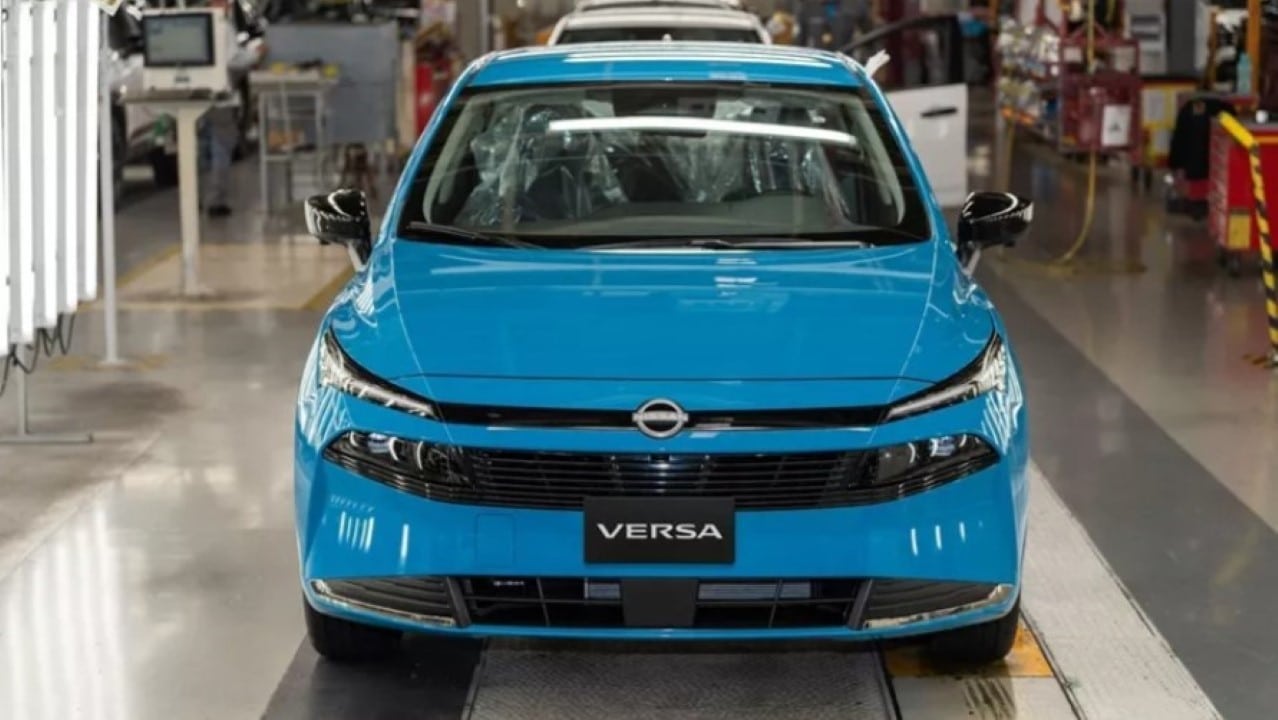
Nissan has officially unveiled the Versa 2027 after the start of production at its factory in México. The model features significant updates to the exterior design, maintaining the current platform to preserve affordable costs. The public debut is expected to take place in the coming weeks, with an initial focus on markets such as México and Brasil.
The subcompact sedan evolves to meet demands for economical vehicles in emerging regions. The changes include split LED headlights and a thinner grille, bringing the look in line with the brand’s other recent models. The production transferred to the Aguascalientes plant reflects industrial optimization strategies.
Automotive sector experts highlight that the Versa 2027 maintains the 1.6-liter aspirated engine, combined with a CVT transmission. Essa configuration guarantees efficiency and low consumption, essential for buyers who prioritize added value. The vehicle continues to be positioned as an affordable option in competitive segments.
Renewed exterior design
The front end of the Versa 2027 has undergone drastic redesigns, incorporating elements such as split headlights connected by a glossy black strip. The Essa aesthetic approach brings the model closer to the more premium lines of the Nissan, such as the Murano, without changing the hood or front fenders. The elongated lower grille contributes to a more aggressive and modern appearance.
At the rear, the taillights gained a sharper signature, accompanied by a trunk with prominent “Versa” lettering. The revised bumper integrates the license plate lower, while newly designed light-alloy wheels complement the unchanged side profile. Essas updates aim to refresh the visual appeal without excessive investment in structure.
Nissan Versa 2027pic.twitter.com/mmMb3KC31b
— Y🅰️YO ®️ivadeneyra (@YAYOcdmx)December 24, 2025
Maintained mechanical specifications
The Versa 2027 uses the Nissan’s V platform, shared with models such as the previous Kicks and the recent Kait. Essa proven base ensures durability and controlled production costs, essential for entry-level sedans. The 1.6-liter four-cylinder aspirated engine remains the main option, delivering performance suitable for urban use.
The CVT transmission is the only one available, eliminating the manual option discontinued in the previous generation. Essa choice prioritizes comfort and efficiency in heavy traffic, common in América Latina cities. Testes indicate that the mechanical assembly offers optimized consumption, in line with increasing environmental standards.
Simplified maintenance and affordable parts reinforce the model’s attractiveness for fleets and individual drivers. Nissan emphasizes that these specifications meet reliability expectations in markets where cost of ownership is a decisive factor.
Market and production strategies
Production of the Versa 2027 began at factory A1 of Aguascalientes, at México, following the scheduled closure of the unit at Cuernavaca for March 2026. The México serves as the main hub, supplying local and neighboring demands.
The focus on emerging markets such as México and Brasil reflects the persistent demand for affordable sedans in these countries. Diferente of the scenario in the Estados Unidos, where the model was discontinued in December 2025, the strategy prioritizes regions with higher sales volume in this category. Analistas predict that tariffs and trade policies will influence future decisions about imports.
The Nissan positions the Versa as an economical alternative to competitors in the subcompact segment. Atualizações in technology and safety aim to attract young buyers and families, expanding reach beyond corporate fleets. Parcerias locations strengthen brand presence in growing economies.
Investments in sustainable production are part of the company’s global plan, with an emphasis on reducing factory emissions. Essa approach aligns the Versa 2027 with accessible and responsible mobility trends.
Technology and security features
The interior of the Versa 2027 should receive updates, including a possible digital dashboard and improved infotainment system. Embora internal images have not been revealed, speculation points to the integration of advanced driving assistants, such as automatic emergency braking and collision warning. Esses elements raise the security standard in the input segment.
Smartphone connectivity via Apple CarPlay and Android Auto is expected as standard on higher trims. Nissan seeks to balance innovation with cost, offering options that serve connected users without making the final product more expensive. Recursos as well as reversing cameras and parking sensors complement the package.
Improvements in sound insulation and internal materials aim for greater comfort on long journeys. Testes Preliminaries suggest that the model meets international crash test standards, reinforcing its reputation for durability. The brand highlights that these additions do not compromise economic accessibility.
Over-the-air updates can be introduced, allowing for post-sales evolutions. Essa modern functionality attracts tech-savvy consumers in urban markets.
Comparisons with previous models
The Versa 2027 represents a substantial evolution of the generation launched in 2019, with a facelift in 2022. Mantendo the accessible essence, the exterior changes avoid a complete redesign, focusing on visual updates to maintain competitiveness. The unchanged profile and roof preserve generous interior space for the category.
Compared to the larger Sentra, the Versa offers a more compact proposition, ideal for parking in congested cities. The discontinuation of manual transmission reflects market trends, prioritizing automatics for greater acceptance. Dados of previous sales indicate that the model captured a significant share in Latin regions.
Evolutions in energy efficiency surpass predecessors, with consumption estimates above 15 km/l in a mixed cycle. The Nissan uses user feedback to refine ergonomics and functionality, resulting in a more mature vehicle. Direct Concorrentes faces similar challenges in balancing price and features.
Outlook for global markets
The Versa 2027 targets expansion in areas where economical sedans dominate automotive preferences. No México, the initial launch capitalizes on local production, reducing logistics costs and boosting jobs in the industry. Vendas designed for the Brasil explore similarities in demands for versatile, low-maintenance vehicles.
Regional adaptations include suspensions calibrated for different roads, ensuring robustness in adverse conditions. The color Arctic Ice Blue Metallic highlighted in initial photos suggests vibrant options to attract diverse audiences. Estratégias of marketing emphasize added value, positioning the model as a smart investment.
Integration with Nissan ecosystems, such as connected services, strengthens brand loyalty. Projeções indicate growth in market share, driven by post-pandemic economic recoveries. The confirmed absence in the USA directs resources to high potential regions.
Release and availability details
The imminent debut of the Versa 2027 follows a teaser released in March 2025, showing the model alongside the Navara. Fotos of prototypes in promotional sessions at México confirm the final design, accelerating expectations for an official reveal. Initial Distribuição prioritizes Latin dealerships, with deliveries starting in the second quarter of 2026.
Financing options and maintenance packages accompany the launch, facilitating acquisition for first-time buyers. Nissan plans virtual and in-person events to demonstrate updates, expanding digital reach. Feedback initial previews suggest positive reception among automotive enthusiasts.
Impacts on the automotive industry
The continuity of Versa reinforces Nissan’s commitment to accessible segments, contrasting with discontinuations in mature markets. Produção optimized in Aguascalientes exemplifies global efficiency, influencing suppliers and logistics chains. Concorrentes monitor these movements to adjust similar strategies.
Innovations in accessible design inspire trends in the sector, promoting balance between aesthetics and economy. Dados market share indicates that subcompact sedans maintain relevance in emerging economies, driving investment in modular platforms. Nissan leads this approach, setting standards for inclusive mobility.
The model contributes to sustainability goals, with recyclable materials and eco-friendly manufacturing processes. Parcerias with local governments foster industrial development, generating positive socioeconomic impacts. Analistas predict that Versa 2027 will solidify the brand’s position in competitive niches.
Customization options available
Versions of the Versa 2027 include varied packages, with alloy wheels and premium interior finishes in top editions. Cores and the highlighted metallic blue offer personalized choices, meeting individual preferences. Acessórios after-sales, such as mats and protections, expand customization without raising base prices.
Advanced multimedia integration allows for modular upgrades, adapting the vehicle to specific needs. Nissan offers extended warranties, reinforcing confidence in the product. Essas options democratize access to modern features in economical sedans.
Performance and efficiency expectations
Tests indicate that the 1.6 engine delivers adequate torque for urban acceleration, combined with a smooth CVT. Consumo estimated on highways exceeds 18 km/l, benefiting drivers on long routes. Emissões controlled companies comply with environmental regulations, promoting sustainable use.
Driving dynamics enhanced by suspension calibrations ensure cornering stability. Freios ABS and electronic distribution complement active safety, reducing risks during emergency braking. The Versa 2027 balances performance with economy, ideal for daily use.
Initial industry reactions
Comments from experts highlight the mature design of the Versa 2027, increasing its appeal in the segment. Atualizações visuals avoid obsolescence, maintaining competitive relevance. Fóruns automotive companies discuss potential for markets beyond América Latina, depending on adaptations.
Feedback from prototypes suggests satisfaction with interior ergonomics, although details are limited. Nissan collects opinions for final refinements, ensuring alignment with global expectations. Essas initial reactions drive pre-release hype.
Preparations for launch
Nissan marketing teams finalize digital campaigns, emphasizing key updates. Parcerias with automotive influencers expands visibility, reaching young audiences. Eventos planned post-revelation test drives allow direct experiences, encouraging sales conversions.
Distribution logistics ensure quick availability at selected resellers. Treinamentos for sellers highlight unique benefits, setting the stage for positive reception. The launch marks a renewed chapter for the Versa in the Nissan line.
