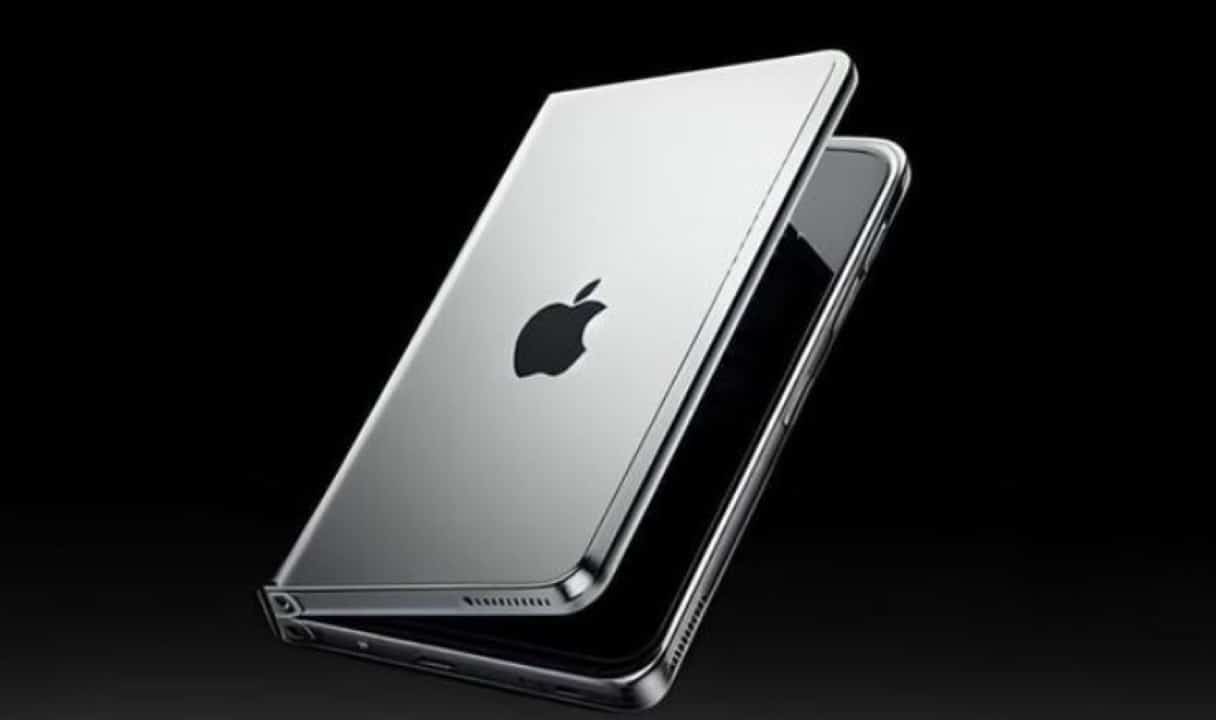
Apple is advancing the development of its first foldable smartphone, known internally as the iPhone Fold, with a focus on solving one of the main problems with devices of this type: the visible crease on the screen. The device should be launched at the end of 2026, integrating technologies that minimize wear and tear and improve the durability of the screen. Esse progress represents a significant step for the company to enter the foldables segment, which already has established competitors.
Recent details indicate that the 7.8-inch internal screen, when unfolded, will have a controlled crease depth of less than 0.15 millimeters, making it practically imperceptible to touch and sight. The bending angle is below 2.5 degrees, which contributes to a more fluid using experience. Panel production has already started, signaling that the device is in an advanced stage of preparation for the market.
The design adopts a book format, with a 5.5-inch external screen for quick use when closed. Componentes with titanium alloy housing and stainless steel and titanium hinge guarantee resistance. Esses elements position the iPhone Fold as a premium option, with an estimated price between 2,000 and 2,500 dollars.
Advances in screen technology
The main innovation lies in the OLED panel developed in partnership with specialized suppliers, which uses advanced materials to reduce creasing. Esse screen type allows for repeated folding without compromising visual integrity. Apple has tested prototypes extensively to ensure that the crease does not worsen over time.
Furthermore, the screen incorporates protective layers that increase resistance to scratches and impacts. Esses materials were selected after years of research, in line with the company’s quality standards. The result is a display that maintains clarity and uniformity even after thousands of opening and closing cycles.

Design details and components
The iPhone Fold includes a side button with integrated Touch ID, opting for this solution instead of the Face ID to optimize internal space. Essa escolha facilita o desbloqueio em diferentes posições do dispositivo. A câmera traseira conta com sistema duplo de lentes, adaptado para capturas tanto no modo dobrado quanto aberto.
The high-density battery, with a capacity of 5,500 mAh, supports the high consumption of larger screens. Processadores of the A20 series Pro, with 12 GB of RAM, guarantee fluid performance in multitasking. The device will be available in just two initial colors, prioritizing simplicity in the production line.
These components were designed to balance lightness and robustness, with the total weight estimated at around 250 grams. The integration of advanced sensors allows features such as automatic detection of usage mode, adjusting the software according to the device’s status.
Development chronology
Apple began research into foldables around five years ago, with registered patents that describe mechanisms to minimize creases. In 2024, initial prototypes were tested internally, focusing on durability. The following year, partnerships with display manufacturers accelerated the process.
Currently in 2026, the engineering validation phase is underway, with test models secured to prevent premature leaks. Fornecedores as well as Samsung Display contribute custom panels, adapted to the specifications of Apple. Essa collaboration ensures that the product meets strict quality criteria.
The schedule calls for mass production in the second half of the year, aligning the launch with the iPhone 18 line. Final Ajustes include software optimizations to exploit dual screens, such as improved multitasking and adaptive interfaces.
Impacts on the smartphone market
The foldables segment grew 40% last year, driven by models such as the Samsung and Google. The entry of Apple could expand this market, attracting users who value integrated ecosystems. Dispositivos similar products have sold millions of units globally.
Competitors adjust strategies, with updates to their lines to compete on price and innovation. The iPhone Fold, with its focus on usability, could capture a significant share of premium consumers. Dados indicate that 25% of high-end smartphone buyers consider foldables as their next purchase.
Camera and security features
The camera system includes a 48-megapixel lens, optimized for low-light photos and high-resolution videos. Modos specific to the folded format allow selfies with the main camera, improving quality. Integration with iOS ensures quick edits and seamless sharing.
In terms of security, the Touch ID returns as the main option, complemented by alternative biometric passwords. Essa approach reduces dependence on front-end components, freeing up space for larger batteries. Testes show recognition rate above 99% under varying conditions.
Expectations for the launch
The launch event is expected to take place in September 2026, at the Apple headquarters auditorium at Cupertino, Califórnia, local time at 10am. Convites will be sent to journalists and analysts weeks in advance. Demonstrações live will highlight the absence of crease and the fluidity of the fold.
Initial availability will occur in key markets such as Estados Unidos, Europa and Ásia, with gradual expansion. Pré-online sales begin immediately after the announcement, with deliveries estimated for October. Limited Estoques can generate high initial demand.
The marketing campaign will emphasize design innovation, positioning the device as a natural evolution of traditional iPhones. Parcerias with operators will offer financing plans to make the price affordable.
Innovation in materials
The titanium casing provides superior resistance to drops and bends, with tests simulating daily use for years. The hybrid hinge combines stainless steel for rigidity and titanium for lightness, withstanding more than 200,000 cycles without failure. Esses materials were chosen after comparative evaluations with conventional options. The external screen receives anti-reflective treatment, improving visibility in bright environments. Integração reinforced glass protects against dust and humidity, achieving IP68 certification. The manufacturing process involves precise machining for perfect alignment of the parts.
Adapted software
iOS will be updated to support foldable screens, with features such as automatic screen splitting for apps. Multitarefa allows you to run two applications simultaneously on the internal screen. Otimizações of energy manages the consumption of the displays, extending autonomy to a whole day.
Over-the-air updates will fix any initial issues, keeping the device up to date. Integração with other Apple products, such as iPads and Macs, facilitates task synchronization. Desenvolvedores receive kits to create specific apps, expanding the ecosystem.
The user interface adjusts icons and menus according to the mode of use, prioritizing ergonomics. Testes with beta users validate usability, incorporating feedback for refinements.
Technical comparisons
Current foldables like the Galaxy Z Fold feature creases of up to 0.3 millimeters, while the iPhone Fold aims for less than half that. The 7.6-inch Telas in competitors contrasts with the 7.8 in the Apple model, offering more usable area. Baterias of 4,400 mAh in rivals are surpassed by the larger capacity proposed.
Processors equivalent in performance, but the A20 Pro chip optimizes energy efficiency. Câmeras’s multiple lenses on other devices compete, but Apple’s focus on processing software can differentiate final quality. Preços similar positions the market as competitive.
Durability tested in laboratories shows that competitor hinges can withstand 150,000 cycles, lower than Apple standards. Resistência scratches vary, with ceramic treatments on some models. Expansão global sales indicate growing acceptance of the format.
Preparations for production
Factories in Ásia increase capacity to meet projected demand of millions of units in the first year. Fornecedores of components receive volume orders, ensuring stable supply chain. Controles strict quality control monitors every step, from assembly to packaging.
Training for support teams prepares specialized technical assistance. Lojas physical stores plan interactive demonstrations for customers to try out the device. Logística Global coordinates shipments to minimize delays.
Adoption prospects
Research shows that 30% of iPhone users would consider migrating to foldables if offered by Apple. Emerging Mercados, like Ásia, lead in adopting innovative technologies. Initial Vendas may exceed expectations based on historical pre-sales.
Integration with services like Apple Pay and iCloud attracts brand loyalty. Annual Atualizações remain relevant, with possible future variants. Feedback of early adopters will influence subsequent evolutions.
