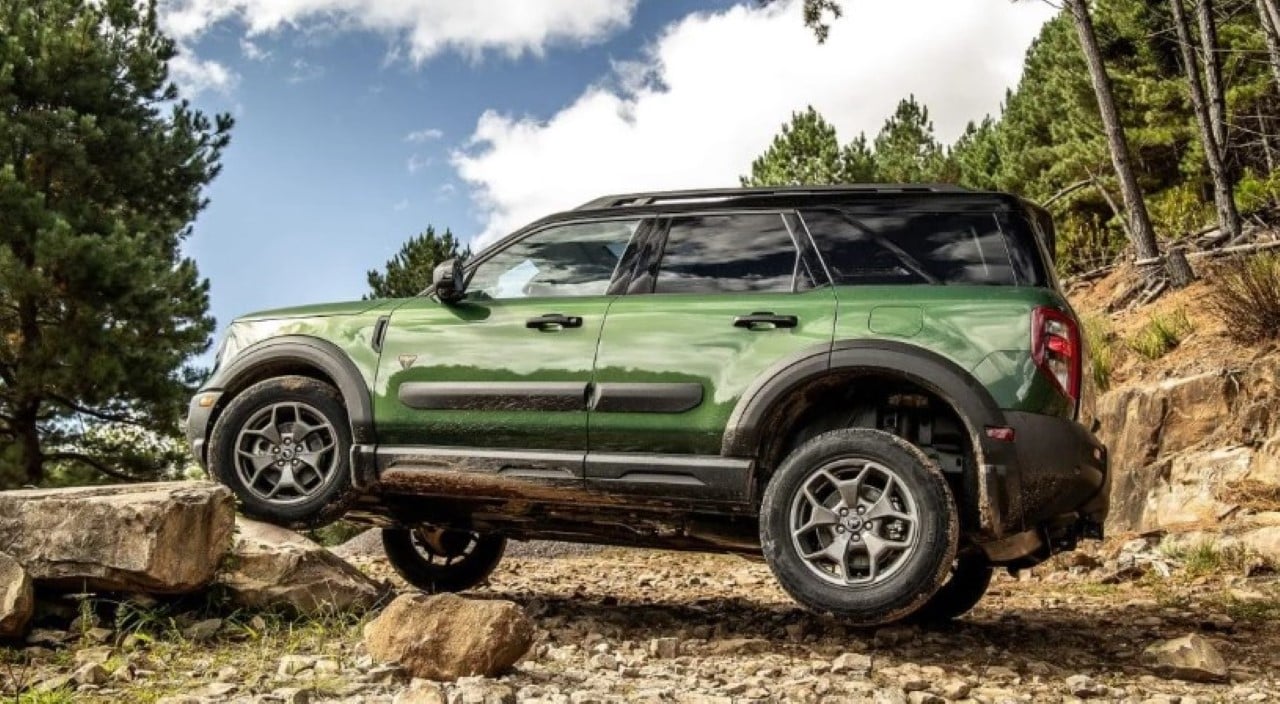
The North American automotive industry is preparing a significant strategic move towards the high-end sports utility vehicle segment in the coming years. Lincoln, the luxury division of Ford, has begun development of a new rugged vehicle that will utilize the acclaimed Ford Bronco architecture. The aim of the project is to create a direct competitor to established industry icons, specifically the Mercedes-Benz Classe G and Land Rover Defender, combining extreme off-road capability with the premium brand’s signature refinement.
This new model represents a paradigm shift for the manufacturer, which seeks to expand its presence in more exclusive and profitable market niches. By adopting the body-on-frame structure, the vehicle promises to deliver superior durability and the ability to overcome difficult terrain, essential characteristics to compete with European rivals that dominate this price range.
Strategic planning points to a long development cycle, aiming to ensure that the final product meets the rigorous quality standards required by the target audience. The commercial launch is expected to take place between the end of the decade and the beginning of the next, positioning the SUV as a central piece in the company’s future product line.
Industry experts indicate that the decision to utilize the Bronco platform is financially astute, allowing for the sharing of proven mechanical components while investing heavily in aesthetic and technological differentiation. The project is not just a “rebadge”, but a complete re-engineering to offer a distinctive and silent driving experience.
Pricing and positioning strategy
Lincoln’s ambition with this new utility is clearly reflected in its projected values and market positioning. The model is expected to occupy the top of the brand’s hierarchy, surpassing the current large SUV, the Navigator, in terms of exclusivity and base price.
Initial estimates suggest a price tag that could surpass the six-figure barrier in the North American market. Enquanto o Navigator Black Label currently orbits the $94,000 range, the new vehicle is targeting a starting price close to $115,000. The Este level puts the future launch on a direct collision course with the entry-level and intermediate versions of the Range Rover and the Mercedes-Benz Classe G.
- The high value is justified by the extensive use of noble materials and advanced engineering.
- The brand aims to attract customers who seek mechanical robustness without giving up status.
- The positioning aims to raise the global perception of the Lincoln brand in the ultra-luxury sector.
To sustain this price, the vehicle must offer a standard equipment package substantially superior to that found in conventional Ford models. The strategy involves capturing the high profit margin typical of luxury off-road vehicles, a segment that has demonstrated resilience and steady growth even in fluctuating economic scenarios.
Exclusive design and interior refinement
Although the mechanical basis is derived from the Bronco, the exterior and interior design of the new Lincoln will follow a completely opposite direction in terms of aesthetic philosophy. The visual proposal must abandon the rustic modularity of the Ford’s “brother” in favor of fluid lines and an imposing presence that recalls the current visual identity of the Lincoln.
Unlike the Bronco, which has a removable roof and doors for an open-air experience, the new SUV will have a fixed and sealed body. Esta engineering decision is crucial to guarantee the acoustic insulation and driving comfort expected from a luxury vehicle, eliminating wind noise and vibrations that are common in vehicles focused purely on off-road.
The interior will receive special attention, with the incorporation of cutting-edge technologies and artisanal finishes. Espera uses large digital screens, covering the instrument panel and the entertainment system, integrated into an environment covered in high-quality leather, real wood and metal details. The focus will be on the absolute comfort of the occupants, moving away from the utilitarian and washable proposal of the Bronco.
Erev hybrid powertrain and technology
One of the great technical differences of the project lies in the choice of the propulsion system. The Lincoln plans to adopt an Veículo Elétrico of Autonomia Estendida (EREV) configuration, a solution that combines the efficiency of electrification with the practicality of conventional fueling for long journeys and remote expeditions.
In this configuration, the vehicle is driven primarily by electric motors, ensuring instant torque and silence on board. An internal combustion engine acts as a generator to recharge the batteries on the move, eliminating the “range anxiety” typical of pure electrics, especially in off-road situations where chargers are non-existent.
The expectation is that the system will use a variant of the turbocharged V6 EcoBoost engine as a generator, taking advantage of its thermal efficiency and power. Essa hybrid architecture not only meets future emissions standards, but also provides the power needed to move a heavy vehicle with agility, overcoming the dynamic limitations of traditional SUVs with combustion-only engines.
Timeline and future development
The launch horizon for this ambitious project is between 2029 and 2030, with some sources suggesting that arrival at dealerships may only occur in 2031.
During this period, the brand’s engineering team will work on calibrating the independent suspension and the 4×4 traction system, ensuring that the vehicle is capable of tackling challenging trails with the same competence as traveling on paved highways. Development runs in parallel with the next generation of the Bronco itself, which could bring important industrial synergies to the Ford Motor Company.
Despite the temporal distance, confirmation of the project signals to the market that Lincoln does not intend to abandon combustion engines completely in favor of battery electric (BEV) engines in the short term for its larger vehicles. The investment in the EREV system demonstrates a pragmatic approach to the energy transition, focused on the real usability of the large utility customer.
