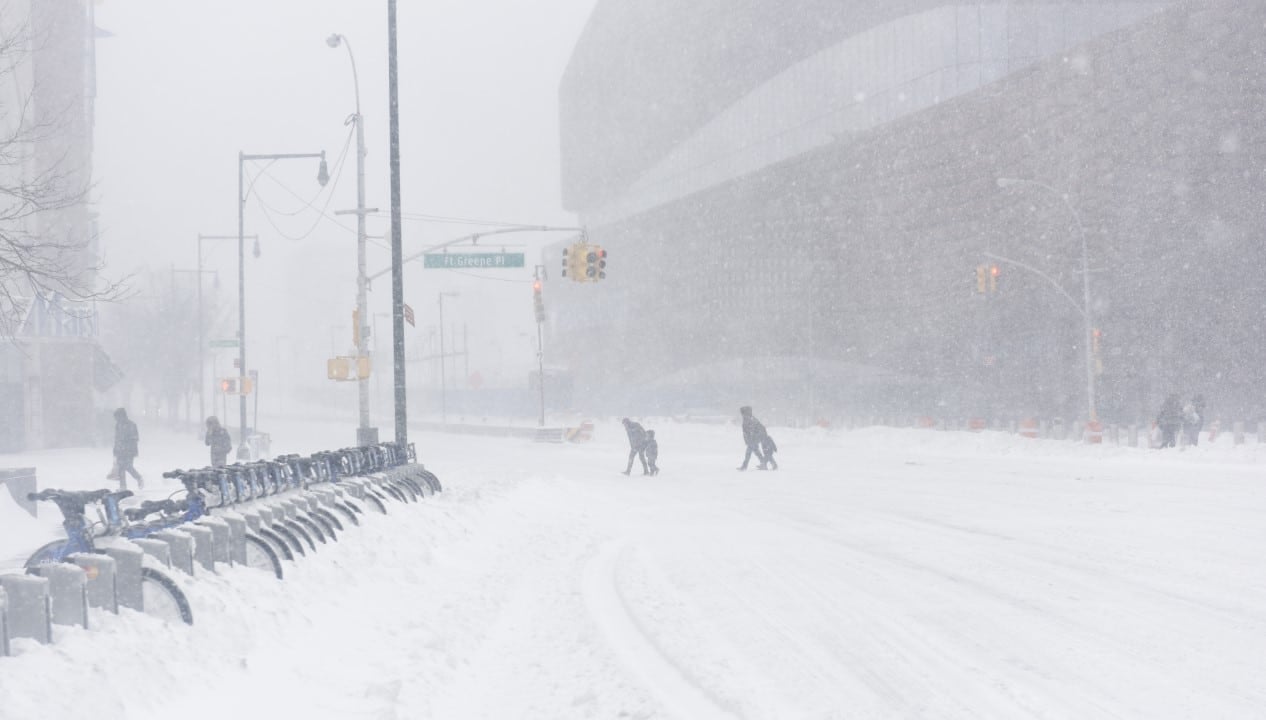
Utility crews have stepped up cleanup and repair efforts across the state of Massachusetts after heavy snowfall caused significant electricity outages. The weather phenomenon severely impacted traffic, the functioning of schools and commercial operations, leaving a trail of paralysis in several communities that now depend on the quick response of local authorities.
Power outages increased rapidly as the storm moved through the region, compromising critical infrastructure and requiring immediate mobilization of resources. Apesar the performance of emergency teams, the complete restoration of services in some areas may take several days, demanding patience from affected residents, especially in coastal communities, which were the hardest hit according to previous weather forecasts.
Challenges in restoration and complexity of damage
The scenario revealed on Tuesday morning presented a considerable logistical challenge, with just over 254,000 customers still without electricity in Massachusetts. Esse número reflete a complexidade e a extensão dos danos causados pela nevasca, que paralisou diversas atividades essenciais e forçou muitos a permanecerem em casa enquanto as concessionárias trabalham para normalizar a situação.
Representatives from Eversource, one of the region’s leading energy companies, said that despite ongoing efforts and the use of remote resources to reconnect more than 100,000 people, the complexity of repairs means full recovery could take time. The nature of the damage, often involving trees falling onto the wiring, requires manual and time-consuming interventions, mobilizing hundreds of technicians and field workers.
Eversource spokesperson, Olessa Stepanova, explained that the company adopts a strict protocol to respond to severe snow, prioritizing the safety of teams and the public. The process involves damage assessment, reestablishment of transmission lines and substations, followed by reconnection of large blocks of customers and finally individual occurrences.
Regional scenario and snow accumulation
The neighboring state of Rhode Island also suffered severe impacts from the storm, recording more than 21,000 power outages on the same Tuesday morning. The situation demonstrates the scope of the frontal system that affected a large part of Nova Inglaterra, although on a smaller scale than in Massachusetts, requiring coordination from local authorities to minimize disruption.
In contrast, the remainder of Nova Inglaterra presented a more controlled outlook regarding power cuts, with Eversource reporting just over 600 outages in Connecticut. The north of the region was not hit as hard by the cuts caused by snowfall, keeping most of its services operational.
The amount of snow accumulated in some areas was significant, exceeding 90 centimeters in specific points, which contributed to branches falling onto power lines. The weather forecast still indicates the possibility of more snow, adding an extra layer of concern for communities and the cleanup work that is still underway.
Security protocols and official recommendations
Amid power cuts, attention to safety is paramount and local authorities have issued strict guidelines for the population. The use of generators must be carried out exclusively outdoors, away from windows and doors, to avoid the accumulation of carbon monoxide, while perishable food left unrefrigerated for more than four hours must be discarded.
For heating, the recommendation is to use safe sources, strictly avoiding the use of gas heaters or barbecues indoors. Além In addition, the population must keep away from any electrical wires that are on the ground and report them immediately to the competent authorities to avoid serious accidents.
Agência of Gestão of Emergências of Massachusetts (MEMA) has been working in coordination with municipalities to establish warming centers and temporary shelters. Essas facilities offer a safe and warm place, as well as access to food and drinking water, ensuring the well-being of the most vulnerable population during the period of interruption.
Economic impacts and logistical recovery
The disruption to activities due to snowfall and power outages poses significant economic challenges to the region, with school closures impacting families’ routines and the pause in business operations resulting in financial losses. The local economy is feeling the effects of the decrease in consumption and the interruption of the supply chain in several sectors.
The logistics of restoring services and normal routine are complex, as snow-covered roads require intense clearing work to allow traffic and access for repair teams. The mobilization of resources from other regions becomes crucial to speed up cleaning and repairs, demonstrating the importance of interstate cooperation in times of crisis.
