
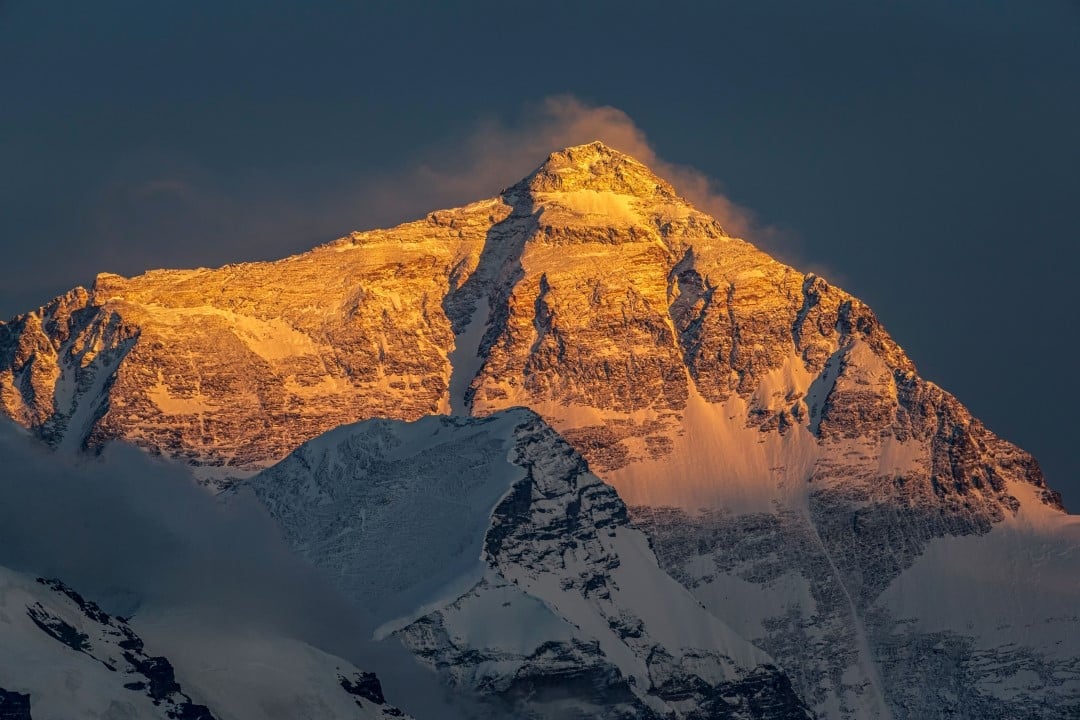
Global warming has caused profound transformations in the topography of Monte Everest, resulting in the accelerated melting of ice sheets that remained frozen for decades. Esse weather phenomenon is bringing to the surface remains of climbers who disappeared on past expeditions, creating a complex scenario for authorities of Nepal and China. The reappearance of these bodies acts as a drastic visual indicator of climate change in the Himalaia region, where temperatures are rising at a faster rate than the global average.
Rescue teams and local Sherpas face increasing technical difficulties in removing these remains at extreme altitudes, known as the death zone. Além of the humanitarian and ethical issue, the thaw exposes tons of accumulated trash, including discarded oxygen cylinders, torn tents and obsolete equipment from previous missions. Esforços cleaning efforts coordinated by local governments attempt to mitigate the visual and biological impact, but the speed of melting exceeds the response capacity of cleaning expeditions.
- Annual waste removal campaigns collected tens of tons of debris in 2025.
- The cost of a high-altitude body recovery operation can exceed thousands of dollars.
- The instability of the terrain makes it difficult for helicopters to land in areas above the base camp.
Transformation of glaciers alters climbing routes
The melting process is not limited to exposing objects and bodies, but directly alters the physical safety of mountaineers trying to reach the summit. Formações of ice that were previously considered stable, such as crevasses and seracs, are becoming unpredictable due to the constant loss of glacial mass. Relatórios of mountain guides indicate that traditional routes need to be re-evaluated each season to avoid fatal accidents caused by avalanches or ice collapses.
Researchers monitoring the region point out that retreating glaciers expose loose rocks, increasing the risk of rockfalls in areas previously covered by perpetual snow. Essa morphological change requires climbers to have an even more rigorous level of technical preparation to deal with mixed terrains of unstable ice and brittle rock. Satellite monitoring has become an indispensable tool for mapping these dangerous new geographic configurations before the start of each ascent window.
Impacts on contamination of local waters
The exposure of organic and chemical waste at the top of the world generates immediate concern for communities living at the foot of the Himalaia mountain range. Melting ice carries microplastics and heavy metals from abandoned equipment into watersheds that feed millions of people downstream. Estudos surveys carried out in 2025 confirmed the presence of contaminants in drinking water sources derived directly from the Everest glaciers, signaling a large-scale public health problem.
- The concentration of pollutants in ancient ice is gradually released as the average temperature increases.
- Microplastics originating from high-tech synthetic clothing have been detected in snow samples.
- Nepal health authorities monitor water quality in villages close to trekking routes.
- Water filtration and treatment projects are being implemented to protect indigenous populations.
New rules for commercial shipping in 2026
To curb environmental degradation, Nepali authorities implemented stricter regulations that came into force in early 2026, focusing on team self-sufficiency. Agora, each expedition is obliged to present a detailed waste management plan and to deposit a financial deposit that is only returned after proof that all waste produced has been disposed of. Failure to comply with these regulations results in heavy fines and a permanent ban from operating on the mountain, with the aim of discouraging the abandonment of materials at high camps.
The increase in the value of climbing permits also serves as a mechanism to control the flow of people and finance state cleanup missions. The government seeks a balance between the revenue generated by adventure tourism and the imperative need to preserve the high-altitude ecosystem, which is extremely fragile. Enforcement was intensified at Acampamento Base, with liaison officers checking the weight of waste brought back by each group of climbers and their respective guides.
Cutting-edge climate monitoring technology
The installation of automatic meteorological stations at altitudes above 8 thousand meters allowed the collection of unprecedented data on the climate in Everest. Esses sensors send real-time information about solar radiation, wind speed and temperature, helping scientists model the future of Asian glaciers with greater accuracy. Artificial intelligence has been used to cross-reference this meteorological data with thermal satellite images, identifying critical points where melting is more severe and exposure of debris is imminent.
Historical mysteries revealed by ice
High-altitude archeology has gained a new boost with the discovery of artifacts that belonged to Everest’s first conquest attempts in the 1920s. Historiadores use these findings to reconstruct the steps of pioneers who disappeared without a trace, trying to resolve debates that have persisted for decades in the world of professional mountaineering.
Modern forensic analysis is applied to these materials to understand the causes of historical fatalities and how the harsh environment affected equipment of the time. Cada recovered object is cataloged and, in many cases, given to museums or families, serving as a memorial to those who lost their lives in the search for the top. Esses items also reveal data about past atmospheric conditions, allowing a direct comparison with climate degradation observed today by field researchers.
Cooperation between nations to safeguard Himalaia
Management of the Monte Everest requires an ongoing diplomatic effort between the Nepal and the China, who share sovereignty over the mountain through its different faces. In 2025, joint clean-up operations were carried out to remove deteriorated fixed ropes that posed a danger to climbers on both sides of the border. Esse political alignment is essential for establishing uniform safety standards and for exchanging technical information on the movement of ice masses that ignore territorial boundaries.
International environmental conservation organizations provide financial and technological support so that local countries can constantly monitor changes. Conferências regions annually discuss the impact of melting glaciers on the economy and culture of Sherpa populations, who directly depend on the stability of the mountain for their subsistence. The Everest has thus become a global symbol of the fight against global warming, uniting different sectors of society around a common goal of preservation.
Adaptation and security strategies for the future
High mountain guides are undergoing new training that includes modules on climate change and identifying emerging geological hazards. Gradual acclimatization remains the cornerstone of safety, but it is now accompanied by constant monitoring of climbers’ health through wearable devices connected to medical centers. Essas innovations aim to reduce the number of emergency rescues, which become increasingly dangerous as the terrain becomes more unstable and prone to landslides.
Ethical awareness among mountaineers has grown, with many opting for lower-impact expeditions and voluntarily participating in trash collections during the descent. Campanhas educational activities reinforce that preserving the mountain is a shared responsibility between governments, tourism agencies and the adventurers themselves who seek the summit. The goal is to ensure that future generations still encounter Everest as a naturally challenging environment rather than a repository for heat-exposed waste.
Scientific data confirms accelerated warming
Records obtained by high-altitude observatories indicate that ice loss on Everest over the past two decades has been equivalent to the accumulation of several centuries. Esse negative mass balance worries glaciologists, who predict that some of the most iconic glaciers could disappear almost completely by the end of this century if global emissions are not reduced. Retreating ice exposes dark rock, which absorbs more solar heat and further accelerates the melting process in a dangerous feedback loop.
Comparative photographic documentation, using images from pioneering expeditions and current satellite photos, unequivocally reveals the retreat of glacial margins by hundreds of meters. Esses data is essential to support conservation policies and to alert the world about the tangible consequences of climate change in remote ecosystems. Everest, once seen as an immutable giant of eternal ice, now appears as a vulnerable giant undergoing rapid geological and environmental transformation.
