
Nintendo officially expanded its catalog of retro games with the inclusion of three historical titles starring the company’s mascot. The update, scheduled to coincide with the celebrations of March 10th, brings works that cover different generations of portable consoles from the Japanese company. The move aims to rekindle veteran fans’ nostalgia and introduce old adventures to a new player base through the current hybrid console.
Subscribers to the premium service will have immediate access to epoch-making works, including the acclaimed Mario vs. Donkey Kong, originally released for the Game Boy Advance. Além of this, the company rescues from oblivion two productions of Virtual Boy: Mario Clash and Mario’s Tennis. Essa initiative reinforces the brand’s commitment to preserving its own history, making games that previously depended on obsolete hardware or difficult to find on the collectors’ market accessible.
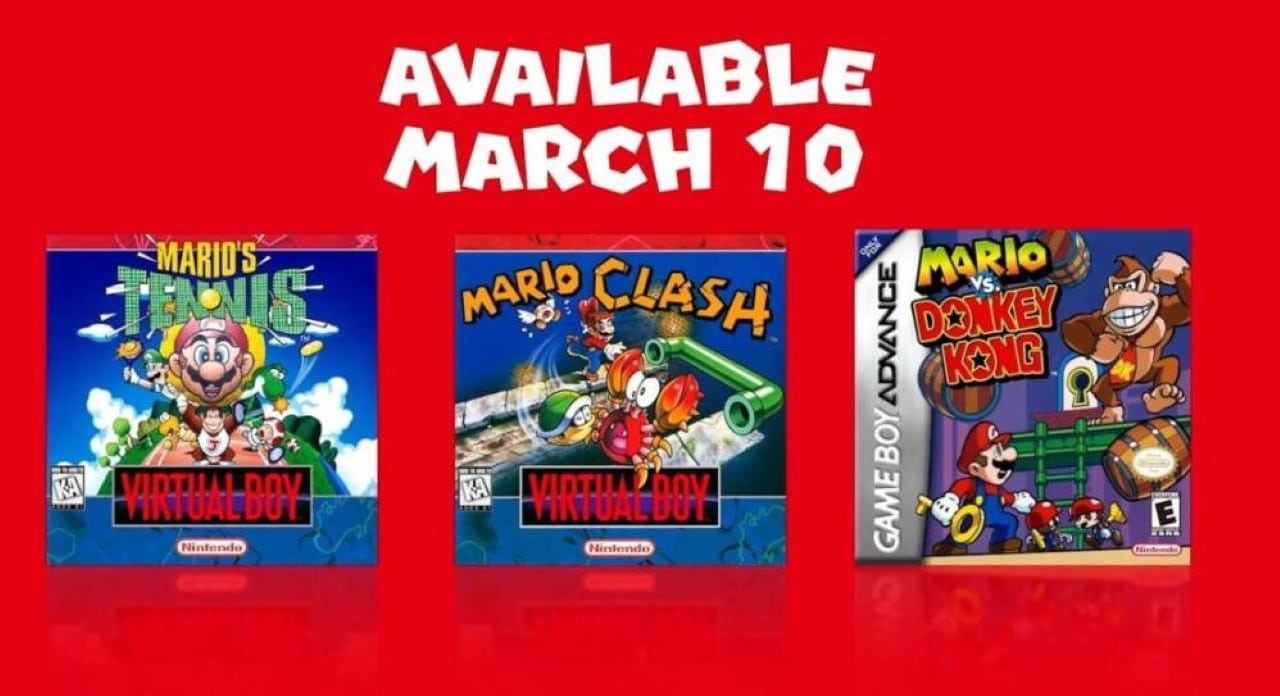
The launch of the games occurs simultaneously in different regions of the world, aligning with the Japão time zone, where the corporation’s headquarters are located. The strategy of releasing classic content on commemorative dates has been a constant in the management of the online service, serving as an incentive to renew subscriptions and to keep community engagement active during festive periods.
The return of relics from Virtual Boy
The inclusion of titles from Virtual Boy represents a significant milestone for the digital preservation of Nintendo. The console, released in 1995 and known for its monochrome graphics in shades of red and black, had a short lifespan and is considered a rarity. Mario Clash, one of the highlights of this update, is a three-dimensional reinterpretation of the classic arcade game Mario Bros., where the player must eliminate enemies such as Koopas and Goombas in a 99-story tower.
The game uses depth of field as a central mechanic, allowing the plumber to move between the front plane and the background of the scene to hit opponents. While the original hardware required an immersive display that isolated the player, the version for the Switch was adapted for modern screens, maintaining the unique visual aesthetic without the ergonomic discomfort associated with the 90s device.
Another rescued title is Mario’s Tennis, which was the system’s launch game in América from Norte. Este, a precursor to the Mario Tennis series, already featured elements that would become standard in the franchise’s sports games, focusing on arcade fun rather than realistic simulation. Emulation on the current console allows users to experience these primitive mechanics with the convenience of modern controls.
Game Boy Advance strategy and mechanics
The third game in the pack, Mario vs. Donkey Kong, released in 2004, serves as a spiritual successor to the original 1994 title. The work combines platform elements with logical puzzles, challenging the player to guide Mario through compact levels to recover toys stolen by the gorilla. Precision and quick thinking are essential to overcome obstacles and find the perfect path through each stage.
Unlike the recently released remake of Switch itself, this original version preserves the pixel art graphics and gameplay characteristic of the portable 32-bit era. The availability of the classic game allows fans to compare the evolution of the franchise and appreciate the original level design, which focuses on manipulating keys, conveyor belts and colored switches.
The simple and straightforward narrative, focused on the rivalry between the two iconic characters, serves as the backdrop for addictive gameplay. The inclusion of this title in the online service offers an alternative for those looking for a more cerebral gaming experience and less focused on the frenetic action of traditional platform games in the Super Mario series.
Access requirements and subscription details
To enjoy these releases, you must have a subscription to Nintendo Switch Online + Pacote and Expansão. Enquanto the basic plan offers access to NES, SNES and Game Boy libraries, platform games such as Nintendo 64, Mega Drive and Game Boy Advance are exclusive to the most complete modality. The inclusion of Virtual Boy games in this premium category adds value to the package, justifying the additional investment for video game history enthusiasts.
The company highlights that emulation offers quality of life features, such as the ability to save progress at any time and the use of cloud saving. Além In addition, the financial entry barrier is significantly reduced; Purchasing the original Virtual Boy cartridges and hardware on the used market can cost hundreds of reais, making a subscription an economical option to access this content legally.
Active subscribers will receive the update automatically on their consoles, simply by being connected to the internet. The application corresponding to each platform must be updated so that new games appear in the selection list, ensuring that the library is always synchronized with the most recent releases promoted by the company.
Cultural impact and celebration of the franchise
March 10th was consolidated in the pop culture calendar due to the spelling of the date (MAR10) resembling the character’s name. Nintendo takes advantage of this annual occasion to run promotions on the eShop, announce partnerships and launch themed products. The availability of classic games reinforces the longevity of the Mario brand, which began its journey in 1981 and has sold hundreds of millions of copies around the world.
In addition to games, the celebration usually involves rewards in the My Nintendo program, where platinum points can be exchanged for profile icons and exclusive digital items. The gamification of the online service encourages players to explore titles they may not have known about, increasing console usage time and strengthening the company’s digital ecosystem.
The preservation of games like Mario Clash and Mario’s Tennis is viewed favorably by media historians and dedicated fans. The Virtual Boy, despite its commercial failure at the time, represents an important chapter of technological experimentation for the Nintendo. Trazer these games back into the light allows a new generation to understand the industry’s past attempts to implement 3D technology, long before virtual reality became accessible to the general public.
The online service’s library continues to grow, now surpassing the mark of a hundred classic games available. With constant updates and the inclusion of rare platforms, Nintendo seeks to keep the service relevant compared to the competition, betting on the strength of its intellectual properties and nostalgia as its main market differentiators.
