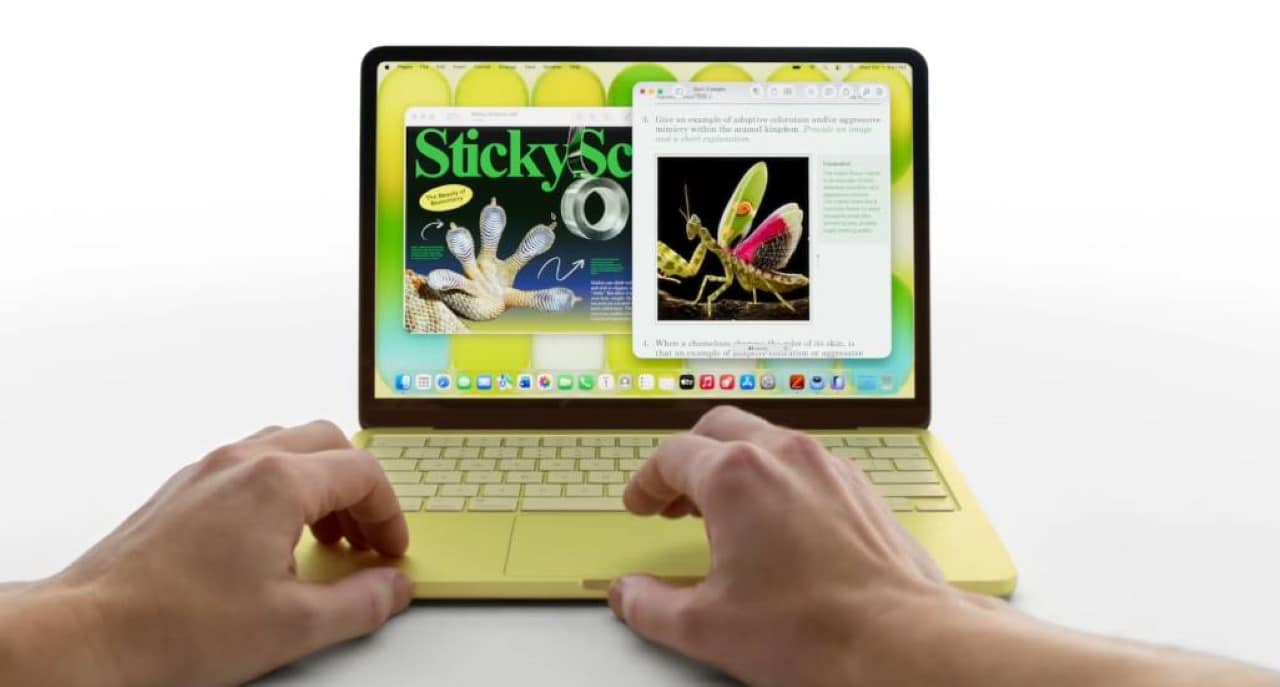
Recently launched as a bet by Apple for the more affordable notebook segment, the MacBook Neo introduces a peculiarity in its biometric security configuration. Projetado to be a gateway to the Mac ecosystem with a more competitive cost, the device stands out for employing an A18 Pro chip, originally developed for the iPhone 16 Pro, aiming for significantly lower prices than other lines of the brand. Contudo, this cost optimization strategy resulted in a specific limitation that may impact the experience of some users, especially when considering the standard of security and convenience expected in modern electronics.
The Cupertino company’s decision to integrate the fingerprint sensor only into the highest capacity model raises discussions about the prioritization of resources in an increasingly demanding global market. Enquanto the innovative proposal to use a smartphone chip to optimize performance and cost attracted a lot of attention, some less obvious features went unnoticed during the official announcement. Entre them, the restriction to the Touch ID biometric system stands out as a point that deserves further analysis, marking a clear differentiation between the device variants.
This choice by Apple, to limit the Touch ID to the MacBook Neo with 512 GB of storage, reflects a common strategy in the technology sector, where premium features are linked to higher value configurations. Frequentemente, manufacturers differentiate their product lines by including or excluding specific features, seeking to optimize profit margins and direct different consumer profiles to different models. Para the public, understanding these nuances becomes essential before finalizing a purchase, ensuring that usage and safety expectations are fully met by the chosen device, without future surprises.
The Touch ID and the MacBook Neo proposal

Touch ID, Apple’s biometric authentication system, provides a layer of security and remarkable convenience, allowing you to quickly unlock your device, authorize purchases and access password-protected applications in a simple way. Sua integration into several of the brand’s products has consolidated it as a resource valued by millions of users, who appreciate the agility and protection it provides on a daily basis. The widespread expectation is that biometrics will be a standard in high-value devices, which makes the Apple’s decision with the MacBook Neo a point of debate for those looking for the best experience with the brand.
For the MacBook The intention is probably to encourage customers to opt for configurations with greater added value, while at the same time the company is able to offer a more basic option at an attractive initial price. Este balance between accessibility and differentiation of resources is a common practice to maximize market coverage and profitability in segments with varying purchasing powers.
Storage targeting details
Apple confirmed that the Touch ID functionality is present exclusively on the more robust variant of the MacBook Neo, equipped with 512 GB of internal storage, while the entry-level model, with 256 GB of memory, features a standard power key. Esta differentiation establishes a clear hierarchy within the product line, driving the convenience and enhanced security of biometrics toward the highest cost option. The decision highlights the importance of storage as a differentiator not only in capacity, but also in security and usability features, directly influencing consumer choice.
Price comparison in the Brazilian market
Abroad, the price difference between the 256 GB and 512 GB versions is approximately US$100, a value that, at first glance, may seem justified by a storage upgrade and the inclusion of a security feature. However, when considering the reality of the Brazilian market, this perception changes significantly. The entry-level alternative has a suggested price of R$7,299, while the complete option reaches R$8,499, representing a considerable disparity that directly impacts the purchasing decision.
This difference of R$ 1,200 for additional resources, which include the Touch ID, raises discussions about cost-benefit, especially when it is noted that many competitors in the notebook market, including those in similar or lower price ranges, already offer biometrics. In the Brazilian competitive scenario, it is not uncommon to find devices from other brands with fingerprint readers or infrared facial recognition systems, which puts the MacBook Neo at a point of more rigorous analysis by consumers.
The absence of the Touch ID on the more affordable model could therefore be seen as a deal-breaker for price-sensitive customers who expect a more complete feature package for such a significant investment. The justification for this pricing and resource segmentation becomes a challenge for Apple in the national market, requiring clear communication about the added value of the ecosystem and the performance of the A18 Pro chip. The expectation is that, over time, adjustments to the pricing policy can mitigate this barrier, making the version with Touch ID more competitive.
The architecture of the A18 Pro chip
The incorporation of the A18 Pro chipset, originating from the iPhone line, represents a significant strategic turn for Apple in the development of the MacBook Neo, consolidating deeper integration between the iOS and macOS ecosystems. Essa choice of hardware not only contributes to a more optimized production cost compared to M-series chips, but also aligns with the quest for energy efficiency and robust performance in everyday tasks. The A18
The unified memory architecture and advanced design of the A18 Pro chip allow the MacBook Neo to maintain a compact and lightweight form factor, attributes highly valued in contemporary notebooks. The synergy between hardware and software is a trademark of the Apple, and with the A18 Pro, this integration becomes even more evident. Desenvolvedores benefit from a more consistent platform, making it easier to create applications that operate natively on both iPhones and Macs, expanding the portfolio of available software and improving the user experience in a cohesive and performant way.
Biometric security in everyday life
Biometric security, exemplified by the Touch ID, has become a fundamental pillar in the electronic device experience, offering a robust layer of protection and unparalleled ease of access. Para users, the ability to authenticate with a simple tap eliminates the need to memorize and repeatedly enter complex passwords, streamlining processes and reducing friction in daily interactions. Essa convenience extends from unlocking the operating system to authorizing digital payments and accessing sensitive information in applications, increasing the perception of security and efficiency.
The absence of the Touch ID on the entry-level MacBook model Neo means that these users will need to resort to traditional authentication methods such as passwords and PIN codes, which may be considered less practical and, in some circumstances, more vulnerable. In a context where data protection and privacy are growing concerns, biometrics emerges as an effective solution, and its exclusion in one of the MacBook Neo variants could be a point to be considered by consumers who value maximum security in their equipment.
Hardware features and limitations
The MacBook Neo was designed with an internal architecture that prioritizes efficiency and integration with the Apple ecosystem, inheriting the powerful A18 Pro chipset. Essa strategic choice of hardware is the pillar for the promise of robust performance and low power consumption, essential for a notebook that aims to be a gateway to the Mac world. The device comes equipped with 8 GB of RAM, a configuration that, although it may seem modest, is optimized by the macOS operating system to manage everyday tasks and applications fluidly, ensuring a consistent user experience for the target audience.
The MacBook Neo’s 13-inch screen features a resolution of 2408 x 1506 pixels, delivering sharp images and vibrant colors, suitable for consuming multimedia content, browsing the internet and working. Visual quality is one of the strong points of Apple products, and the Neo is no exception to this rule, guaranteeing an immersive experience for the user. Outro The highlight is the battery, which promises an autonomy of up to 16 hours, allowing the device to be used for long periods without the need for recharging, a crucial factor for portability and productivity on the move.
Despite being positioned as a more affordable model, the MacBook Neo does not compromise on build quality and essential internal components, maintaining the Apple’s reputation for design and durability. The combination of the A18 Pro chip with macOS, optimized for this ARM architecture, delivers performance that exceeds expectations for its price range, offering a responsive user experience. The decision to offer 256 GB or 512 GB of storage is standard in the industry, but the linking of the Touch ID only to the higher capacity version is the detail that differentiates it, directly impacting the perception of value and the final cost for the consumer looking for the biometric feature.
This segmentation of resources, although common in market strategies to differentiate products, can generate discussions about the complete experience that Apple intends to deliver to users in its entry line. The absence of the Touch ID on the most basic model is a notable limitation, especially when considering the convenience and security this system offers. The company’s choice to associate such a valued feature with a higher price level demonstrates a clear strategy to encourage upgrades, but also highlights design and cost-benefit priorities for consumers.
Sales and competition perspectives
Despite the detailed presentation of its specifications, Apple has not yet formalized the exact date for the availability of the MacBook Neo in the Brazilian market, although sales are expected to begin in the next few days. Este strategic launch is crucial for Apple, as it seeks to strengthen its presence in the entry-level notebook segment, a market with high demand and intense competition. Consumer response will be decisive in evaluating the effectiveness of this new brand approach.
The competitiveness of the MacBook From Para to Apple, the challenge will be to clearly communicate the intrinsic benefits of the Mac ecosystem and the A18 Pro chip, justifying the value proposition of the Success will depend on the company’s ability to meet user expectations in a highly competitive market.
Usage experience and global market
The MacBook Neo, with its cutting-edge technology proposition and more competitive price, has the potential to attract new users to the Mac platform, expanding the Apple consumer base. However, the company will need to navigate consumer expectations for features like the Touch ID and storage options, ensuring the overall user experience justifies the investment. The global launch strategy and adaptation of the product to different market realities will be fundamental to its long-term acceptance and success.
