
The Mitsubishi officially announced the arrival of a new strong competitor for the compact sports utility vehicle segment at the Ásia, investing heavily in energy efficiency as the main market differentiator. The Xforce HEV model appears with the promise of redefining fuel consumption standards in the category, presenting numbers that surpass established direct competitors. The automaker’s strategy focuses on offering a solution that combines the brand’s traditional robustness with the growing demand for low emissions and operational savings.
The vehicle is equipped with a mechanical package that integrates a 1.6-liter combustion engine with an electrical system, resulting in a combined power of 114 hp. The biggest technical highlight is the autonomy, with tests indicating the ability to travel up to 24.4 kilometers with just one liter of fuel, a significant milestone for SUVs in this category.
Produced at the Laem Chabang factory, at Tailândia, the model was developed with the specificities of the Southeast Asian market in mind, but with technologies that meet global quality standards. The suggested starting price revolves around values that, in direct conversion, are close to R$150,000, positioning it competitively against rivals such as the Toyota Yaris Cross.
- Record efficiency: Consumption of 24.4 km/l places the model at the top of the category in terms of economy.
- Hybrid set: Motor 1.6 combustion works together with an 85 kW electric propellant.
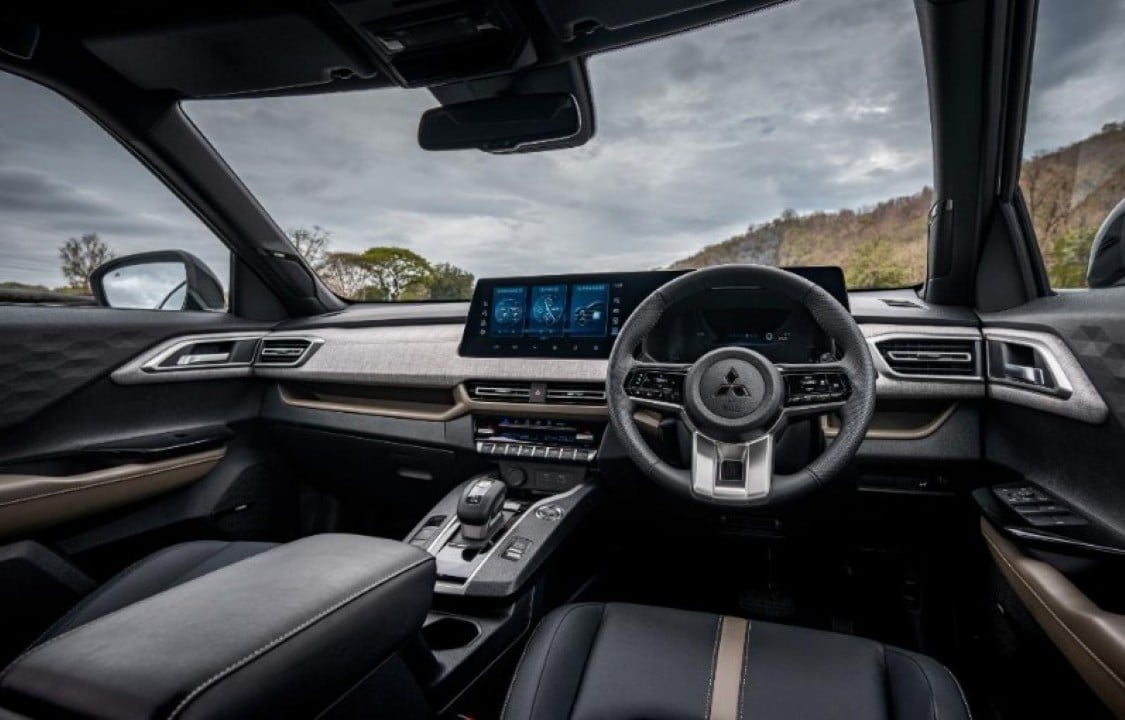
- Internal technology: digital Painel and sound system developed by Yamaha.
- Versatility: Altura of 222 mm ground allows you to overcome urban obstacles and light trails.
Details of the engine and e:Motion system
The operation of the Xforce HEV is based on proprietary technology called e:Motion, which represents a direct evolution of the systems previously used by the brand in the Xpander model. The thermal engine operates in the Atkinson cycle, known for its greater thermal efficiency at the expense of gross power, leaving immediate torque delivery to the electric motor. The system generates 255 The 1.1 kWh battery, although compact, is sufficient to allow travel in purely electric mode over short distances or low-speed situations.
Transmission and driving dynamics
One of the highlights of the engineering applied to this vehicle is the new two-speed transaxle, developed to minimize mechanical losses common in conventional transmission systems. Diferente of traditional automatic transmissions, this system works to keep the combustion engine in its ideal rotation range, while the electric motor assists with load variations. Isso results in linear and smooth acceleration, eliminating jerks and improving comfort on board, in addition to contributing decisively to the impressive fuel consumption figures published by the manufacturer.
To ensure that the SUV maintains the identity of the Mitsubishi, known for off-road capable vehicles, seven different driving modes were incorporated. The driver can select specific settings for mud, gravel, wet asphalt or economical driving, adjusting throttle response and stability control intervention. The Active Yaw Control system acts on torque vectoring, braking the inner wheels in curves to improve trajectory and increase safety on slippery surfaces.
External design and dimensions
Visually, the Xforce HEV adopts a design language that refers to robustness, with muscular lines and an imposing front grille that follows the brand’s current visual identity. The 18-inch wheels aren’t just for aesthetics; they were designed to optimize lateral airflow, reducing aerodynamic resistance and contributing to the car’s overall efficiency.
In terms of measurements, the car is 4.39 meters long and has a wheelbase of 2.65 meters, which translates into generous internal space for the occupants. The ground clearance of 222 mm is one of the highest in the category, offering the driver peace of mind when tackling ditches, speed bumps and uneven terrain without scraping the bottom of the vehicle.
The full LED optical assembly guarantees superior visibility and gives the SUV a modern light signature. The rear complements the look with lights that invade the side, increasing the model’s sense of width and stability.
Interior and onboard connectivity
The cabin of the Xforce HEV is designed to offer a complete digital experience, centered around a 12.3-inch infotainment screen. Este high-resolution display allows control of various vehicle functions and connectivity with smartphones, facilitating navigation and access to media. Next to it, an 8-inch digital instrument cluster provides vital driving information in a clear and customizable way.
The partnership with Yamaha resulted in a premium sound system, specifically tuned for the acoustics of this SUV’s cabin. The interior finish uses soft-touch materials and ergonomic seats, aiming to reduce fatigue on long journeys and increase the perception of quality among the most demanding consumers.
Driver safety and assistance
In terms of safety, Mitsubishi equipped the model with a comprehensive package of active assistance, essential for competitiveness in the current market. Adaptive cruise control allows the vehicle to automatically maintain a safe distance from the car in front, reducing stress on highways.
The autonomous emergency braking system is capable of detecting obstacles and pedestrians, applying the brakes if the driver does not react in time. Além In addition, blind spot monitoring alerts you to vehicles in adjacent lanes, preventing common accidents when changing lanes.
The lane keeping assistant corrects the direction if the vehicle starts to leave the lane without signaling. Esses features put the Xforce HEV on par with segment leaders in terms of occupant protection.
The body structure was also reinforced to better absorb impacts, complementing the electronic safety systems. The combination of passive and active safety is one of the brand’s selling points to attract families.
Commercial strategy and expansion
The choice of Tailândia as the launch and production stage was not random, as the country offers robust tax incentives for the production of electrified vehicles. Mitsubishi plans to use this base to export the Xforce HEV to other emerging markets in Southeast Asia, such as Indonésia, Filipinas and Malásia, where demand for compact SUVs remains high.
The ten-year extended warranty for the hybrid system’s battery demonstrates the manufacturer’s confidence in the durability of the package. With competitive prices and a robust technological package, the model’s mission is to recover the brand’s market share and lead the transition to more sustainable mobility in the region.
