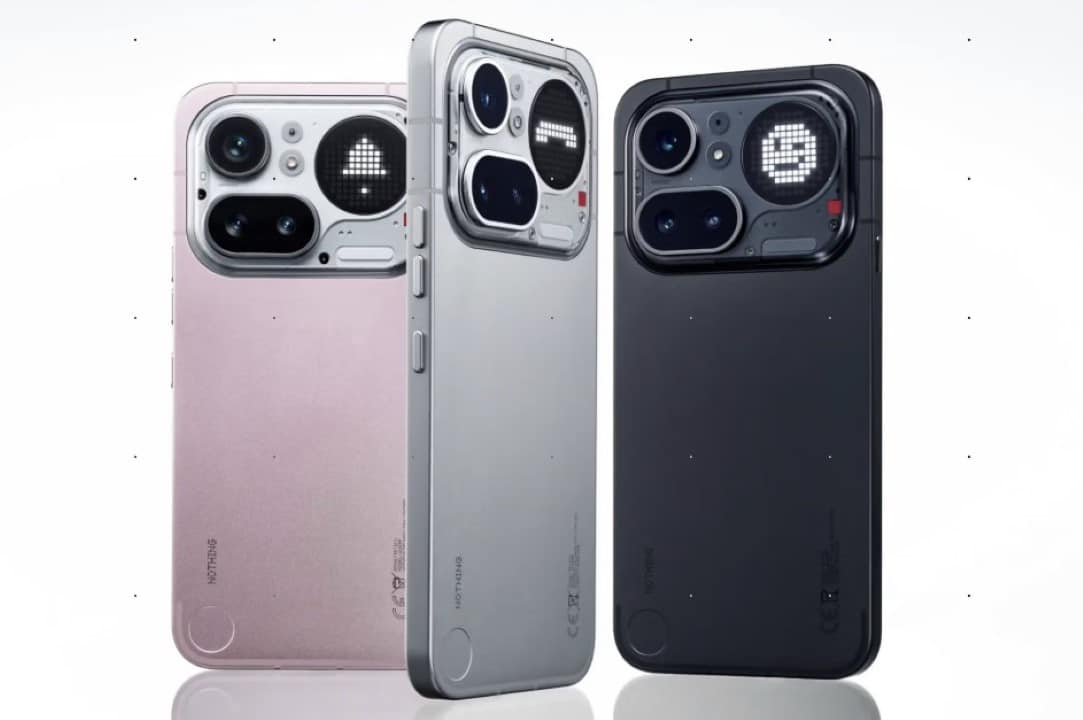
The Londres-based technology maker held a significant event this week to announce the expansion of its mid-range smartphone lineup. Sem major previous leaks that spoiled the surprise, the brand officially presented the Phone (4a) and the unprecedented Phone (4a) Pro. The launch marks an inflection point for the company, introducing more noble materials in the “a” series and technical specifications that seek to redefine the premium midsize segment, highlighting robust construction and advances in processing.
The highlight of the announcement falls on the Pro model, which abandons the traditional polycarbonate of the more affordable line in favor of a recycled aluminum unibody chassis. Além of the aesthetic and tactile change, the new devices hit the market running the Nothing OS 4.1 interface, based on the Android 16, guaranteeing users the latest software from the Google ecosystem. The company has committed to long-term support, offering three years of major operating system updates and six years of security fixes.
電話 (4a) Pro。
—何も (@nothing)2026 年 3 月 5 日
The launch strategy includes aggressive geographic expansion. Pela For the first time in the history of the “a” line, the Pro model will be officially sold in the North American market, signaling the brand’s intention to compete directly with major players in the Estados Unidos. Global sales are scheduled to begin in stages throughout March, varying by region.
Performance and battery life
At the heart of the Phone (4a) Pro lies the new Snapdragon 7 Gen 4 chipset. The focus on artificial intelligence was also prioritized, with a 65% improvement in processing AI tasks, optimizing everything from photography to power management.
To sustain this firepower, the Pro model is equipped with a 5,080 mAh battery, and a specific version for the Indian market will have 5,400 mAh. The device supports 50W fast wired charging, promising efficiency for heavy users. Battery durability was a focal point of engineering, with the promise of retaining 90% of original capacity even after 1,200 full charge cycles.
The standard model, the Phone (4a), uses the Snapdragon 7s Gen 4 processor. Although the Embora is a slightly more modest version, it still offers gains of 10% in energy efficiency and 7% in graphics and processing performance. The Ambos models use UFS 3.1 storage technologies and LPDDR5X RAM memory (in the Pro) or LPDDR4X (in the base model), ensuring fluidity when opening applications and transferring data.
Improved design and screen quality
The construction of the Phone (4a) Pro draws attention due to its reduced thickness of just 7.95 mm, achieved thanks to the use of an aluminum chassis. Este design is not just aesthetic; it integrates a 5,300 mm² vapor chamber, improving heat dissipation during demanding tasks like gaming. The front is protected by Gorilla Glass 7i glass, offering superior resistance against drops and scratches.
In terms of display, the Pro model sports a 6.83-inch OLED panel with a variable refresh rate of up to 144 Hz and a resolution of 1,260 x 2,800 pixels. Peak brightness reaches an impressive 5,000 nits, ensuring readability in direct sunlight, with 2,160Hz PWM dimming for viewing comfort. The standard model isn’t far behind, with a 6.78-inch OLED screen, 120Hz and 4,500 nits brightness.
Water and dust resistance also differs between versions. The Pro model is IP65 certified, capable of resisting water jets and accidental shallow submersion of up to 25 cm for 20 minutes. The Phone (4a) maintains IP64 certification, protecting against splashes and dust, suitable for everyday use but less robust against immersion.
Evolution in cameras and photography
The photographic system received special attention, with both devices sharing a 32 MP front camera and an 8 MP ultra-wide lens with a 120-degree field of view. However, the main sensor is the big difference from the more expensive model. The Phone (4a) Pro uses the 50 MP Sony Lytia 700c sensor, supporting advanced technologies such as the
The standard model is equipped with the 50 MP Samsung GN9 sensor. The Embora is competent, it does not have the features of the Ultra XDR and limits video recording to 1080p in some situations, reserving 4K for specific conditions without the same advanced stabilization as its bigger brother. Exclusivo of the Pro model is the inclusion of a telephoto lens with 3.5x optical zoom and up to 7x hybrid zoom, allowing quality long-distance captures.
- Sensor Principal:50 MP (Sony Lytia 700c on Pro; Samsung GN9 on base model)
- Ultra-wide lens:8 MP with 120 degree angle
- Camera Frontal:32 MP for high-resolution selfies
- Zoom Óptico:3.5x (Exclusive to model Pro)
Revamped Glyph interface
The brand’s visual signature, the Interface Glyph (rear lights), has been updated. The Phone (4a) Pro features the “Glyph Este system allows for granular notifications and more complex visual interactions.
The conventional model maintains the “Glyph Bar”, made up of 63 bar-shaped LEDs. Apesar to have fewer points of light, the intensity was increased by 40%, reaching 3,500 nits, ensuring that light alerts are visible even in very bright environments.
Pricing and global availability
Pre-orders for the Phone (4a) begin immediately in select markets, with general availability starting March 13th. The Pro model follows a similar schedule, arriving in physical stores at the end of the month. Na Europa, prices start at 350 euros for the base model (8GB/128GB) and 480 euros for the Pro model with the same memory configuration.
In the North American market, the Phone (4a) Pro will be sold from US$500, positioning itself as a competitive option compared to flagships from other brands. Na Índia, prices start at 32,000 rupees for the standard model and 40,000 rupees for the Pro version, reaffirming the brand’s commitment to offering cutting-edge technology at affordable prices in emerging markets.
