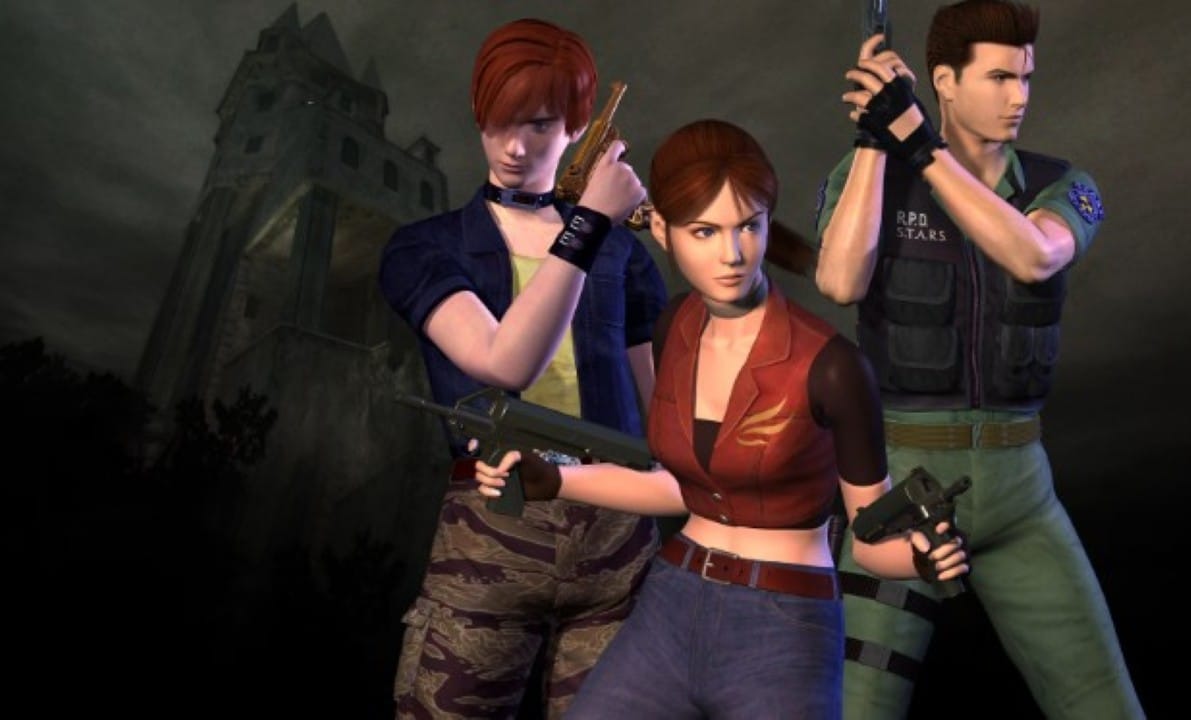
Japanese developer Capcom is preparing to expand its portfolio of survival games with the revitalization of one of its classic titles most anticipated by consumers. Informações recent behind-the-scenes looks at the electronic games industry indicate that the company has scheduled the launch of a completely remade version of a title originally published in 2000, reinforcing its commitment to preserving its history.
The central project of the new information involves the development of the remake of an adventure starring the character Claire Redfield, expected to hit the global market in 2027. The producer’s internal schedule demonstrates a long-term strategy to maintain the relevance of its classic intellectual properties, ensuring that the franchise’s life cycle remains active and profitable for shareholders.
Antes from the arrival of this recreation, the company plans to make the ninth numerical chapter of its main series available. The launch structure aims to intersperse new titles with modernized versions of works from the past, ensuring a constant flow of products on physical shelves and digital stores around the world, without overloading creative teams with the need to invent universes from scratch every year.
Details of the ninth chapter of the main franchise
Information released by sources with a history of success in the industry indicates that the next new game in the series has a release window established for the end of February of the current year. The title represents the project with the largest budget and development time ever allocated by the company for a single game from the brand, reflecting the board’s ambition to raise the quality standard of intellectual property.
The narrative of this new chapter will place government agent Leon S. Kennedy in the main role, marking the character’s return after his participation in the recreation of the fourth game in the series. The plot will take place in a fictional location inspired by Southeast Asia, bringing an unprecedented setting to the franchise and exploring horror elements based on isolation on remote islands.
The story’s events are set chronologically in the summer of 2025, presenting a direct connection to previous biological incidents in the game’s universe. The developer plans to introduce new exploration and combat mechanics to differentiate this release from its direct predecessors, focusing on a more open and interconnected world than the linear corridors of the past.
Return to island Rockfort and historical rescue
The work scheduled for 2027 had its original debut on the Dreamcast console, quickly becoming a milestone in the narrative evolution of the survival horror genre. The story follows a survivor’s tireless search for the traces of her missing brother, months after the complete destruction of a fictional town in the American Midwest by a military containment attack.
The plot transports players to a remote prison facility known as Rockfort Island, operated by a multinational pharmaceutical corporation with vast military power. The site serves as a base for illegal genetic experiments and houses luxurious secret facilities that hide the dark secrets of one of the founding families of the criminal organization that caused the global outbreak.
The main antagonists of the plot belong to the Ashford lineage, presenting a complex psychological profile that adds layers of psychological tension to the user experience. The modernization of these characters is seen as one of the main challenges for the team of writers and art directors involved in the recreation project, requiring a more realistic and less caricatured tone.
The relevance of this particular title lies in its contribution to the series’ global mythology, establishing crucial connections between the early zombie-focused games and the later sequels focused on international bioterrorism. The narrative update will make it possible to correct temporal inconsistencies and deepen the motivations of the secondary characters who inhabit the island’s facilities.
Technological update with its own graphics engine
The development of the new version will use the company’s proprietary technology, a graphics engine responsible for the visual and technical success of the company’s most recent releases on the global market. Esta advanced tool allows the creation of highly detailed environments, dynamic lighting systems that react in real time and photorealistic textures that significantly expand the immersion in horror scenarios. Technological standardization facilitates the sharing of digital resources between different production teams, optimizing programming time and reducing operational costs for large-scale development.
The transition from the classic format to modernity requires a complete redesign of the camera system and the control interface offered to the player. The original perspective, based on fixed security camera angles, will be replaced by a dynamic view over the character’s shoulder, a standard consolidated by the contemporary industry for action and horror games. Esta profound mechanical change demands the architectural redesign of all maps, the strategic repositioning of enemies and the creation of new artificial intelligence routines to maintain the level of difficulty and the atmosphere of oppression characteristic of the original work.
Commercial performance drives new projects
The continuation of heavy investments in recreations of old games is supported by the significant financial results obtained by the Japanese developer in recent fiscal years. Official sales data reveal the global public’s massive acceptance of this product format, proving that nostalgia combined with high technology is a low-risk formula. The modernized version of the second game in the franchise reached an impressive 16.3 million units sold, becoming one of the biggest successes in the studio’s history, while the unprecedented eighth chapter registered 12.8 million copies sold on various platforms. The recent remake of the fourth game quickly racked up 11.1 million in sales, and the remake of the third title reached 10.6 million units shipped. Estes robust numbers attest to the viability of the company’s business model, which manages to efficiently monetize both the veteran fan base and a new generation of consumers who have not had contact with the limitations of the original versions. Consistency in quarterly profits allows the company to finance longer development cycles and maintain multiple teams simultaneously dedicated to large-scale projects, mitigating the financial risks associated with creating entirely new intellectual properties in the digital entertainment industry’s current volatile economic climate.
Availability and next generation platforms
Distribution planning for upcoming titles focuses exclusively on the advanced technology hardware available in today’s electronics market. The versions under development are being optimized to extract maximum performance from the processors in next-generation desktop consoles and the graphics cards in high-performance personal computers.
Existem strict technical guidelines to ensure stable frame rates and support for high resolutions, in addition to visual adaptations planned for future hardware updates from major console manufacturers. Compatibility with the successor to the current hybrid system on the Japanese market is also included in the software producer’s internal planning documents.
Rolling release strategy
Management of the company’s publishing calendar aims to avoid long periods of silence without news for the brand’s millions of consumers. The administrative tactic of alternating numbered titles with reworked versions creates a cycle of constant engagement, keeping intellectual property always in the spotlight on major technology media outlets and live internet video streaming platforms.
Preservation of classic mechanics and enemies
Modernizing games requires a delicate balance between introducing new features and preserving the core identity of the survival experience. Managing scarce resources, such as limited ammunition and essential healing items, will remain the mechanical pillar of gameplay, forcing users to make tactical decisions with each enemy encounter.
Developers are working on updating the behavior of classic enemies, ensuring that iconic creatures like biological hunters and elastic mutants pose genuine threats in the new combat system. The resolution of complex puzzles spread across the scenarios will also receive logical adjustments to adapt to the pace of current productions.
Survival horror universe expansion
The systematic recreation of narratives from the past acts as a vital generational bridge within the vast global gaming community. The refined modernization of controls and updated graphics remove the technical barriers to entry that games of past decades imposed on users accustomed to contemporary high standards of usability and fluidity.
- Maintaining an atmosphere of isolation and scarcity of resources.
- Updated dialogues and documents for greater narrative coherence.
- Implementation of three-dimensional sound design for auditory immersion.
Mechanical refinement combined with absolute respect for the source material demonstrates the technical maturity of the developer’s internal production processes. The expectation of the financial market and specialized analysts in the technology sector is that the company will maintain its strong trajectory of increasing the value of corporate assets through this extremely calculated management of its valuable historical catalog of interactive entertainment.
