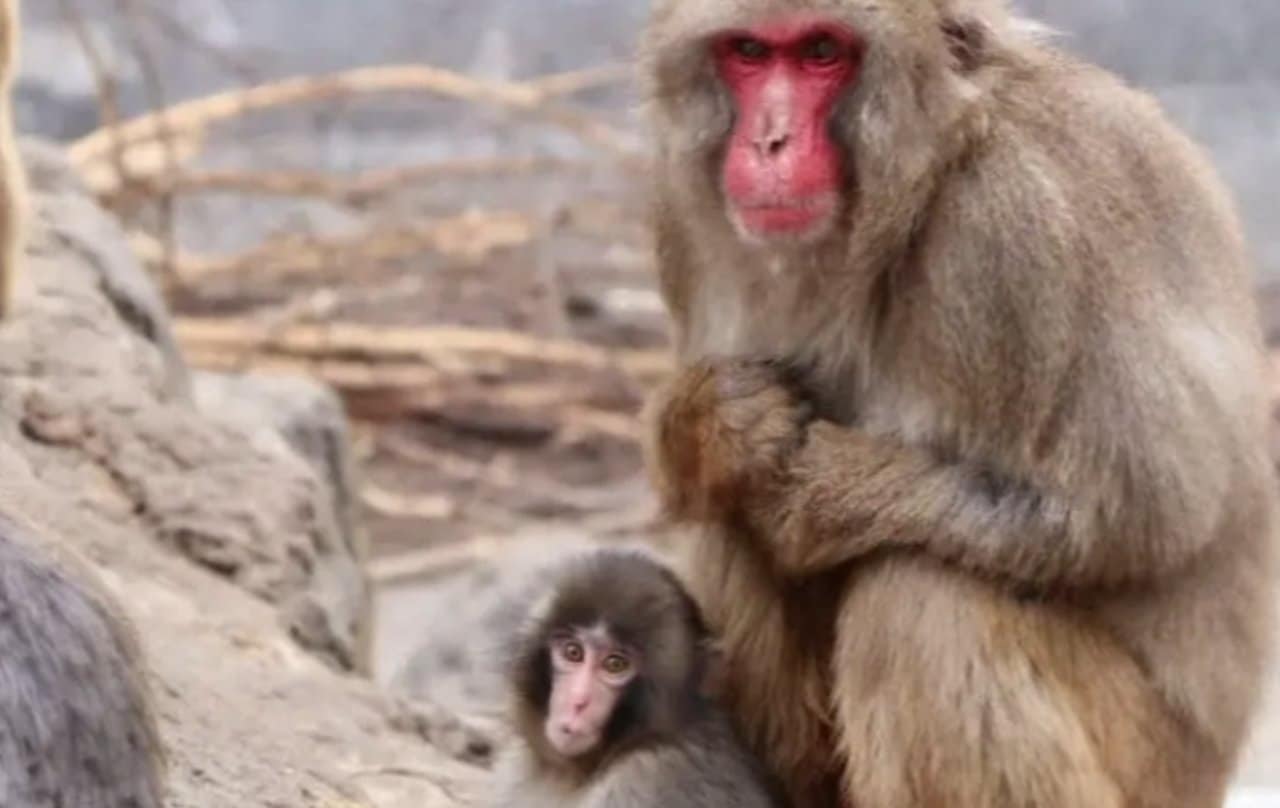
Zoológico and Jardim Botânico of Cidade of The measure was taken after a video of the animal was widely shared on social media, sparking global concern about what appeared to be bullying by other members of the group. The institution seeks to dispel misconceptions and reaffirm its commitment to the well-being of the animals in its custody, a debate that has taken on complex contours with the growing influence of digital media.
The controversy surrounding Punch, a hand-reared Japanese macaque after being abandoned by its mother, has escalated significantly. Sua image, often accompanied by a stuffed orangutan that he saw as a motherly figure, had already captivated the internet. Contudo, recent images of other monkeys apparently “disciplining” the baby have provoked a wave of concern from both Japanese citizens and international observers.
Faced with the repercussions, the zoo had initially spoken out on February 20, stating that, although Punch received reprimands from others, there were no serious attacks. The organization called for support for Punch’s efforts to integrate, rather than focusing solely on the penalty. However, the viralization of the video required a new and more detailed explanation, reaffirming the official position and clarifying the nature of the observed behavior.
The social context of Japanese macaques
The social structure of Japanese macaques is intricate and marked by a well-defined hierarchy. Esses groups form an autocratic society, where dominant individuals exercise control over subordinates, sometimes through behaviors that the zoo describes as “discipline.” Essa dynamics are intrinsic to the species and fundamental to the cohesion and organization of the group, fundamentally different from the concept of human “abuse”.
Since 1948, Japanese primatologists have dedicated themselves to in-depth study of the behavior, society and ecology of monkeys native to the Japão. The vast literature accumulated over decades corroborates that the “discipline” observed in Punch is a natural phenomenon. Esse type of interaction is not restricted to this specific offspring, being an integral part of the group life of any Japanese macaque in its natural environment or in captivity that reproduces these social conditions.
It is crucial to understand that these episodes of discipline do not represent the entirety of Punch’s life experience. The zoo emphasizes that the baby spends most of its day in a state of tranquility and positive interaction with other monkeys. Além In addition, many individuals in the group have shown care and play with Punch, which has led him to spend less time attached to his stuffed toys, an indication of his growing socialization and acceptance within the group.
Intervention and temporary separation
Despite the initial explanation about the social nature of the monkeys, the increase in attacks by individuals higher than Punch forced the zoo to take more drastic action. As of March 8, Punch was temporarily separated from the group. Esta action, although seen as necessary, highlights the delicacy of managing animal welfare in an environment that seeks to replicate, as far as possible, the social complexities of nature.
The decision to temporarily separate Punch reflects the zoo’s priority on ensuring the cub’s safety while closely monitoring its condition. Esta strategy allows observing the evolution of the group’s behavior and that of Punch individually, evaluating the best options for their future reintegration. The intervention seeks to balance the need for protection with the imperative of maintaining the monkey’s social development within a naturalistic context.
The Zoológico team of Ichikawa is employing a cautious, evidence-based approach. Keepers and staff work together to ensure that Punch receives the necessary care and can eventually return to his group safely, fully adapting to the social life that is essential for his species.
Challenges of public interpretation and the role of social media
The virality of animal videos like Punch highlights a growing challenge for zoos and conservation institutions: the public interpretation of animal behavior through the lens of social media. Muitas times, isolated scenes are decontextualized, leading to intense emotional reactions and the humanization of behaviors that are perfectly natural in the animal kingdom.
Expressions of concern, although well-intentioned, place considerable pressure on zoos to explain and justify their practices. The complexity of animal behavior and social dynamics in groups is not easily understood by a lay public, especially when videos are accompanied by simplistic or misleading narratives on digital platforms.
Punch’s situation serves as a vivid reminder of the need for continued education. Zoológicos like Ichikawa play a vital role not only in conservation and research, but also in promoting a deeper, more nuanced understanding of wildlife by helping the public differentiate between natural discipline and true abuse.
The reintegration dilemma and group life
The zoo has received numerous suggestions to permanently separate Punch from the group, a measure that, while apparently protective, carries significant risks to the animal’s long-term development and well-being. The Ichikawa team understands the motivation behind these requests, but considers the consequences of such a decision.
Group life is a fundamental pillar for Japanese macaques. Punch’s definitive separation could impede his ability to return to his natural social environment, condemning him to an isolated existence. Este scenario, far from being ideal, would compromise his mental and social health, since he has already become accustomed to living with his peers. Reintegration, although challenging, is seen as the most beneficial path to Punch’s full development as a monkey.
Zoo staff reiterate that they share everyone’s concern about Punch. Efforts are focused on monitoring his adaptation and working tirelessly so that he can enjoy a healthy and fulfilling life within the group, reinforcing the commitment to management practices that prioritize the physical and psychological well-being of the animals.
Primatology and understanding behavior
Primatological research has been essential in unraveling the mysteries of Japanese macaque behavior. Understanding their hierarchies, discipline rituals, and social interactions provides a solid basis for the management and conservation of the species. Fieldwork and observations in controlled environments, such as zoos, complement each other to provide a comprehensive view of these complex societies.
Studies show that discipline in primate groups is not random, but rather a mechanism to maintain order, set limits, and teach appropriate behaviors to young people. Essas interactions are crucial for cultural transmission within the group and for the long-term survival of individuals. Interpretar these actions without due scientific knowledge can lead to erroneous conclusions and misinformation.
Zoológico of Ichikawa relies on this knowledge to guide its decisions, seeking a balance between the individual protection of the animal and the maintenance of the social structure that is vital for its species. Educating the public about the science behind animal behavior is a powerful tool for combating misinformation and promoting a deeper appreciation of nature.
The future of punch at the zoo
The situation of Punch continues under strict observation and care in Zoológico of Ichikawa. Temporary separation is a dynamic strategy, adjusted according to the puppy’s response and the interactions observed. The primary goal is to ensure that Punch can thrive, learning to navigate the complexities of their species’ social life without compromising their safety or long-term well-being. Keepers are implementing specific protocols to facilitate their eventual and gradual reintroduction, focusing on strengthening their resilience and social skills.
Future decisions about Punch will be made based on ongoing assessments, considering his health, social development and the dynamics of the monkey group. The zoo seeks to ensure that his journey is closely monitored, with all actions guided by animal welfare principles and primatological knowledge, ensuring a future where he can live fully as a Japanese macaque within his group.
