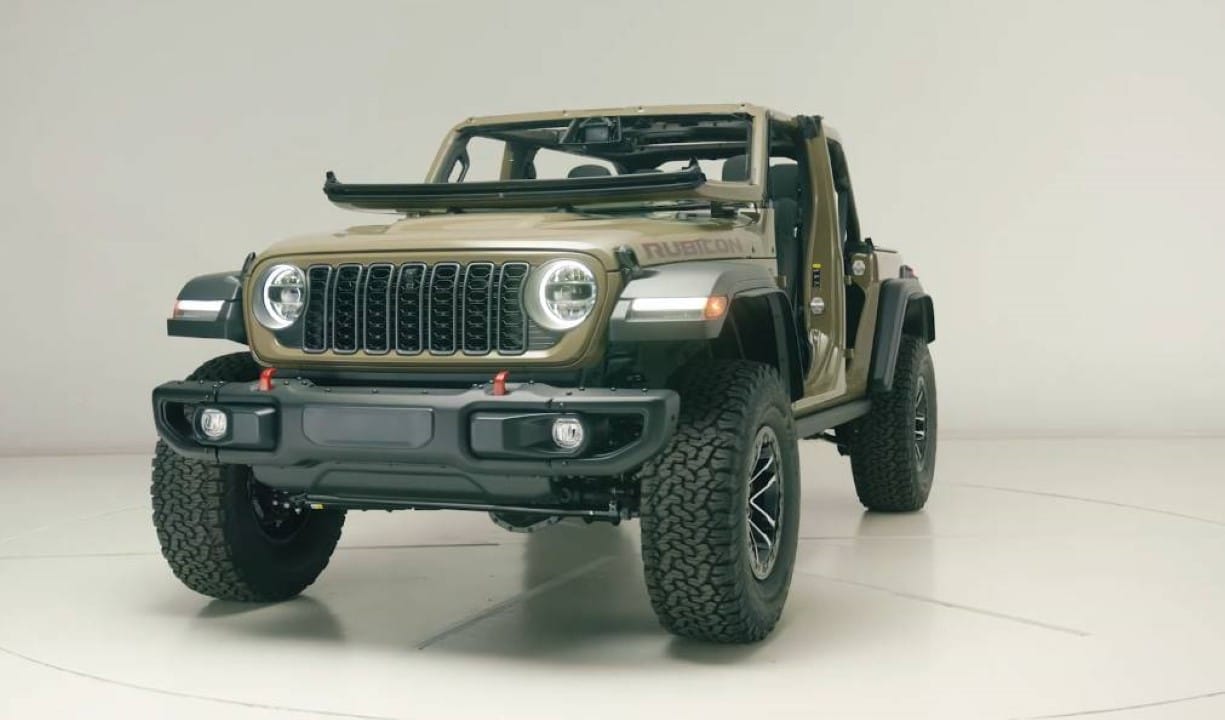
The Stellantis group has achieved a significant milestone in automotive safety engineering with the recent evaluation of its classic mixed-use vehicle. Insurance Institute for Highway Safety, an independent organization that evaluates vehicle protection, confirmed that updates applied to the model’s front structure prevented the utility vehicle from tipping over during severe impact simulations. Este result establishes a turning point for the project, which faced rigorous criticism in previous years due to its unstable dynamic behavior in controlled laboratory environments.
The small overlap test, considered one of the most demanding applied by the institute, simulates a collision where only forty percent of the car’s frontal width hits a rigid barrier at a speed of 64 km/h. Este cenário específico é desenhado para replicar acidentes reais envolvendo árvores, postes de iluminação ou colisões frontais parciais com outros automóveis no trânsito, situações que historicamente causam traumas severos aos motoristas e passageiros devido à concentração extrema de força em uma área reduzida da carroceria.
To understand the magnitude of this structural update, it is necessary to observe the main technical points implemented by the engineering team during the chassis redesign process:
– Reforço straight to the front rail to maximize kinetic energy dissipation.
– Redirecionamento of impact forces away from the main passenger cabin.
– Manutenção of lateral stability during the abrupt transfer of weight at the moment of impact.
The combination of these mechanical factors allowed the vehicle to keep all four wheels firmly on the ground after the violent collision on the driver’s side. The immediate consequence of this stability is a drastic reduction in the risk of secondary trauma, which generally occurs when a car rolls over and subjects its occupants to unpredictable multidirectional forces within the passenger compartment.
Structural modification to the chassis alters impact dynamics
The engineering department focused its efforts on the front chassis rail, a vital component for absorbing kinetic energy in accidents. The reinforcement applied to this specific part acts as a high-strength physical barrier that prevents the structure from collapsing unevenly under extreme pressure.
During an asymmetric impact, the new configuration effectively redirects destructive forces, distributing the load across the entire lower platform of the car. Esta intelligent distribution prevents kinetic energy from accumulating on a single side of the suspension, which was the main trigger for loss of lateral balance in previous versions.
The independent institute highlighted that this modification definitively resolves a persistent mechanical behavior that had been observed since the launch of the current generation of the utility. Todas units manufactured from October of the previous year already incorporate this essential structural improvement directly from the assembly line.
Valuation history reveals automaker’s ongoing challenges
This particular model’s path through rigorous safety testing has been marked by a series of technical hurdles since assessments conducted in 2019. The manufacturer’s initial attempts to correct the defect, implemented in the 2022 versions, proved insufficient to completely eliminate the risk, keeping the car below the standards of excellence required by the international sports utility vehicle market.
The definitive overcoming of this structural challenge in the current version represents a significant evolution in the engineering of vehicles with a high center of gravity. Video records of the most recent tests show completely different dynamic behavior, with the suspension and chassis working together to absorb shock without compromising the lateral horizontal axis. Esta technical progression demonstrates how constant pressure from independent safety institutes forces the automotive industry to continually invest in research and development, even in projects already consolidated in the global market and with high sales volumes.
Detailed performance in protecting front occupants
Despite the overall success in avoiding the rollover, the car’s overall rating in the combined test was established as acceptable. Esta note reflects a thorough analysis of the different levels of protection offered to front seat occupants during the collision simulation.
On the driver’s side, the evaluation instruments recorded highly positive numbers regarding the preservation of physical integrity. The internal structure of the cabin remained intact, and sensors located on the test dummies indicated a low probability of serious injuries to the head, neck and chest.
However, the scenario observed on the passenger side presented different challenges for the technical assessment team. Telemetry data pointed to a considerable risk of injuries to the lower limbs, specifically to the right leg and foot of the occupant positioned in the right front seat.
The occurrence of structural intrusion in the floor area was the determining factor that prevented the vehicle from achieving the maximum grade of excellence. The safety institute emphasizes that, although vital survival space is preserved, this specific vulnerability requires future technical interventions by the automaker.
Direct comparison with competitors in the utility segment
The off-highway vehicle market is highly competitive, and safety ratings often dictate consumer purchasing trends. Direct Rivais, like the Ford Bronco evaluated in 2021, had already set a high standard by achieving top scores in the same small frontal overlap tests.
With recent structural updates, the Stellantis model significantly reduces the technical gap in relation to its main competitors. Embora has not yet reached the absolute top of the safety rankings in all lower limb protection categories, the elimination of the risk of rollover places the car in a much more favorable commercial and institutional position.
Rollover physics and the high center of gravity
The fundamental architecture of traditional off-road vehicles inherently presents complex challenges for automotive safety engineering, primarily due to high ground clearance and specific suspension geometry designed to negotiate extreme obstacles. Dados compiled by Esta physical characteristic is intrinsically linked to the high center of gravity, which makes the body more susceptible to lateral weight transfer during abrupt maneuvers or asymmetric collisions. The recent chassis update directly mitigates the forces that induce rollover in frontal impact scenarios, but does not alter the immutable laws of physics that govern the dynamic behavior of a car designed with a robust, upright structure for use on trails.
Driving recommendations for mixed-use vehicles
Due to the unique structural characteristics of these SUVs, traffic authorities and safety experts strongly recommend adopting a preventative driving posture. Drivers must exercise extra caution when navigating tight curves, making sudden lane changes or traveling on uneven surfaces at high speeds, always respecting the dynamic limits of the equipment.
Additional assessments and integrated security systems
In addition to the specific small overlap test, the car was subjected to a comprehensive battery of additional evaluations to attest to its overall reliability. In criteria such as moderate frontal collision and updated side impact, the model demonstrated solid performance, ensuring adequate protection for all occupants distributed throughout the cabin.
The presence of standard active and passive safety technologies plays a fundamental role in these positive results. The integration of advanced side curtain airbags and continued refinement of the electronic stability control system work in synergy with the reinforced chassis to maximize life preservation in real-world highway accident scenarios.
