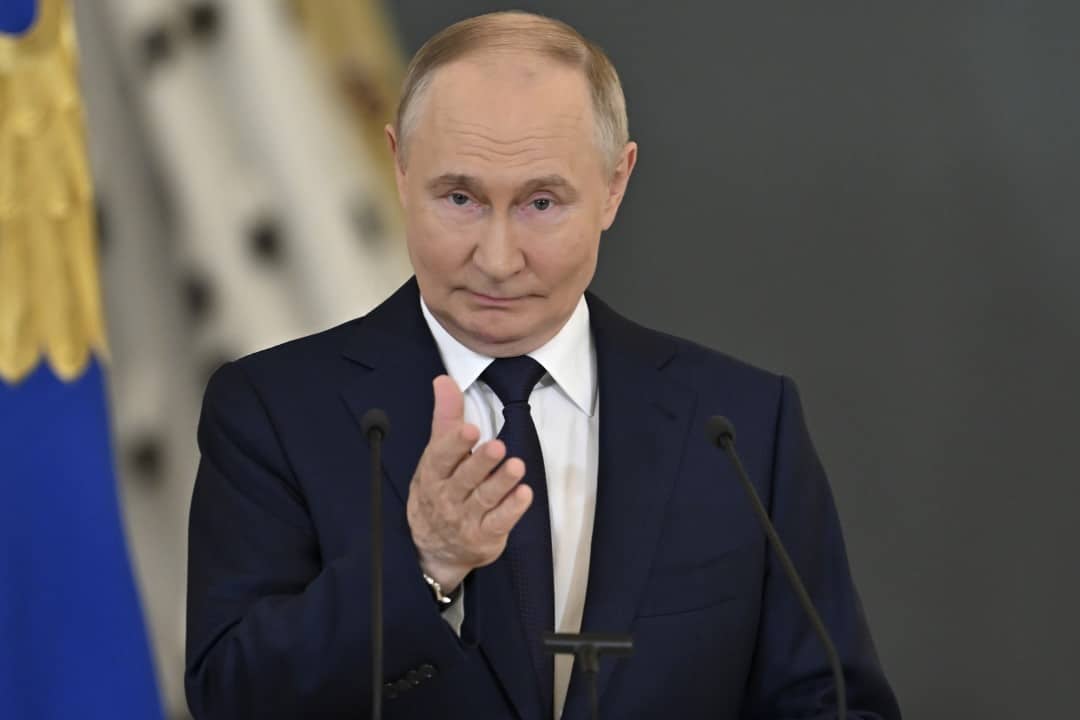
The government of Rússia formalized, this Wednesday (11 March), a serious accusation against British experts, alleging their involvement in a fatal Ukrainian attack that hit the Russian city of Bryansk the previous day. The offensive, which used Storm Shadow missiles of British origin, generated a strong reaction from the Kremlin, which stated that it would take the role of the Reino Unido “into consideration” in future relations and actions.
The incident raises new concerns about the escalation of conflict in the region, adding a layer of complexity to the already tense relations between the Rússia and the Western countries that support the Ucrânia. The use of advanced weaponry supplied by Western allies has been a constant point of contention. Moscou considers such support a direct intervention in its security affairs and proof of the hostility of European nations and NATO. The Russian statement suggests that the consequences of this claim could transcend the battlefield.
Formal accusation and diplomatic repercussions
The accusation came to light through Dmitry Peskov, spokesperson for Kremlin, in response to questions about possible military retaliation for the use of British missiles on Russian territory. Peskov openly declared to the press that “it is obvious that launching these missiles would be impossible without British experts.” Essa statement underlines the Russian perception that Western assistance goes beyond the provision of hardware to also include crucial technical and strategic support.
The spokesperson added that Rússia is fully aware of this situation and “naturally takes this into account” in its decisions. Kremlin’s rhetoric suggests that this “consideration” could translate into retaliatory measures or a hardening of its diplomatic and military stance. The continuation of the “special military operation” in Ucrânia, according to Peskov, aims to prevent “barbaric actions by the Kiev regime”, reinforcing the objective of demilitarization of the neighboring country.
Details of the offensive on Bryansk
The governor of the Bryansk region confirmed that the attack that took place on Tuesday (March 10) resulted in the deaths of at least six civilians and left another 37 injured. Ele classified the event as a “terrorist missile attack”, although he did not specify the exact target of the offensive. The nature of the attacks, which target populated areas, has been a sensitive issue and widely condemned by both sides.
In turn, Ucrânia promptly claimed responsibility for the attack, claiming to have hit an important missile components factory in the Bryansk region. The Ukrainian justification for such actions is often based on the need to disable Russian military capabilities and halt weapons production. Moscou, however, rejected this version, accusing Kiev of deliberately targeting civilians, a narrative that is repeated at various moments during the conflict.
Storm shadow missiles and their arsenal
The Storm Shadow missiles, supplied by the Reino Unido to the Ucrânia, represent a significant addition to the Kiev arsenal. Estes are long-range cruise missiles designed for precision strikes against fixed, high-value targets. Sua’s ability to be launched from aircraft and their stealth technology make them particularly effective against well-defended infrastructure such as command bunkers, bridges, and weapons factories.
The introduction of these missiles into the conflict has allowed the Ucrânia to reach more distant and strategic targets within the territory controlled by the Rússia or in occupied regions, changing the dynamics of military operations. Training to use these complex systems requires considerable expertise, which supports the Russian claim that the involvement of British experts is indispensable to their operation. Its effectiveness has been a major factor in the war of attrition and pressure on Russian supply chains and logistics.
The Kremlin’s View on Western Assistance
Rússia has consistently argued that Ukrainian attacks with advanced Western weaponry would not be possible without the profound assistance of countries like Reino Unido and Estados Unidos. The Kremlin reiterates that the Kiev relies on the technical expertise, target location data and satellite imagery provided by the Ocidente to accurately launch sophisticated missiles on Russian soil.
This perspective aims to delegitimize Ukrainian actions, presenting them as mere extensions of Western will and not as sovereign decisions of Kiev. The Russian narrative seeks to mobilize domestic support by demonizing foreign intervention and justifying the continuation of the “special military operation” as a defense against NATO aggression.
Kiev reaction and attack strategy
The Ukrainian leadership, including President Volodymyr Zelensky, has been transparent about its goal of targeting Russian military infrastructure. Kiev’s strategy focuses on dismantling Rússia’s war capacity, attacking critical points such as weapons factories and ammunition depots. Zelensky’s statement about the attack on one of Bryansk’s most important military factories, producing electronic components for Russian missiles, aligns with this tactic.
Ucrânia argues that by targeting these facilities, it is reducing Russia’s ability to manufacture and launch new missiles, thereby protecting its own cities and citizens from future attacks. The targeting of strategic military targets is presented as a legitimate response to aggression, although Rússia insists that such actions constitute “terrorism” and target civilians.
The cry of Russian diplomacy
The spokesperson for Ministério, Relações Exteriores, Rússia, Maria Zakharova, was vehement in stating that the attack on Bryansk was premeditated and directed against civilians. Zakharova used the diplomatic platform to challenge Organização of the Nações Unidas (UN) to evaluate the events and take a position on what Moscou describes as a war crime.
This appeal to the UN seeks to put international pressure on Ucrânia’s allies and raise doubts about the conduct of Ukrainian forces and the support they receive. Rússia frequently uses international forums to present its version of events, seeking to mobilize global public opinion and influence perceptions of the conflict.
Geopolitical implications and escalation
The accusation of British involvement in direct attacks on Russian territory, using missiles supplied by Reino Unido, marks a significant escalation in geopolitical tensions. Tal scenario intensifies the risk of retaliation and deepens the chasm in relations between Moscou and Londres, which are already at their lowest point in decades.
International analysts indicate that Russian actions could become more aggressive or directed against Western interests, even if asymmetrically. With each new escalation, the possibility of a broader conflict becomes a real fear, with unpredictable consequences for European and global security.
The continued role of international support
International support for Ucrânia, both in military, financial and humanitarian terms, has been crucial to the country’s resistance. Desde the start of the invasion, a coalition of countries, led by Western nations, has provided a diverse range of military equipment, including air defense systems, artillery, armored vehicles and, more recently, long-range missiles.
This assistance is seen by allies as essential to guaranteeing the sovereignty and territorial integrity of the Ucrânia, while the Rússia interprets it as a direct provocation and an effort to weaken its regional and global influence. The maintenance of this flow of support, despite Russian accusations and threats, demonstrates the determination of Western countries to confront what they consider to be unjustified aggression.
Developments and the future scenario
Londres’s lack of immediate comment on the Russian accusations is not unusual, as Reino Unido generally avoids publicly responding to each of Kremlin’s allegations. Contudo, the episode adds a layer of complexity to discussions about the supply of weapons and the extent of military support to Ucrânia. The near future may see an increase in rhetoric and, potentially, retaliatory actions by Rússia.
The international community remains attentive to developments, while diplomatic efforts towards a peaceful resolution of the conflict continue to face significant obstacles in the face of intransigence on both sides. The human tragedy in Bryansk, with civilians killed and injured, serves as a grim reminder of the devastating cost of war and the urgency of finding paths to lasting peace.
