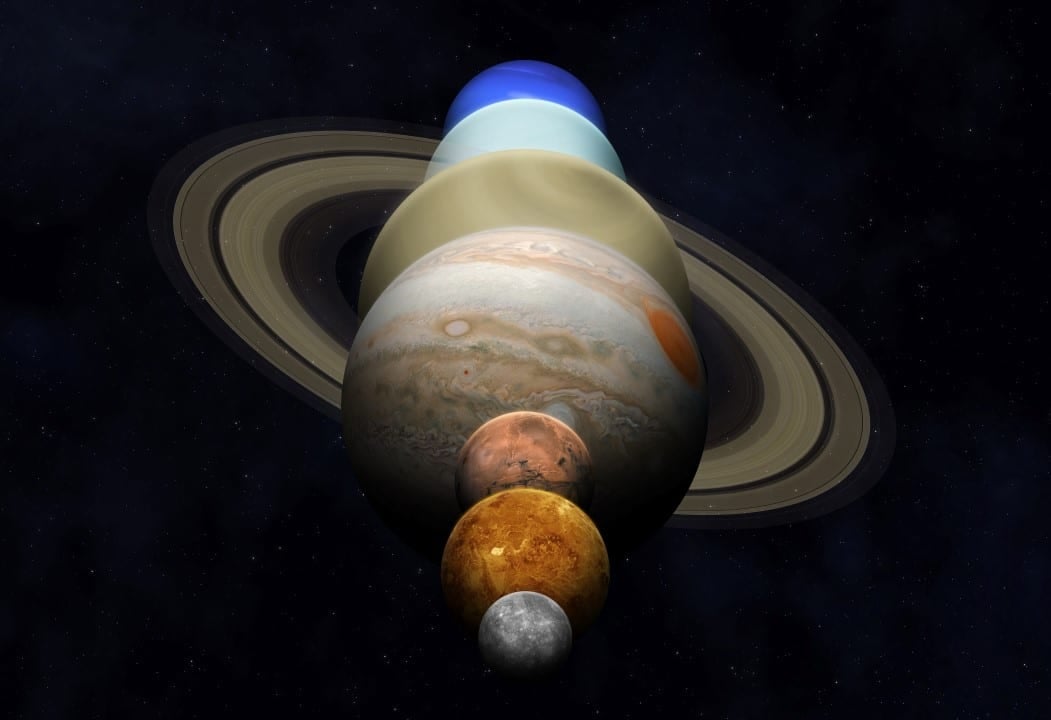
Astronomy enthusiasts in different parts of the world had the opportunity to witness a remarkable celestial phenomenon: the alignment of six planets, popularly known as the “parade of planets”. Este event occurs when multiple celestial bodies are positioned so that they are visible simultaneously in the sky, a spectacle that combines natural beauty with the complexity of orbital mechanics. Observation, weather conditions permitting, offers a unique perspective on the solar system.
NASA scientists, including planetary Heidi Haviland of Centro of Voos Espaciais Marshall, often explain that such alignments are a direct consequence of the planets’ orbit around Sol. The relative positions of the planets constantly change, and occasionally create a configuration that allows them to be viewed together from Terra. Este type of event serves as a vivid reminder of spatial dynamics.
For the public, the experience of observing a parade of planets varies depending on the celestial bodies involved. Mercúrio, Vênus, Saturno and Júpiter are generally visible to the naked eye, standing out for their constant luminosity. However, more distant planets like Urano and Netuno require the use of binoculars or a telescope to detect, revealing the diversity of visibility within our own solar system.
What is a parade of planets?
A parade of planets, or planetary alignment, describes the configuration in which several planets appear to be in a straight line across the sky, as seen from Terra. Embora are rarely perfectly aligned in a three-dimensional line, their orbital positions can create the illusion of a “parade” along a swath of sky. Este event is possible due to the different orbital periods and inclinations of each planet.
The occurrence of such alignments is a constant reminder of the precision and regularity of celestial orbits. Cada planet follows its own path around Sol, and the combination of their speeds and relative distances determines the frequency and visibility of these spectacles. Astrônomos track these movements with great precision, using complex models to predict future events.
Detailed observation of celestial bodies
For those looking to observe the planets individually during an alignment, some tips are crucial. Vênus is often the first to appear in the sky, standing out as the brightest object after Sol and Lua. Sua constant white light on the western horizon, just after sunset, or in the east, before dawn, makes it easier to identify.
Mercury, on the other hand, presents a greater challenge due to its proximity to Sol and its small size. The best time to try to spot it is about 30 to 60 minutes after sunset or before sunrise, when the sky still has an afterglow but Sol is already below the horizon. Ele appears as a white dot near the horizon.
Urano and Netuno, as they are in much more distant orbits, require the assistance of equipment. Good quality Binóculos may reveal Urano as a pale greenish dot, while Netuno, even more distant, almost always requires a telescope to distinguish as a small bluish disk. Identification of these gas giants enriches the observation experience.
Essential tips for the night show
To maximize the chances of a successful observation of a parade of planets, some points must be considered. Choosing the right place and time are essential to fully appreciate the phenomenon and the beauty of the sky.
- Avoid city lights:Urban light pollution drastically reduces the visibility of fainter celestial bodies. Procure rural areas or parks with minimal artificial lighting.
- Observe during twilight:The parade is most visible at twilight, whether just before sunrise for “early birds” or just after sunset for those who prefer nighttime.
- Check the height of the planets:The planet needs to be at least 10 degrees above the horizon to be clearly visible, avoiding obstruction and distortion caused by the Earth’s atmosphere.
- Consider auxiliary equipment:Embora some planets are visible to the naked eye, binoculars and telescopes are essential for Urano, Netuno and to get a more detailed view of the others.
The Science Behind Alignment
The physics that govern planetary motion is complex but understood. The orbit of each planet around Sol follows specific laws, resulting in different speeds and inclinations in relation to the ecliptic plane. It is this celestial dance that periodically places them in apparent positions that make them visible in a line in our field of vision.
Heidi Haviland points out that a planet’s position relative to Terra not only affects its visibility, but is also a critical factor in space missions. The need to precisely align spacecraft trajectories with their planetary destinations underscores the importance of understanding these dynamics. Esse knowledge is essential for the efficiency and success of robotic and manned explorations.
Relevance to space exploration
The study of planetary alignments transcends mere amateur observation, having significant scientific value. Ele reinforces understanding of celestial mechanics and provides valuable data for planning future forays into space. The position of planets is one of the most important factors in determining the “launch windows” of interplanetary missions.
Still in 2018, for example, NASA’s InSight mission, which sent a robotic landing module to Marte, had to wait an entire year for Terra and Marte to align at their closest point. Esse alignment allowed for a shorter trip with less fuel consumption, perfectly illustrating how the orbit and position of planets play a central role in mission design.
These cosmic phenomena are not just a visual display, but also natural laboratories for scientists to deepen their knowledge of the formation and evolution of our solar system. Collecting data on the atmosphere, composition and gravitational interactions during these alignments contributes to more accurate models of the universe.
The ability to predict and understand these planetary parades is a testament to the advancement of astronomy. From the first naked-eye observations to the use of complex space telescopes, humanity has continually improved its ability to decipher the mysteries of the cosmos. Cada alignment is an opportunity to test and refine these predictions, ensuring the accuracy of future explorations.
Visual impact and viewer experience
The sight of multiple planets together in the night sky is a spectacle that inspires awe and curiosity in people of all ages. It is a moment of connection with the vast universe, which reminds us of the grandeur and order that prevail beyond our atmosphere. Muitos observers report a feeling of smallness and wonder when faced with such a phenomenon.
This type of event also plays an important role in the education and popularization of science. By making astronomy accessible and visibly impressive, planetary parades encourage interest in STEM fields (Science, Tecnologia, Engenharia, and Matemática) and promote greater public understanding of space and exploration.
Celestial phenomena and human curiosity
Throughout history, humanity has been captivated by celestial phenomena. Desde From ancient civilizations that used the stars for navigation and calendaring, to modern observers with their high-tech telescopes, the night sky has always been a source of fascination and knowledge. Parades of planets are part of this rich tradition, serving as periodic markers of our cosmic journey.
They invite us to look up and contemplate our position in the cosmos, encouraging reflection on vast distances and astronomical times. The beauty and order of the universe, manifested in events such as a planetary alignment, continue to drive the search for new discoveries and the expansion of our understanding of the universe.
Best moments and places for contemplation
The visibility of a parade of planets depends crucially on the time of day and weather conditions. It is essential to seek clean, dark skies, away from the light pollution of big cities. Twilight, both morning and afternoon, offers the best observation windows, when the sky is not completely dark, but the brightest planets are already standing out.
