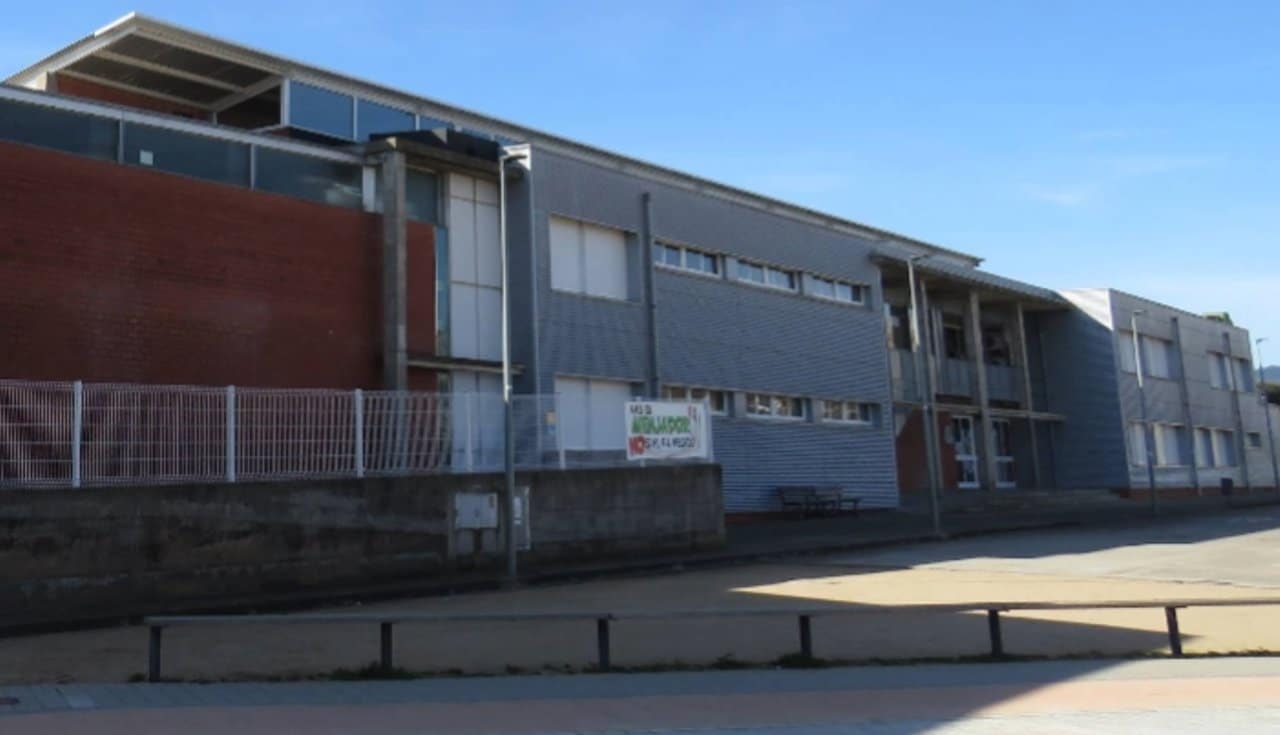
Three nine-year-old children suffered injuries on Wednesday morning due to an explosion that occurred during a chemical experiment carried out outside the l’Entorn school, located in the municipality of Porqueres, in the province of Girona. The incident quickly mobilized a large contingent of rescue teams, as two of the victims, a boy and a girl, had severe burns and required immediate transfer to specialized health units. A third student, also male, had injuries considered mild and received treatment at a local hospital, being discharged early in the afternoon of the same day, while his colleagues remained under strict observation to carry out additional tests and specific treatment for the clinical condition presented.
The emergency services were called at exactly 10:49 am, when the management of the educational institution reported the explosion of a container used in the practical activity. The city’s mayor, Francesc Castañer, promptly spoke out to ensure that the educational space maintained its structural safety conditions intact and that the situation was under control.
The quick intervention of health and security professionals was decisive in stabilizing the victims and organizing the transfer logistics. The area where the activity took place was isolated to allow the work of technical teams and subsequent expertise on the exact causes of the failure in the scientific experiment.
Response from emergency and medical care teams
The structured rescue operation to respond to the incident at Rua Montseny required highly complex logistical coordination. The mobilized apparatus included the sending of two medicalized helicopters and five advanced support ambulances.
The child who presented the most severe burn condition was stabilized on site and transported by air directly to the Hospital Vall d’Hebron, located in Barcelona, a unit that has a national reference center for the treatment of burn patients. The second victim in serious condition was also taken to the same hospital institution, using an ambulance equipped with intensive care resources, ensuring the maintenance of vital signs throughout the road journey.
The third student involved, with minor injuries, was taken to Hospital Josep Trueta, in The efficiency demonstrated by Sistema and Emergência Médica highlighted the importance of rapid triage protocols in incidents with multiple victims in school environments. The integrated action between ground rescuers and aeromedical teams allowed the response time between the initial call and hospital admission to be reduced to the minimum possible, a factor that directly influences the prognosis for recovery from thermal and chemical injuries suffered by children.
Institutional positioning and communication with families
The minister of Presidência, Albert Dalmau, used official communication channels to confirm the total commitment of government teams to support the injured. The government representative highlighted the agile action of the teaching staff and rescuers in the first minutes after detecting the problem.
The school management established a direct and continuous communication channel with the legal guardians of the students enrolled at the institution. The objective of this measure was to provide accurate updates on the health status of the victims and detail the contingency actions adopted by management in a transparent manner.
History of similar occurrences in the Catalunha region
The event recorded in Porqueres adds to other episodes documented in the region that involve failures in scientific demonstrations, highlighting the need for continuous review of pedagogical practices. Há approximately three years ago, a similar situation occurred in the municipality of Verges, in the region of Baix Empordà, when a teacher and a second-year student of On Naquela occasion, the ignition of a mixture containing alcohol, bicarbonate, sugar and sand resulted in uncontrolled flames. Posteriormente, in September of a recent previous year, the province of Girona witnessed another serious incident during a science outreach event led by physicist Dani Jiménez at a cultural center. The explosion before an audience of three hundred people left eighteen people injured, including ten minors, showing that the risks inherent in handling chemical compounds persist even under the supervision of experienced professionals and in strictly controlled environments.
Strict guidelines for hands-on activities in laboratories
Carrying out scientific demonstrations requires the implementation of a risk management system prior to students entering the experimentation space. The selection of materials must prioritize compounds with low reactivity and zero toxicity.
School work safety experts recommend the adoption of standardized preventive measures for any activity that involves physical or chemical reactions. Key guidelines include:
– Uso mandatory safety glasses with side seals for everyone present in the area.
– Utilização of nitrile gloves or material compatible with the substances handled.
– Manutenção of a minimum safety distance between the demonstration bench and the observers.
– Presença of fire fighting equipment inspected and valid.
The suitability of the age group for the type of experiment is another non-negotiable factor when preparing the lesson plan. Crianças in the early years of elementary school must only act as observers in demonstrations involving any type of release of thermal energy.
The infrastructure needed to prevent accidents
Spaces intended for practical science teaching require specific architectural and engineering adjustments to guarantee the physical integrity of users. The installation of mechanical exhaust systems, such as laminar flow hoods, is essential for the dispersion of gases and vapors that may be accidentally generated during the mixing of reagents. Além In addition, the floor must be covered with non-slip and corrosion-resistant material, facilitating immediate cleaning in the event of a spill of flammable or corrosive liquids.
The storage of chemical products requires cabinets designed with their own ventilation and shelves with containment edges. Substances must be cataloged and separated by chemical incompatibility classes, preventing reagents that react violently with each other from being stored in the same compartment. Access to this stock must be restricted exclusively to teaching staff and laboratory technicians, through strict control of keys and records of daily use.
The role of teacher training in risk management
The continuous training of educators who teach subjects in the area of natural sciences is the first line of defense against school accidents. Professionals need to undergo periodic refresher training focused on first aid and handling fire extinguishers.
Planning a practical class must include the preparation of a detailed risk map, previously identifying all possible operational failures. The responsible teacher must carry out a practical test of the experiment without the presence of students before the official class.
The safety culture must be transmitted to students in a didactic way and integrated into the program content. Respect for standards of conduct within the experimental environment needs to be established as a prerequisite for participation in interactive activities.
Psychological support for the school community
The trauma generated by a medical emergency in the educational environment affects not only the direct victims, but also classmates and employees who witness the scene. Sistema of Emergência Médica provided a team of psychologists specialized in crisis intervention.
Mental health support aims to mitigate acute stress and prevent the development of anxiety disorders in children exposed to the event. Rodas conversation and welcoming dynamics were structured to help students process what happened in a healthy and supervised way.
Review of standard operating procedures
The management of l’Entorn school has made a commitment to temporarily suspend laboratory activities until a complete safety audit is completed. The reformulation of internal protocols will seek to align pedagogical practices with the strictest protection standards in force, ensuring that the learning environment resumes its routine with maximum levels of safety for the entire academic community.
