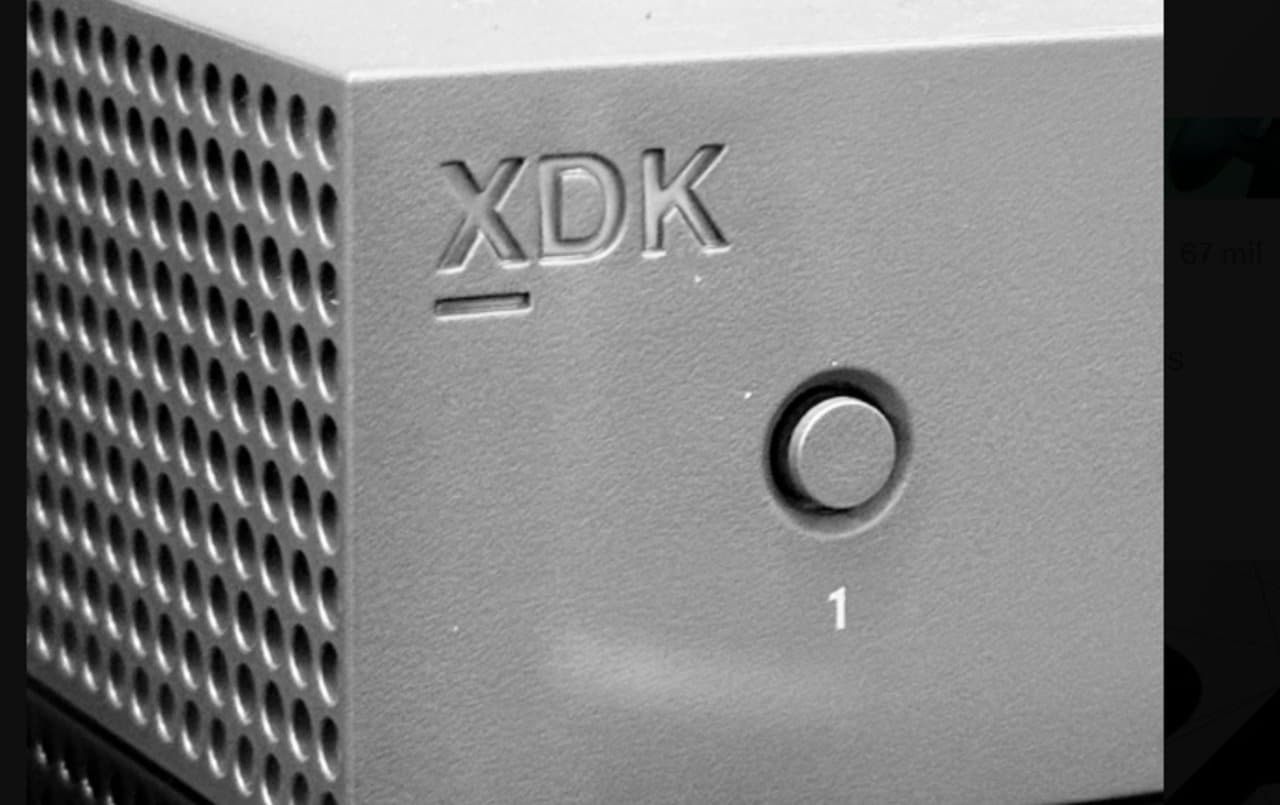
The technology giant recently released exclusive photographs of hardware in the development phase for its next gaming platform. The equipment, known internally by the codename that refers to a spiral structure, appears shortly after the official confirmation of a project focused on total integration between traditional desktop functionalities and personal computers. The black and white images reveal a development kit with robust features, generating immediate debates among experts and enthusiasts in the digital entertainment sector about the future of processing architecture.
During preparations for one of the biggest events aimed at software creators in São Francisco, the company took advantage of the moment to align its strategies with partner studios. The visual reveal serves as a strategic warm-up to maintain the engagement of the technical community and consumers, while the definitive specifications remain under strict industrial secrecy. The move indicates a paradigm shift in the way the manufacturer plans to distribute its entertainment ecosystem.
– Fusão of libraries for native execution in multiple operating environments.
– Implementação of ultra-fast storage technologies to eliminate loads.
– Processamento graphics based on customized high-performance components.
– Retrocompatibilidade expanded with the brand’s historical collection since the first generations.
This initial presentation lays the foundation for what the manufacturer projects as the biggest technical leap ever made in a single hardware transition, focusing on eliminating the boundaries between different types of players.
External structure and reuse of components
The three photographs published by official development channels show specific details of the casing used in the current testing stage. The equipment features a clear side marking with the technical identification acronym and adopts a thick industrial format, a widely recognized industry standard for prototypes delivered to programmers before final consumer design. Observadores technicians quickly noticed that the housing shows signs of wear and dust accumulation, which raises the hypothesis of a direct reuse of physical structures from past generations to house the new boards and processors in the primary validation phase.
The practice of reusing old cases is not unprecedented in the history of electronics manufacturing, although it is less frequent in such different architectural transitions. Essa pragmatic approach allows engineers to accelerate the deployment of authoring tools without waiting for the final industrial design to be finalized, reducing operational costs in the initial stress testing phase. Especialistas point out that the interior of these boxes houses entirely new components, specifically configured to simulate the hybrid processing capacity that the company intends to launch on the global market in the coming years, ensuring that the software is ready before mass production of the final chassis.
Native integration between gaming ecosystems
The core of the new initiative lies in breaking down historical barriers between computer users and consumers of dedicated television devices. The proposal aims to unify software development, allowing studios to create a single code capable of running with maximum optimization in both hardware environments.
This convergence makes the work of programmers easier, who traditionally need to allocate significant resources to adapt their products to different operating systems and processing architectures. With the standardization of creation tools, the market expects a reduction in production time and the incidence of technical failures during global launches.
For the end consumer, the promise is unrestricted continuity of the user experience, ensuring that progress, digital licenses and social interactions move invisibly between the desk and the living room, without the need for duplicate purchases.
Technical advances and processing architecture
The superior performance required by the new generation directly depends on the implementation of cutting-edge technologies in high-density data management. The advanced memory architecture is one of the fundamental pillars to allow the creation of more complex and detailed virtual worlds, requiring unprecedented transfer rates in the segment.
The use of direct storage protocols ensures that information flows from the solid-state drive to the graphics processing unit without overloading the central processor. Esse method optimizes high-resolution texture rendering in real time, a basic requirement for modern graphics engines.
In the visual field, improved support for light ray tracing promises to elevate photorealism, simulating reflections, shadows and global illumination with mathematical precision. Continued partnership with semiconductor manufacturers suggests the use of state-of-the-art custom chips tailored to maintain thermal stability.
While the exact clock speeds and amount of volatile memory remain secret, the kits distributed to developers are designed to provide some computational headroom. Isso ensures that performance tests occur without hardware bottlenecks during the intensive programming phase.
Corporate restructuring and new leadership
The accelerated advancement of the project coincides with significant changes in the executive hierarchy of the company’s entertainment division. The appointment of Asha Sharma to industry leadership marks a new strategic phase, focused on revitalizing the brand’s presence in the global competitive landscape and strengthening partnerships with content creators and technology providers.
During recent conferences, the executive emphasized the unwavering commitment to delivering top-notch hardware, dispelling previous rumors that the company could focus exclusively on internet transmission services. Current management seeks to balance innovation in digital signatures with the manufacture of high-performance physical equipment.
Distribution of tools to partner studios
Delivering early-stage development kits is a critical step to ensuring the release catalog is robust and technically polished. Programming teams use these raw machines to adapt graphics engines, test new physics mechanics, and optimize the resource consumption of the embedded operating system.
Constant feedback from these partners shapes final hardware and system software reviews. Close collaboration during trade shows and technical symposiums allows for fine-tuning of the application programming interface, ensuring that the final product meets the real demands of the interactive software industry.
Transformations in the digital entertainment market
The convergence between platforms represents a direct response to changes in digital consumption habits, where flexibility and instant access have become absolute priorities for the technology-consuming public. By positioning its next release as a definitive bridge between the versatility of computers and the convenience of living room appliances, the manufacturer attempts to redefine value standards in the global market. Esse strategic move not only pressures direct competitors to rethink their closed ecosystem approaches, but also encourages manufacturers of peripherals, network components and displays to develop products strictly compatible with this new hybrid reality. In the long term, the standardization of processing architectures can democratize access to highly complex creation tools, allowing smaller studios to reach levels of technical quality previously restricted to productions with massive budgets, fundamentally changing the economics and distribution of the entertainment software sector on a global scale.
Next steps for official reveal
Industry expectations now turn to the major technology events scheduled for the coming months, where the company is expected to present the final consumer-facing design and detail the complete technical specifications of the new generation equipment.
