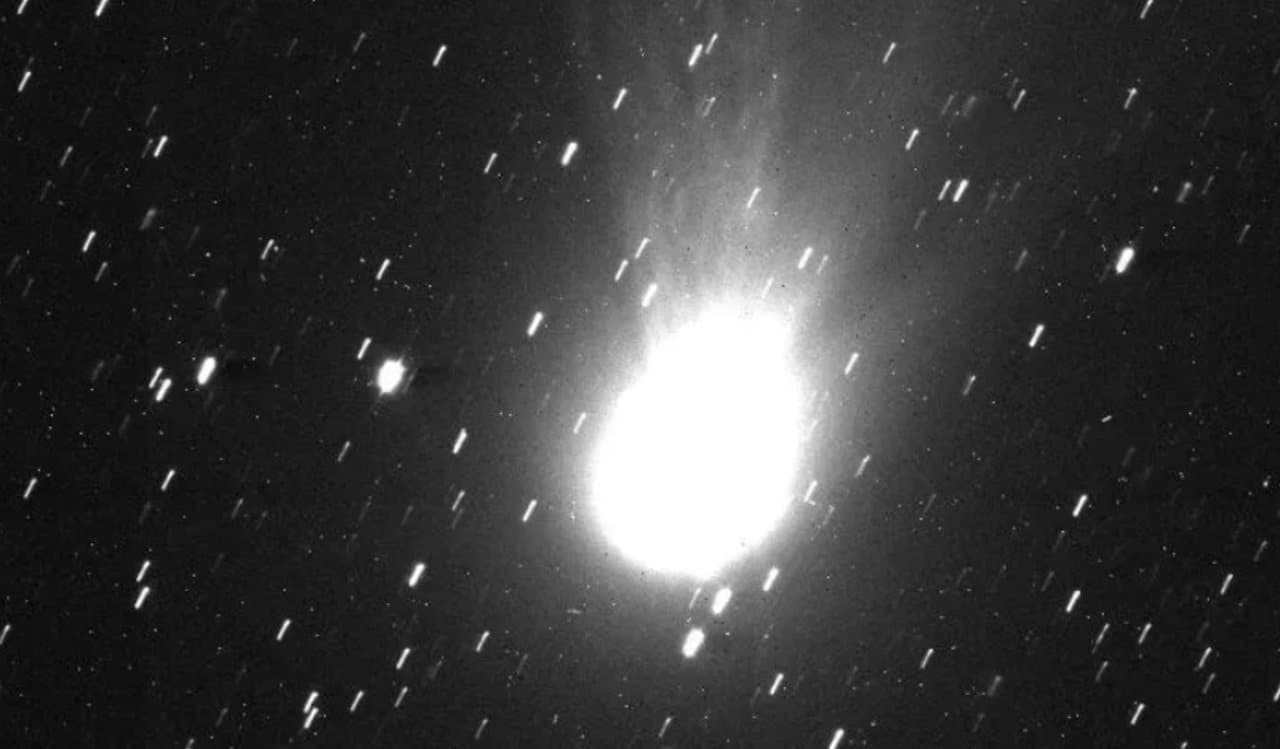
Astronomers linked to Iniciativa to Estudos Interestelares developed an aerospace engineering project with the aim of reaching a celestial body originating from another planetary system. The technical proposal aims to send a highly equipped probe to study comet 3I/ATLAS, a rare object that crosses our cosmic neighborhood at a speed of more than 60 kilometers per second. Detectado inicialmente em meados de 2024, o corpo celeste já se encontra em uma trajetória de afastamento rápido no ano vigente, o que inviabiliza abordagens tradicionais de exploração e exige o desenvolvimento de uma estratégia de perseguição de longo prazo que se estenderá por décadas no espaço profundo.
Designing missions to investigate interstellar visitors represents one of the biggest hurdles in contemporary astrophysics and flight engineering. Esses celestial bodies offer an unprecedented opportunity to analyze the chemical and physical composition of distant planetary systems without the need to send spacecraft outside the heliosphere. Taking advantage of the passage of material through our own space region reduces the costs and time that would be spent on direct interstellar travel, transforming the solar system into a natural observation laboratory.
Due to the extreme orbital dynamics of 3I/ATLAS, the launch window for a rapid and direct interception was closed shortly after its discovery by ground-based observatories. The team of researchers, led by experts in orbital mechanics, needed to formulate a viable alternative that would compensate for the increasing distance to the target. The plan involves the following operational parameters:
– Utilização of complex gravitational maneuvers involving giant planets.
– Aplicação of propulsion systems with high thermal and energy efficiency.
– Estabelecimento of a flight schedule estimated to last half a century.
Hyperbolic trajectory and characteristics of the cosmic visitor
The behavior of 3I/ATLAS differs substantially from the asteroids and comets that make up our local solar system. Enquanto native objects orbit Sol in regular and predictable elliptical trajectories, this visitor has an open hyperbolic orbit, indicating that it is not gravitationally bound to our star and will return to deep space after its passage.
Telemetry data collected during its detection revealed that the object had already crossed the orbit of Júpiter when it was identified by astronomical scanning instruments. The speed of 60 kilometers per second is significantly higher than the escape velocity of the solar system, which guarantees its imminent exit from our galactic region without any possibility of returning in future millennia.
Strategic planning and interception schedule
The plan structured by aerospace engineers seeks to overcome the temporal disadvantage through a specific and rare planetary alignment. The choice of the year 2035 to start the mission is based on the exact relative position between Terra, Júpiter and Sol, which will create an ideal gravitational corridor for sending the probe towards the escaping target.
Mathematical simulations run on supercomputers indicate that at the time of interception in 2085, the comet will be located approximately 732 astronomical units away from Sol. One astronomical unit is equivalent to the average distance between Terra and Sol, which represents around 150 million kilometers in absolute space vacuum.
For technical comparison purposes, this mark represents a distance four times greater than that reached by the Voyager 1 probe, which has been traveling through space since the 1970s.
Fundamentals of astrodynamics and stellar maneuver
The technological core of the interception proposal lies in the practical application of the Oberth effect, an astrodynamic principle formulated at the beginning of the 20th century. The technique consists of using the gravity of a massive body, in this case Sol itself, to multiply the efficiency of the spacecraft’s thrusters during the point of closest approach.
This point of maximum approximation is technically known in academic circles as stellar perihelion. By activating the engines at the exact moment the probe reaches its maximum speed around the star, the kinetic energy generated by the fuel is significantly amplified by the laws of orbital physics.
Ballistic calculations show that a speed variation of 10.36 kilometers per second during this maneuver would allow reaching the comet in three decades. On the other hand, a smaller impulse, around 8.36 kilometers per second, would extend the trip to a period of 50 years.
Choosing the 50-year path requires profound adaptations to the machine’s life support systems and the durability of electronic components. Successful execution of this schedule depends on absolute precision at the time of launch from the Earth’s surface, where any deviation would result in critical failure.
Thermal Engineering and Advanced Shielding Challenges
The need to perform the approach maneuver at a distance of just 3.2 solar radii from the center of the star poses a thermal engineering challenge unprecedented in the history of space exploration. The probe will need to dive into a region where radiation and heat are intense enough to melt most metals known to current science. Este extreme scenario requires the development of armor capable of withstanding temperatures much higher than those faced by any previous human artifact, including the famous Parker Solar Probe. Para To solve this obstacle, aerospace engineers propose the use of shields composed of multiple layers of reinforced carbon and very high-density airgel. Estes advanced materials are specifically designed to dissipate extreme heat and protect the delicate scientific instruments housed inside the ship. Maintaining internal temperature is vital for preserving electronic navigation and communication systems with land bases.
The structural integrity of this heat shield represents the determining factor for the absolute success of the interception mission. Qualquer millimeter failure during the passage through stellar perihelion would result in the instantaneous vaporization of the equipment even before the start of the chase phase in deep space. High-performance thrusters also depend on this protection to operate at the exact moment of greatest gravitational acceleration. Testes rigorous vacuum chambers on the Terra are being structured to simulate the extreme solar radiation conditions the probe will face. The scope for miscalculations or material failures during this critical operating window is considered virtually nil by project directors. Investment in research into heat-resistant materials ends up generating innovations that could be applied in other areas of the global technology industry.
Structural architecture and launch systems
The architectural design of the interceptor probe foresees a total mass of approximately 500 kilograms, a strict limit established by the engineering teams. Esta weight configuration is strictly optimized to carry only the essential instruments intended for spectrometric and photographic analysis of the visiting comet. Mass limitation is a crucial factor in maximizing acceleration during the complex gravity maneuvers planned along the route. Manter the light ship guarantees maximum efficiency of the stored fuel for course corrections during the decades of vacuum travel. The initial trajectory designed by astrophysicists includes a flyby of the planet Júpiter, using the gas giant’s immense gravity to the mission’s advantage. Esta specific maneuver serves to brake the probe and direct it in a free and controlled fall towards the center of the solar system. Para To put this entire complex system into Earth orbit, the project considers the exclusive use of new generation super-heavy rockets. Estes launch vehicles are the only ones capable of providing the initial thrust necessary to initiate the gravitational slingshot sequence. Cada component of the spacecraft undergoes detailed scrutiny to ensure that the scientific return justifies the logistical and financial effort involved in the operation.
Evolution of terrestrial astronomical monitoring
The feasibility of long-term missions generates debates about resource allocation in institutional astronomy and government agencies. The entry into operation of new observation complexes, such as the Observatório Vera C. Rubin, promises to revolutionize the ability to track the night sky. Estes state-of-the-art equipment allows the early identification of orbital anomalies long before they cross Earth’s orbit, facilitating the planning of future interceptions.
Relevance of exploring primordial fragments
The physical study of bodies like 3I/ATLAS carries immense scientific value for the factual understanding of galactic evolution and the formation of solar systems. Direct analysis of the ice and dust present on the comet’s surface would reveal the exact proportion of isotopes and chemical elements formed in distant nebulae.
Collecting this data in person would provide the first material evidence of the environmental conditions of other stellar systems during their primordial formation phase. The execution of an engineering project of this magnitude drives the development of new technologies that benefit the entire infrastructure of commercial observation satellites.
