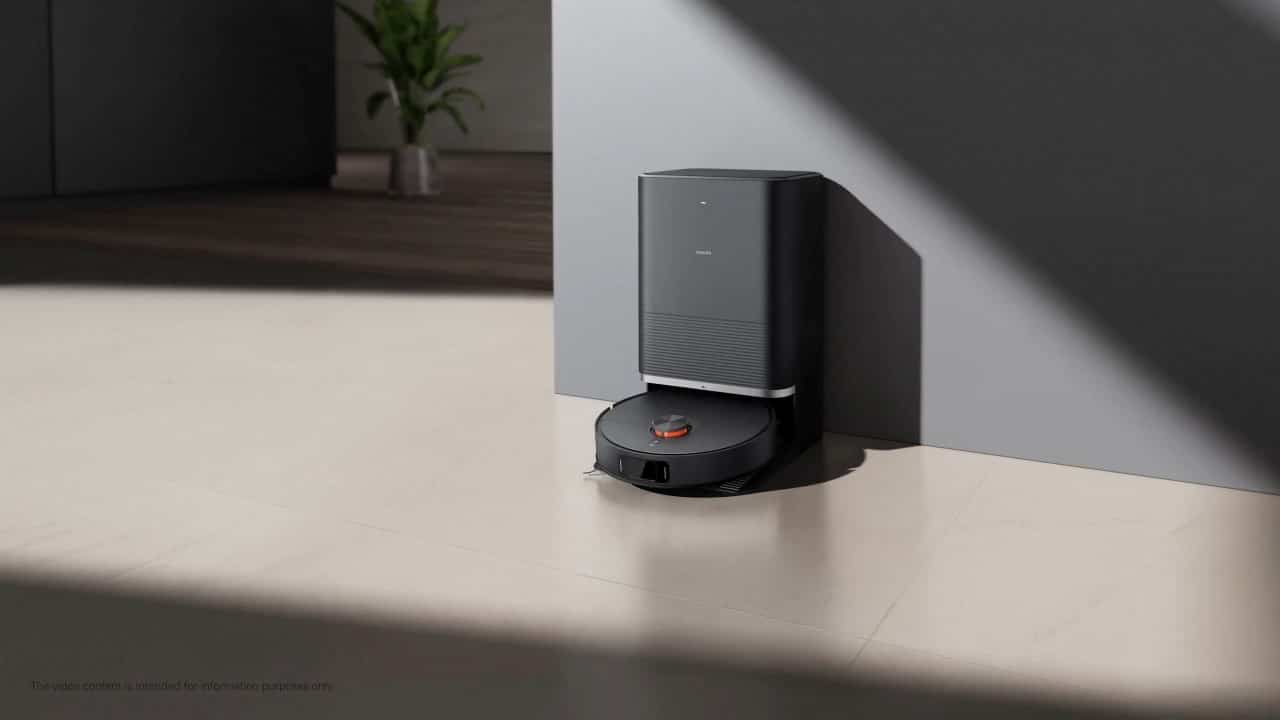
The Asian technology manufacturer has introduced its latest home automation equipment to the market, marking a significant advancement in the high-performance smart cleaning category. The newly launched device integrates complex machine learning-based navigation systems with a first-of-its-kind mechanical structure to navigate complex obstacles in residential environments. The introduction of this equipment reflects the home appliance sector’s growing demand for autonomous solutions that require minimal human intervention during daily sanitizing tasks.
With a focus on operational efficiency, the new model was designed to work in scenarios where traditional vacuum cleaners tend to fail, such as thick carpets, steep unevenness and floors with multiple objects scattered around. The engineering applied to the product aims to solve chronic problems reported by home automation users over the past few years.
The development of this machinery required the combination of high-precision optical sensors with industrial-capacity suction motors, adapted to the compact format required by household appliances. The result is a machine capable of mapping, deciding routes and carrying out cleaning completely independently.
Market values and commercial availability
The official launch of the equipment took place exclusively in the Chinese market, integrating the company’s high-standard product portfolio for the current year. The initial availability strategy focuses on testing the acceptance of new technologies in a market highly accustomed to the consumption of smart home devices.
The machinery hits Asian shelves with a suggested value of 6,599 yuan for the version equipped with the smart water tank. In a direct conversion to Brazilian currency, without considering taxes, customs duties or import fees, the amount is equivalent to approximately R$4,956.
To date, the manufacturer has not released an official schedule for expanding sales to the international market, including the Brasil, the Américas and the Europa. The global distribution of equipment of this complexity often depends on software adaptations, voice command translation, and specific regional security certifications.
Mechanical engineering with bionic legs and articulated arms
One of the most notable technical differences of the new equipment is the implementation of double bionic robotic legs in its locomotion base. Este mechanical system allows the machine to raise its own chassis to overcome steps, door sills or elevations up to 6 centimeters high, an unprecedented technical milestone in the category of domestic robots.
This ability to overcome physical obstacles eliminates the need for artificial ramps or manual user intervention to move the device between rooms with different floor levels. The joint acts autonomously as soon as the front and lower sensors detect the physical barrier on the programmed path.
Despite the structural lifting capacity, the chassis maintains an extremely low profile in its normal sailing state, measuring just 9.3 centimeters in total height. Essa dimensão foi calculada especificamente para garantir o acesso da máquina a espaços restritos, como a área inferior de sofás, camas e estantes, onde o acúmulo de poeira é frequente e de difícil acesso para vassouras convencionais.
To complement cleaning in perimeter areas, engineering included three steerable robotic arms in the device’s design. Estes components extend outside the main body to sweep wall edges, apply the wet mopping system and sanitize the corners and contours of furniture legs with millimeter precision.
Extreme suction capacity and continuous scrubbing system
The device’s internal motor has been resized to generate suction power that reaches 35,000 Pa, establishing the highest value ever recorded within the Asian brand’s entire cleaning product ecosystem. Essa suction force is capable of removing heavy particles, solid debris of different sizes and fine dust embedded in the deepest fibers of dense carpets and rugs. The operation occurs simultaneously, allowing the machine to vacuum dry residue, scrub the surface and scrape the floor in a single pass, optimizing the total time of the environment’s cleaning cycle without loss of energy efficiency.
The scrubbing module operates under a continuous maintenance system powered by 16 water outlet holes strategically positioned on the base of the device. Essa technology ensures that the cleaning fabric remains constantly moist to the exact extent and is cleaned during the operation itself, preventing the collected dirt from being spread to other areas of the floor that have already been sanitized. The water flow is electronically controlled to deal with different levels of stains and adhered dirt, adapting friction and humidity according to the need detected by surface sensors.
Panoramic navigation and object recognition by artificial intelligence
The equipment’s spatial orientation is managed by a set of three high-resolution cameras that provide a panoramic, three-dimensional view of the entire residential environment. Este optical hardware works in conjunction with artificial intelligence algorithms trained on neural networks to identify and avoid collisions with extreme precision, operating effectively even in low light or total darkness.
The system’s internal database is capable of instantly recognizing up to 280 different types of household objects and classifying 47 distinct categories of floor dirt. The sensitivity of the lenses allows the detection of tiny items that often jam common vacuum cleaners, such as charger cables or headphone wires just 3 millimeters thick, forcing the robot to change its route milliseconds before physical contact.
Entanglement prevention and maintenance reduction mechanisms
Routine maintenance of standalone vacuums is often a constant point of friction for consumers, especially when it comes to the accumulation of human hair and pet hair on gears and rotating shafts. To mitigate this mechanical problem, the new model incorporates an advanced anti-tangle system directly into its main sweeping brush. Este component has hidden internal steel blades that automatically cut the curled hair during the high-speed rotation process, sending the crushed fragments directly to the internal powder compartment. The side brushes also received a specific aerodynamic design that repels long hairs, drastically reducing the owner’s need to stop and manually clean the parts. Essas integrated hardware solutions ensure that the equipment completes its scheduled cleaning cycles without interruptions due to mechanical locking, increasing the useful life of the internal motors and maintaining suction efficiency always at the maximum level specified by the manufacturer’s engineering.
Remote connectivity and monitoring of residential environments
The entire operation of the machinery can be managed remotely through direct integration with the Mi Home application, which offers detailed options for programming daily routines, delimiting virtual prohibited zones and adjusting individual suction power per room. The software processes navigation data to generate interactive maps in real time, allowing the user to monitor the exact progress of cleaning through their smartphone screen from anywhere in the world with internet access.
In addition to touch controls on the digital interface, the system supports native voice commands through the Xiao AI virtual assistant, making it easier to initiate localized cleaning. Navigation cameras also gain a secondary security and communication function, allowing owners to use the app to observe pets left alone in the home or even make one-way video calls in real time using the robot’s built-in microphones.
Positioning in the autonomous appliance sector
The introduction of this cleaning machine with industrial-grade specifications tailored for everyday home use signals a shift in the development pattern of autonomous home appliances in the global market. The manufacturer consolidates its position in the residential technology segment by delivering hardware capable of operating independently in homes with complex architecture and high furniture density, minimizing the need for prior preparation of the environment by the user before starting the vacuuming and scrubbing cycles.
